Transfer Board and Slide Board review is for buyers who need a simple, wide, low-friction aid for lateral transfers.
This Transfer board is built around straightforward mechanics rather than extras, which is exactly why it can make sense.
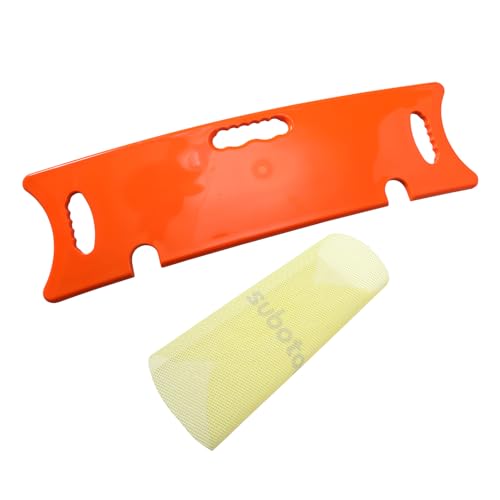
Transfer Board Review Summary
This Transfer board is a focused mobility aid for moving between a wheelchair, bed, sofa, toilet, commode, tub, or car with less friction and more control.
It suits buyers who want a sturdy, no-nonsense transfer solution with built-in handles, tapered ends, and a broad sliding surface instead of a complicated system with moving parts.
Verdict: if you need a transfer board that emphasizes stability, fit, and simple handling, this one is a credible option.
It is especially relevant for caregivers and users who want a board that can support more controlled lateral transfers and offer multiple grip points during positioning.
Review Scorecard
| Category | Score | Buyer-focused rationale |
|---|---|---|
| Transfer stability | 8/10 | Wide shape, tapered ends, and a non-slip pad support controlled placement on common transfer gaps. |
| Ease of handling | 8/10 | Three built-in handles make lifting, repositioning, and angling the board more practical. |
| Surface glide | 8/10 | ABS construction and a smooth finish are designed to reduce friction during sliding transfers. |
| Fit flexibility | 7/10 | The 29.5-inch by 8-inch profile is broad enough for many everyday transfer setups, but fit still needs checking. |
| Load confidence | 8/10 | The listed support capacity is strong for a daily-use transfer aid in this category. |
| Buyer simplicity | 9/10 | It focuses on core transfer-board needs without extra mechanisms that can add complexity. |
Key Features and Specifications of Transfer Board
The listing positions this as a sliding transfer board made from high-density ABS polymer with a smooth, burr-free surface.
The practical point is simple: the board is meant to help reduce friction when moving across short gaps, while still feeling rigid enough to support controlled transfers.
The stated size is 29.5 inches long, 8 inches wide, and 0.5 inch thick.
That is a useful footprint because it gives the board enough reach for common surface-to-surface transitions while staying compact enough to store and carry.
The ends are tapered, which should help reduce catching on armrests or edges during setup.
The listing also calls out three built-in handles.
That matters more than it sounds like, because transfer boards are often awkward to grip once positioned.
Multiple handholds can make it easier to lift, angle, and remove the board without forcing an unsafe grasp.
Key facts from the product record:
- Heavy-duty ABS polymer construction
- Smooth glide surface
- Listed support capacity of about 440 lb
- Three built-in handles
- Included 10-inch non-slip round pad
- Tapered ends and side notches
- Designed for transfers between wheelchair, bed, sofa/couch, toilet/commode, tub, and car
The included non-slip round pad is worth noting separately.
It is not a transfer sheet; it is an accessory meant to add traction and help stabilize placement on smoother surfaces.
For a product like this, that can improve confidence during setup, though it does not replace proper technique.
Pros and Cons of Transfer Board
Pros
- The wide, simple board format is easy to understand and use in common transfer scenarios.
- The smooth ABS surface is purpose-built for lower-friction movement.
- Built-in handles are a practical advantage for caregivers and users.
- The included non-slip pad adds a useful stabilization aid.
- Tapered ends and side notches should help with positioning around edges and armrests.
Cons
- It is still a manual transfer aid, so safe use depends on fit and technique.
- The size may not suit every chair, vehicle seat, or bathroom setup.
- The broad surface helps with stability, but it can still feel bulky compared with smaller boards.
- The listing guidance implies the user should test fit first; that is a real-world constraint, not a minor footnote.
The overall tradeoff is clear.
This Transfer board prioritizes straightforward utility over compactness or advanced features.
If you want a transfer aid that feels purpose-built for daily lateral moves, that is a strength.
If you want something lighter, smaller, or more specialized, you may want to look elsewhere.
Who Should Buy Transfer Board?
This Transfer board makes the most sense for people who regularly move between seated and level surfaces and want a board that can help make those transfers more controlled.
It is a strong fit for home care situations where the user, a spouse, or a caregiver needs a reliable tool for bed-to-chair, chair-to-toilet, or chair-to-car movement.
It is also a reasonable match for buyers who value a wider surface and multiple handles.
Those features are useful when the board needs to be placed, lifted, or repositioned repeatedly throughout the day.
The product record suggests it is intended for both assisted and more independent use, which broadens its appeal.
Buy it if you want:
- A simple transfer board for everyday lateral transfers
- A wide ABS board with a smooth sliding surface
- Built-in handles for easier positioning
- An included traction accessory for smoother placement
- A product designed for common home and vehicle transfer points
Skip it if you need:
- A powered lift or a fully assisted transfer device
- A compact board for very tight spaces
- A solution that can be used without checking fit and technique
- Something intended for complex mobility needs beyond board-style transfers
The key question is whether your transfer routine matches the board’s design.
If your daily use cases are predictable and involve short, relatively direct moves, this product fits the job well.
If your environment is cramped or unusually shaped, the wide board format may be less convenient.
How Transfer Board Handles Daily Transfers
Lateral Transfers
This board is built for lateral movement, not for lifting someone vertically.
That is the right design choice for short transitions across similar-height surfaces, because the smooth board and broad body are intended to reduce friction rather than replace caregiver support.
Surface Fit and Positioning
The tapered ends and side notches are important because transfer boards often fail at the contact points, not the middle.
By shaping the ends to interact better with edges and armrests, the listing suggests a practical focus on setup and removal.
Grip and Control
The three built-in handles matter most when the board has to be nudged, lifted, or stabilized mid-transfer.
Handles do not make a transfer board safer by themselves, but they can improve control when the user or caregiver needs a better grip.
Material and Maintenance
ABS polymer is a sensible material for a transfer board because it can be made smooth and rigid without unnecessary complexity.
The product record does not promise anything fancy here; it just indicates a durable, low-friction construction meant for repeated daily handling.
Alternatives to Transfer Board
If this Transfer board is close to what you need but you want a different shape or brand, there are a few credible Amazon search paths to compare:
- DMI transfer board for a familiar mobility-aid brand with multiple board styles.
- MTS medical transfer board if you want to compare other board designs used in care settings.
- transfer board with handles if handle placement is your main buying criterion.
- wheelchair transfer board if you want to compare broader transfer-board options side by side.
The main thing to compare is not marketing language but fit: length, width, grip layout, surface smoothness, and whether the board matches the surfaces you actually transfer across.
A cheaper or smaller board can be enough for some users, but a poorly fitting board is a bad trade.
Is Transfer Board Worth It?
Yes, Transfer Board is worth considering if you want a practical, wide, manual transfer aid for common home and vehicle transitions.
Its strongest points are the simple ABS construction, the built-in handles, the tapered ends, and the included non-slip pad, all of which support the same basic goal: better control during everyday lateral transfers.
The deciding factor is fit.
If your wheelchair, bed, toilet, tub, or car setup matches the board’s dimensions and transfer style, this is a sensible buy.
If you need a more specialized mobility solution, or if your transfer routine is unusually constrained, look at alternatives before committing.
For buyers who want a straightforward transfer board that emphasizes utility over gimmicks, this one is a solid shortlist candidate.
For everyone else, the right move is to verify dimensions and transfer technique first, then buy only if the setup truly matches your needs.