Long periods of sitting can make discomfort harder to manage, especially when changing position is difficult. The right cushion can improve comfort, but fit, stability, and skin care matter as much as the material inside.
These 10 picks cover wheelchair, recliner, and everyday chair seating. Use the guide below to narrow down the best type for the person, chair, and amount of time spent sitting.
Best 10 Pressure Relief Cushions for Elderly Picks for 2026
Best for Secure Wheelchair Fit
AUVON Gel Wheelchair Seat Cushion

- U-shaped tailbone cutout
- Gel layer with breathable foam
- Anti-slip base plus adjustable strap
Best For: Wheelchair users who want tailbone clearance and a secured cushion
Best for Easy-Care Seating
Everlasting Comfort Ventilated Wheelchair Cushion

- Ventilated gel memory foam
- Machine-washable removable cover
- Rubberized non-slip base
Best For: Daily use across wheelchairs, cars, and desk chairs
Best for Airflow
AUVON Ventilation Seat Cushion

- 30 air holes and 11 grooves
- Waterproof-membrane velour cover
- Anti-slip base and carry handle
Best For: Warm sitters seeking ventilated memory foam
Best for Layered Foam Support
Ifoam Gel-Infused Wheelchair Cushion

- Gel-infused memory foam top
- High-density supportive base
- Washable cover and non-slip bottom
Best For: Adults under 200 pounds seeking layered foam support
Recliner Pick
Lunderg Alternating Air Pressure Pad

- 136 alternating air cells
- Quiet pump with static mode
- Anchored, easy-clean cover
Best For: Extended recliner or sofa use
Wheelchair Set
Seat Cushion With Lumbar Pillow

- U-shaped tailbone cutout
- Includes lumbar pillow
- Washable waterproof cover
Best For: Everyday wheelchair seating with lumbar support
Contoured Seat Pick
Gel-Topped Memory Foam Cushion

- Cross-shaped pressure zoning
- Cooling gel surface
- Machine-washable cover
Best For: Contoured support across common seats
Best for Washable Wheelchair Use
Gel and Memory Foam Seat Cushion
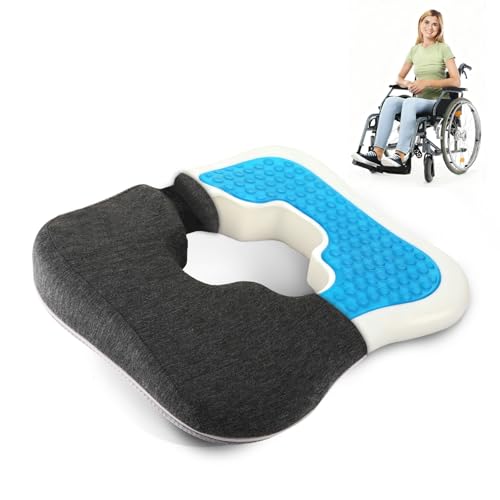
- 18 x 16 x 3-inch seat
- Removable, machine-washable cover
- Anti-slip bottom
Best For: Wheelchair users prioritizing easy cover care
Best for Long Desk Sessions
Cushion Lab Contoured Seat Cushion, Black
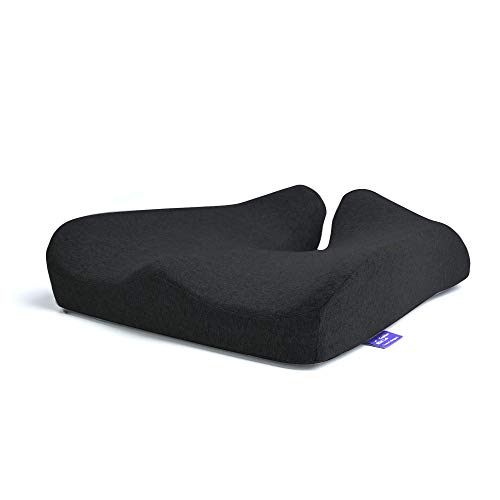
- Contoured hip and thigh support
- Extra-dense memory foam
- Spot-clean care
Best For: Long sessions in office or home chairs
Best Light Grey Option
Cushion Lab Contoured Seat Cushion
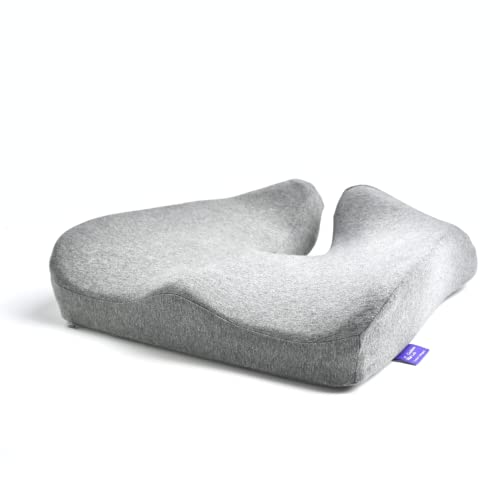
- Light grey upholstery
- Contoured hip and thigh support
- Spot-clean care
Best For: Home, car, or wheelchair seating in light grey
Best for Secure Wheelchair Fit – AUVON Gel Wheelchair Seat Cushion
Among pressure relief cushions for elderly adults, this AUVON model combines a thick gel layer with memory foam and a U-shaped tailbone cutout. Its 18 x 16 x 3-inch size fits most adult wheelchairs and can also be used on other chairs.
Best For: Someone who wants tailbone clearance, a cooler-feeling seat, and a cushion that can be strapped to a wheelchair.
Pros:
- U-shaped cutout leaves space around the tailbone; a sloped front supports the thighs.
- Gel layer, breathable foam, and cooling fabric are designed to reduce stuffiness.
- Anti-slip bottom and adjustable strap help keep it in place; removable cover has a waterproof membrane.
Cons:
- Memory foam cannot be washed; the cover must be air-dried after washing.
- Foam may feel firmer below 68°F.
The strap is a useful distinction if the cushion tends to shift during transfers or daily use. Check the wheelchair seat dimensions before ordering.
Best for Easy-Care Seating – Everlasting Comfort Ventilated Wheelchair Cushion
If you’re comparing pressure relief cushions for elderly adults who sit in several locations, this Everlasting Comfort cushion offers gel memory foam with a ventilated design. The removable cover and non-slip base make it a practical option for a wheelchair, office chair, or car seat.
Best For: Daily users who prioritize a washable cover and a cushion they can move between seats.
Pros:
- Gel memory foam is designed to contour to the body and ease pressure around the hips and tailbone.
- Ventilated gel design and breathable cover help limit heat buildup.
- Rubberized non-slip base; removable cover is machine washable.
Cons:
- The foam itself is not washable; remove the cover for cleaning.
- No fastening strap is specified, so the non-slip base is its stated method of staying in place.
This is a flexible pick for multiple seating settings. If your wheelchair needs a strapped-down cushion, compare its grip-only design with models that include a buckle strap.
Best for Airflow – AUVON Ventilation Seat Cushion
For shoppers seeking pressure relief cushions for elderly adults who get warm while sitting, this AUVON cushion emphasizes airflow rather than a gel layer. Its memory foam has 30 air holes and 11 ventilation grooves, and the cushion measures 18 x 16 x 3 inches.
Best For: Someone who wants a ventilated foam cushion with a soft cover for a wheelchair or other chair.
Pros:
- Air holes and grooves are designed to help dissipate heat during extended sitting.
- Memory foam molds to the sitter’s shape.
- Removable velour cover has a waterproof membrane; anti-slip bottom and carrying handle add convenience.
Cons:
- There is no fastening strap listed.
- Foam is not washable, and the washed cover must be air-dried.
Choose this one if ventilation is the priority. It is not a substitute for medical guidance: the manufacturer advises consulting a healthcare provider before use if the sitter has severe bedsores.
Best for Layered Foam Support – Ifoam Gel-Infused Wheelchair Cushion
This Ifoam option stands out among pressure relief cushions for elderly adults for its layered construction: gel-infused memory foam sits over a high-density foam base. At 18 x 16 x 3 inches, it is intended for wheelchairs as well as scooter, office, car, and dining seats.
Best For: Adults under 200 pounds who want a layered foam cushion with a washable cover.
Pros:
- Memory foam upper layer contours to the body while the dense base adds support.
- Design aims to distribute seated weight and reduce pressure around the tailbone.
- Breathable, removable cover can be washed; non-slip bottom helps limit shifting.
Cons:
- Only the cover is washable, not the foam cushion.
- For users over 200 pounds, the manufacturer recommends choosing a cushion at least 4 inches thick instead of this 3-inch model.
The two-layer build may appeal to buyers who want more structure beneath the memory foam. Heed the manufacturer’s thickness guidance when choosing for a heavier sitter.
Recliner Pick – Lunderg Alternating Air Pressure Pad
Among pressure relief cushions for elderly people who spend extended periods in a recliner, this Lunderg pad stands out for its powered alternating-air design. Its 136 air cells inflate and deflate gradually, while an adjustable pump lets you choose a softer or firmer feel.
Best For: Adults who spend long hours in recliners or sofas and want an alternating-pressure surface.
Pros:
- Alternating and static modes offer a choice between changing pressure and a stable surface.
- Quiet 23 dBA pump includes adjustable pressure control.
- Stretch cover has anchors to help prevent slipping and is easy to clean.
Cons:
- Requires a pump rather than working as a standalone cushion.
- Supports up to 300 pounds; the cover is hand-wash only.
This is the most specialized option here for prolonged recliner use. Check that the pad fits the intended chair and that a powered setup suits the user’s routine.
Wheelchair Set – Seat Cushion With Lumbar Pillow
For shoppers comparing pressure relief cushions for elderly wheelchair users, this set pairs an 18-by-16-inch memory-foam seat cushion with a lumbar pillow. The U-shaped seat design creates space around the tailbone, and a strap helps keep the cushion in position.
Best For: Wheelchair users who want a seat cushion and separate lumbar support for everyday sitting.
Pros:
- Includes a lumbar pillow alongside the seat cushion.
- Anti-slip design and adjustable strap help secure the seat cushion.
- Waterproof, removable cover is machine washable.
Cons:
- The 18-by-16-by-3-inch seat cushion may not fit every chair; measure before buying.
- Not a powered alternating-pressure system.
Its combination of tailbone clearance, lumbar support, and washable cover makes this a practical everyday option. Confirm both the seat dimensions and strap placement against the wheelchair before ordering.
Contoured Seat Pick – Gel-Topped Memory Foam Cushion
This option among pressure relief cushions for elderly sitters uses contoured memory foam with a cooling gel surface. Its cross-shaped zoning and 15-degree slope are designed to redistribute seated pressure around sensitive areas, including the tailbone.
Best For: Adults seeking a portable cushion for a wheelchair, recliner, or other everyday seat.
Pros:
- Contoured design targets pressure around the buttocks and coccyx.
- Gel surface offers a cool feel.
- 18-by-16-by-3-inch size fits many common seats; removable cover is machine washable.
Cons:
- No strap or anti-slip feature is specified in the supplied details.
- Its dimensions may not suit every wheelchair or chair.
Choose this one if a shaped foam seat appeals more than an air-powered pad. Measure the intended seat first, and do not rely on a cushion alone to manage existing pressure sores.
Best for Washable Wheelchair Use – Gel and Memory Foam Seat Cushion
Among pressure relief cushions for elderly adults, this 18 x 16 x 3-inch option combines a gel surface with memory foam and a contoured, sloped design intended to spread sitting pressure. It is sized for many adult wheelchairs as well as other seats.
Best For: Wheelchair users who want a removable, washable cover and a grippy base.
Pros:
- Gel-topped memory foam and zoned contours are designed to distribute pressure across the seat.
- Removable cover can be machine washed and is described as water-resistant against spills.
- Anti-slip bottom helps keep the cushion in position.
Cons:
- At 18 inches wide, it may not fit narrower wheelchair seats; measure first.
- Its 3-inch height raises the sitting position.
The washable cover is a practical advantage for everyday care. Treat its bedsore-prevention language as a design claim, not a substitute for individualized pressure-injury care.
Best for Long Desk Sessions – Cushion Lab Contoured Seat Cushion, Black
For shoppers comparing pressure relief cushions for elderly adults who spend long periods at a desk, this black Cushion Lab seat cushion uses extra-dense memory foam and shaped thigh and hip contours. Its design is intended to encourage upright sitting and shift weight away from the tailbone.
Best For: Older adults seeking a contoured cushion for office chairs, home seating, or car trips.
Pros:
- Contoured shape cradles the hips and thighs.
- Extra-dense charcoal memory foam is designed to offer soft support.
- Also marketed for use in wheelchairs and mobility scooters.
Cons:
- Spot-clean care is less convenient than a machine-washable cover.
- The listed 4-inch height may noticeably change seat height and fit.
This is a comfort-focused choice for extended sitting, particularly if a shaped seat feels preferable to a flat pad. Check the seat dimensions and resulting sitting height before buying.
Best Light Grey Option – Cushion Lab Contoured Seat Cushion
Among pressure relief cushions for elderly adults, this light grey Cushion Lab option offers a contoured alternative to a flat seat pad. Extra-dense charcoal memory foam and shaped hip and thigh areas are intended to redistribute sitting weight and encourage an upright posture.
Best For: Older adults wanting a light grey cushion for home, car, or wheelchair seating.
Pros:
- Contoured seat is designed to cradle the hips and thighs.
- Extra-dense memory foam provides soft support.
- Listed for chairs, cars, wheelchairs, and mobility scooters.
Cons:
- Requires spot cleaning rather than machine washing.
- The supplied specifications give inconsistent or incomplete sizing, so confirm fit before ordering.
This model makes sense if you like Cushion Lab’s shaped seat design and prefer light grey. Verify the current dimensions for your chair, since the provided listing does not establish one clear full-size measurement.
How We Picked the Best Pressure Relief Cushions for Elderly
We looked for a useful range of Pressure Relief Cushions for Elderly adults rather than treating every seat the same. This selection includes contoured memory foam, gel-infused and ventilated options, wheelchair-focused pads, a cushion-and-lumbar set, and an alternating-air recliner pad. We prioritized practical buying details: seat compatibility, intended sitting time, cover care, stability, and whether a design may help reduce concentrated pressure. Product descriptions alone cannot establish that a cushion prevents pressure injuries or treats pain.
Quick Comparison: Match the Cushion to the Seat
Wheelchairs: Start with a cushion sized to the usable seat, then check height, firmness, cover, and how securely it stays in place. Recliners: The Lunderg alternating-air pad is the option here for shoppers specifically considering powered, changing pressure; it requires a pump and a suitable setup. Office, dining, or car seats: Contoured foam options, including the Cushion Lab designs, suit shoppers who want portable support, provided the added height does not compromise posture or transfers. Warm seating: Ventilated designs may feel more comfortable, though airflow and temperature will also depend on clothing and the chair.
Key Buying Factors for Pressure Relief Cushions for Elderly Adults
Fit, Position, and Transfers
Measure the chair’s usable seat width and depth, not just its advertised dimensions. A cushion that overhangs, slides, or lifts the sitter too high can make positioning and standing less secure. Check that feet remain supported and that the cushion works with the chair’s backrest and armrests. If the person uses a wheelchair, ask a clinician to assess fit when posture or skin integrity is a concern.
Support, Material, and Cover
Foam and gel-infused foam can provide steady support, but firmness should suit the user’s weight and preferences; sinking through to the hard seat defeats the purpose. A tailbone cutout may feel helpful for some users, but it does not replace proper pressure management. Look for a cover that can be removed and cleaned according to its instructions. A water-resistant cover can help with spills, but confirm what protection is included rather than assuming the whole cushion is waterproof.
Skin-Risk Needs
People with limited mobility or a history of pressure injuries may need more than an off-the-shelf cushion. Alternating-air products add setup, power, and maintenance considerations, and any cushion should be paired with appropriate repositioning and regular skin checks. Seek clinical guidance for persistent redness, open skin, or suspected pressure sores.
Who Should Buy Which Pressure Relief Cushions for Elderly?
Choose a stable, correctly sized wheelchair cushion for daily wheelchair use; prioritize a washable cover and secure placement when spills or shifting are concerns. Consider a ventilated cushion if heat buildup is the main comfort complaint, or a contoured foam model for everyday chairs when fit and sitting height work well. A cushion-and-lumbar set may appeal to someone who also wants back support, but check that both pieces improve rather than disrupt posture. Consider the alternating-air recliner pad for recliner use only after confirming the chair, pump, and care routine are practical. For anyone at significant risk of skin breakdown, make the final choice with a healthcare professional.