When caring for someone with Alzheimer’s, ensuring their safety is a top priority. Choosing the right bed alarm can make a significant difference in providing peace of mind for both you and your loved one. With various options available, each featuring unique functionalities, it’s essential to know what to look for. Let’s explore the ten best Alzheimer’s safety bed alarms that can enhance security and simplify your caregiving experience.
Lunderg Early Alert Bed Alarm for Elderly Adults

The Lunderg Early Alert Bed Alarm is an ideal choice for caregivers of elderly adults, especially those with dementia. This innovative device features pre-alert smart technology that detects when your loved one starts to stand, notifying you before they leave the bed. With a patented sensor pad designed to minimize false alarms, you won’t be disturbed by shifting or repositioning. The wireless connection guarantees ease of use, while the portable pager offers adjustable volume settings. Plus, its long-lasting battery life of 15 months means less hassle. You can confidently keep your loved ones safe without breaking the bank, thanks to FSA/HSA eligibility.
Best For: Caregivers of elderly adults, particularly those with dementia, seeking a reliable fall prevention solution.
Pros:
- Pre-alert smart technology detects when a patient begins to stand, providing timely notifications to caregivers.
- Patented sensor pad minimizes false alarms caused by shifting or repositioning, enhancing user experience.
- Long battery life of 15 months reduces the need for frequent replacements, ensuring consistent performance.
Cons:
- Initial setup may require careful placement to avoid false alarms if not properly positioned.
- Wireless technology can be susceptible to interference in certain environments.
- The size of the sensor pad may not fit all mattress types, limiting compatibility.
Smart Caregiver Bed Alarm for Elderly Adults
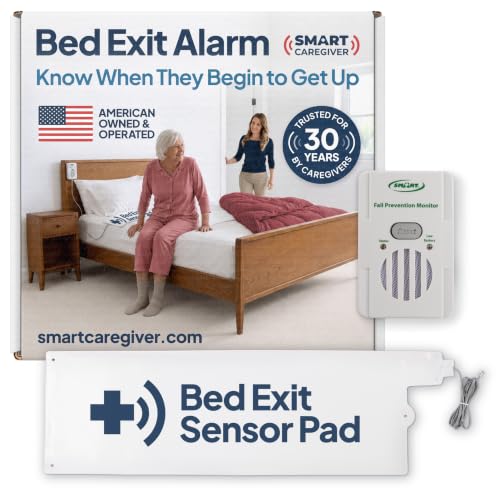
For caregivers of elderly adults, the Smart Caregiver Bed Alarm stands out as an essential tool in fall prevention. This system features a 10″x30″ weight-sensing bed pad that alerts you instantly when your loved one gets out of bed. The in-room alarm serves as a reminder for them to stay seated until you arrive. Designed to fit discreetly under the fitted sheet, it’s durable and easy to clean. Plus, with adjustable volume levels and a reset button, you can manage the alarm effortlessly. It’s a reliable choice for ensuring safety and peace of mind in caregiving environments.
Best For: Caregivers of elderly adults seeking a reliable fall prevention system to enhance safety and peace of mind.
Pros:
- Durable and easy to clean, designed for daily use in caregiving environments.
- Instant alerts ensure timely assistance and reduce the risk of falls.
- Adjustable volume levels and a reset button offer customizable alarm management.
Cons:
- Requires one 9-Volt battery or an AC adapter (not included) for operation.
- Optional wireless add-on kit is sold separately, adding to the overall cost.
- May not be suitable for those who prefer non-intrusive monitoring solutions.
Smart Caregiver Bed Exit Alarm with Wireless Pager for Fall Prevention

Designed specifically for seniors and elderly patients, the Smart Caregiver Bed Exit Alarm with Wireless Pager excels in fall prevention by utilizing a sensitive weight sensor pad. When pressure is removed, the soft 10 x 30 pad wirelessly alerts you, ensuring timely caregiver notifications. You’ll appreciate the advanced pager with vibrate and sound options, allowing for quick responses tailored to your preferences. Plus, the system supports up to six sensors, covering multiple areas for thorough safety. With an extra-large contact sensor, false alarms are minimized, fostering trust in its reliability. Smart Caregiver’s 30 years of experience guarantees you’re choosing a dependable solution.
Best For: Seniors and elderly patients at risk of falls who require timely alerts for caregiver assistance.
Pros:
- Advanced pager offers both vibrate and sound alerts for caregiver convenience.
- Supports up to six sensors, allowing comprehensive monitoring of multiple areas.
- Engineered with an extra-large contact sensor to minimize false alarms.
Cons:
- The bed pad may require occasional adjustments for optimal placement.
- Wireless operation may be affected by distance or obstacles between the pad and pager.
- Initial setup may take time for those unfamiliar with technology.
Upgraded Bed Sensor Alarm for Elderly and Caregiver Alert
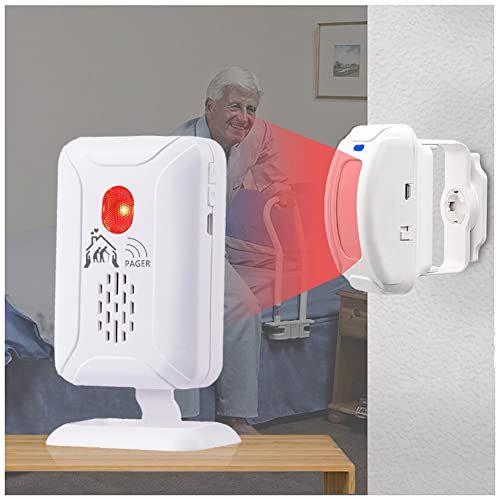
With its advanced motion sensor technology, the Upgraded Bed Sensor Alarm is an ideal choice for caregivers of elderly or dementia patients. This alarm monitors when your loved one gets out of bed or leaves the room, triggering an alert without startling them. You can easily place the wireless sensors under the bed or at the door. With five volume levels, dual reminders of sound and LED light, and a range of 918 feet, it keeps you informed from a distance. Plus, it runs on both batteries and a Micro USB, ensuring reliable operation when you need it most.
Best For: Caregivers of elderly or dementia patients who need reliable monitoring and alerts when their loved ones get out of bed or leave the room.
Pros:
- Provides a non-intrusive alert system that does not startle patients.
- Offers a long wireless range of up to 918 feet, allowing caregivers to monitor from a distance.
- Features dual reminders with sound and LED light, enhancing visibility and awareness.
Cons:
- Requires batteries for operation, which may need frequent replacement.
- The size of the sensors may not be suitable for all bed types or setups.
- May require some initial setup time to ensure proper placement and function.
Lunderg Large Bed Alarm for Elderly Adults

Lunderg Large Bed Alarm stands out as an ideal choice for caregivers of elderly adults and dementia patients who require constant monitoring. This system includes a wireless sensor pad and a portable pager, ensuring you’re alerted when your loved one stands up. The 20” x 30” sensor pad connects wirelessly up to 300 ft., minimizing false alarms with its anti-slip design. You can adjust the pager’s volume or switch to vibration mode, perfect for different environments. With a one-year warranty and a 30-day money-back guarantee, you’ll feel confident in your purchase, knowing it supports your patient’s safety and comfort.
Best For: Caregivers of elderly adults and dementia patients who require constant monitoring for safety and fall prevention.
Pros:
- Wireless sensor pad with a wide coverage of up to 300 ft., ensuring reliable alerts.
- Adjustable pager volume and vibration mode cater to different environments and preferences.
- Easy to clean and designed to minimize false alarms with anti-slip stickers.
Cons:
- Bed pads have a limited lifespan of only 12 months, requiring replacement.
- Some users may find the initial setup and placement of the sensor pad challenging.
- The need for batteries may be inconvenient for some caregivers.
Lunderg Bed Alarm for Elderly Adults – Wireless Sensor Pad & Pager

For caregivers seeking an effective solution to monitor elderly adults, especially those with dementia, the Lunderg Bed Alarm stands out with its wireless sensor pad and pager system. This 10” x 30” sensor pad alerts you immediately when the user gets up, allowing for quick responses, particularly at night. With a wireless range of up to 300 feet, the lightweight pager can easily fit in your pocket or clip onto your clothing. The adjustable volume and vibration settings guarantee you won’t miss an alert. Plus, it includes anti-slip stickers to reduce false alarms, enhancing overall reliability for peace of mind.
Best For: Caregivers of elderly adults and patients with dementia who need a reliable fall prevention solution.
Pros:
- Wireless sensor pad allows for immediate alerts when the user gets up, enhancing response time.
- Adjustable volume and vibration settings ensure alerts can be customized to suit the caregiver’s needs.
- Lightweight and portable pager can easily be carried or mounted, providing convenience for caregivers.
Cons:
- Battery-powered components may require regular battery replacement, which could be inconvenient.
- Limited lifespan of bed pads (12 months) means additional costs for replacements over time.
- Potential for false alarms if the sensor pad is not positioned correctly, despite anti-slip features.
EverNary Bed Alarm for Elderly Dementia Patients
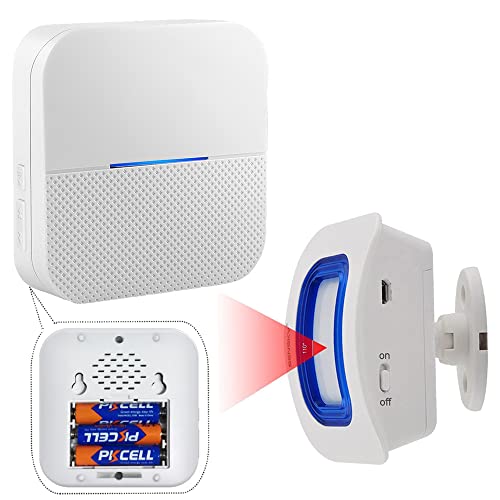
The EverNary Bed Alarm is an ideal solution for caregivers of elderly dementia patients who need reliable fall prevention and monitoring at home. Its motion sensor detects movement within a 16.4ft range, effectively alerting you when your loved one attempts to leave their bed or room. The portable pager fits easily in your pocket, ensuring alarm noise doesn’t disturb your patient at night. With a range of up to 260 ft, it features 52 ringtones and adjustable volume levels. Plus, you can customize the system to pair multiple receivers and transmitters, tailoring it perfectly to your needs.
Best For: Caregivers of elderly dementia patients seeking reliable fall prevention and monitoring solutions at home.
Pros:
- Effective Monitoring: Motion sensor detects movement within a 16.4ft range, alerting caregivers when patients attempt to leave bed or room.
- Portable and Convenient: The pager fits easily in a pocket and removes alarm noise from the bedside, ensuring a peaceful environment for patients at night.
- Customizable Setup: Supports pairing multiple receivers and transmitters, allowing for a tailored monitoring experience based on individual needs.
Cons:
- Battery Dependence: Requires AAA batteries for both the pager and motion sensor, which may need frequent replacements.
- Limited Range in Obstructed Areas: While effective in open areas, the range may be reduced if there are walls or obstacles between the motion sensor and pager.
- Initial Setup Complexity: Customizing the system with multiple components may be challenging for some users without technical expertise.
Patient Aid Bed Alarm with Motion Sensor Pad for Fall Prevention

A motion sensor pad measuring 10″ x 30″ makes the Patient Aid Bed Alarm an excellent choice for caregivers of elderly individuals at risk of falls, particularly those with Alzheimer’s. This system features a wired device that can be powered by an AC adapter or batteries, ensuring functionality wherever needed. Install the motion sensor pad under the patient for maximum effectiveness, and choose from various ring sound options, reaching volumes of up to 90db. Made from durable, waterproof vinyl, this alarm is both foldable and easy to clean, offering peace of mind with a 1-year warranty for added support.
Best For: Caregivers of elderly individuals at risk of falls, especially those with Alzheimer’s disease.
Pros:
- Durable and waterproof material ensures long-lasting use and easy cleaning.
- Adjustable volume options allow customization of alarm sound to suit different environments.
- 1-year warranty provides peace of mind with hassle-free replacement for defects.
Cons:
- Not suitable for patients with pacemakers or defibrillators, limiting its use for some individuals.
- Wired device may restrict placement options compared to wireless alternatives.
- Installation may require mounting tools, which could be challenging for some users.
Newly Upgraded Bed Alarm for Elderly Dementia Patients (Wireless Fall Detection & Motion Sensor Alert System)

Designed specifically for elderly dementia and Alzheimer patients, the newly upgraded bed alarm offers peace of mind with its advanced wireless fall detection and motion sensor alert system. With a 500+ ft range, you can monitor your loved one from various locations. The smart dual alert system features both LED lights and 110db sound notifications. Plus, it’s easy to set up in just 20 seconds, requiring no technical skills. You’ll appreciate the customizable alerts, including 17 alarm tones and a silent vibration mode for nighttime use. This kit includes everything you need for immediate deployment and reliable 24/7 operation.
Best For: Elderly individuals with dementia or Alzheimer’s who require monitoring for fall prevention and safety.
Pros:
- Smart dual alert system with both LED light and loud sound notifications ensures quick awareness of any movement.
- Customizable alerts with 17 alarm tones and a silent vibration mode make it suitable for different environments and times of day.
- Easy setup in just 20 seconds with no technical skills required allows for immediate use by caregivers.
Cons:
- Battery dependence on 3xAA alkaline batteries or the need for Micro USB charging may be inconvenient for some users.
- Limited portability of the receiver may restrict mobility for caregivers if they need to move around frequently.
- Alarm volume at maximum 110db might be too loud or startling for some users, particularly during nighttime use.
Bed Alarms for Elderly Dementia Patients – Digital Sensor Motion Alerts

For caregivers of elderly dementia patients, the PILSAMAS Bed Alarms stand out with their innovative digital sensor motion alerts. These alarms utilize infrared sensors to effectively detect footstep motion, minimizing false alarms from bed movements. With a wireless range of 1000 feet, you’ll receive timely alerts through a caregiver pager that shows the exact sensor ID, enabling a quicker response. Offering five alert modes, including chimes and vibrations, you can customize notifications to suit your needs. Plus, with a robust battery life and easy installation, this system enhances safety while giving you peace of mind.
Best For: Caregivers of elderly dementia patients who need a reliable and effective fall alert system.
Pros:
- Innovative sensor technology reduces false alarms caused by non-threatening movements.
- Wide wireless range of 1000 feet allows caregivers to monitor patients from a distance.
- Multiple alert modes provide customizable notifications to fit different preferences.
Cons:
- Requires battery replacements for motion sensors, which may be inconvenient over time.
- Limited to 20 sensors and unlimited receivers, which might not cover larger homes extensively.
- Relies on caregiver responsiveness, meaning immediate assistance is not guaranteed.
Factors to Consider When Choosing Alzheimer’s Safety Bed Alarms
When choosing Alzheimer’s safety bed alarms, you should consider several key factors. Think about the type of alarm, its wireless connectivity range, and how easy it is to set up. Additionally, pay attention to sensitivity, accuracy, and the available alert modes to guarantee it meets your needs.
Alarm Type Options
Choosing the right alarm type for Alzheimer’s safety bed alarms involves evaluating several key factors that can greatly impact effectiveness and caregiver response. You’ll find two main categories: wired and wireless systems. Wireless alarms offer greater flexibility and are easier to install, making them a popular choice. Consider motion sensor alarms, which alert you when a patient gets out of bed or leaves a designated area, enhancing safety. Some models feature a pre-alert system that notifies you as soon as the patient begins to stand, allowing for quicker intervention. Additionally, customizable alert options—like sound, vibration, and visual indicators—cater to your preferences. Look for alarms that minimize false alarms, ensuring accurate detection of true exits versus minor movements.
Wireless Connectivity Range
Understanding the wireless connectivity range of Alzheimer’s safety bed alarms is essential for ensuring effective monitoring and prompt response. Some systems offer impressive ranges up to 1,000 feet, allowing you to monitor from various locations in your home. Most bed alarms, however, typically provide around 300 feet, which is generally adequate for residential settings. Keep in mind that the layout of your home can impact this range; walls and furniture may obstruct signals, affecting reliability. Opt for advanced models with dual-band technology to enhance connectivity and reduce interference. When choosing an alarm, knowing the maximum wireless range is important, especially for nighttime alerts and larger homes where quick responses are critical.
Ease of Setup
Selecting an Alzheimer’s safety bed alarm that’s easy to set up can make a notable difference for both caregivers and patients. Look for systems that allow simple installation, like placing a sensor pad beneath the mattress or fitted sheet, without complex wiring. Many alarms also feature wireless connections, eliminating the hassle of running cords. Some models come with all necessary batteries included, so you won’t need to make immediate extra purchases. Choose alarms with clear installation instructions that require minimal technical skills for user-friendliness. It’s also helpful to pick alarms that can be quickly activated, such as those with self-test features, ensuring everything functions correctly during setup. This streamlined approach can notably enhance the overall experience.
Sensitivity and Accuracy
When it comes to Alzheimer’s safety bed alarms, sensitivity and accuracy are vital factors that can greatly impact patient safety. You’ll want an alarm that effectively detects when a patient begins to rise, preventing falls and ensuring caregivers can respond promptly. Look for systems utilizing advanced sensor technologies, like pressure pads or motion sensors, which minimize false alarms. These false alarms can disrupt care and lead to caregiver desensitization. Consider the size and placement of the sensor pad, as larger pads generally offer better coverage. Some alarms feature pre-alert technology that activates before a patient fully leaves the bed, allowing for earlier intervention. Regular testing and maintenance are essential to keep the system reliable and accurate.
Alert Modes Available
Choosing the right alert mode is just as important as ensuring sensitivity and accuracy in Alzheimer’s safety bed alarms. Many bed alarms come with multiple alert modes, such as sound, vibration, and visual indicators like LED lights. This variety lets you select the best option for your environment and the needs of your loved one. Some systems even have adjustable volume levels, allowing you to customize the sound intensity. If you want to avoid startling an anxious patient, consider models with silent alert options like vibrate-only modes. Additionally, advanced features may include various alarm tones for different situations, and wireless systems can send remote alerts via handheld pagers or smartphone apps, enhancing your response time.
Battery Life Expectancy
Battery life expectancy is an important factor in ensuring the reliability of Alzheimer’s safety bed alarms, as you want a system that won’t fail in critical moments. Some alarms can last up to 15 months, while others may only function for 45 days to 12 months. The type of batteries used plays a significant role, with alkaline batteries typically lasting shorter than rechargeable or specialized options. Regularly checking battery levels is vital, as low battery indicators help maintain functionality. Consider models with alternative power options like AC adapters or USB charging to enhance reliability. Finally, think about the ease of battery replacement; frequent changes can be a hassle for caregivers, so choose alarms designed for convenience.
Cleaning and Maintenance
Selecting an Alzheimer’s safety bed alarm involves more than just functionality; you also need to contemplate cleaning and maintenance. Look for models made from easy-to-clean materials like tear-and-water-resistant vinyl to guarantee hygiene and durability. Some alarms come with incontinence-resistant designs, allowing for straightforward cleaning without sacrificing performance. Regular maintenance is vital, so it’s essential to use cleaning methods that won’t harm the sensor technology or affect the alarm’s effectiveness. Many user-friendly designs can be wiped down with a damp cloth, making upkeep manageable for caregivers. Additionally, check the battery life of the alarm system; longer battery life means you’ll spend less time on maintenance and replacements, enhancing overall convenience.
Size and Design
When it comes to Alzheimer’s safety bed alarms, size and design play a significant role in their effectiveness and usability. Choose a pad that comfortably fits under the mattress or fitted sheet—common sizes like 10″x30″ or 20″x30″ work well. A larger pad may detect movement more effectively, while a smaller one offers discreetness. Look for designs that prioritize easy installation, featuring anti-slip materials to reduce false alarms. Wireless options are beneficial, with a range of up to 300 feet, allowing flexibility in monitor placement. Also, consider the alarm’s portability and weight if you need to move it around your home or care facility. These factors guarantee a secure environment for your loved one while providing peace of mind for you.