Choosing the right alert system can make bathroom trips safer for someone with dementia while giving caregivers faster response times and more peace of mind.
This roundup covers the best bathroom floor alarms for dementia patients, focusing on dependable sensing, alert style, ease of setup, and comfort for daily use.
Best 10 Bathroom Floor Alarms for Dementia Patients Picks for 2026
Best for Doorway Alerts
Smart Caregiver Floor Mat Alarm and Pager System

- 24in x 48in pressure mat
- Wireless pager included
- Simple alerting for high-traffic spots
Best For: Caregivers who need a step-triggered alert near the bathroom, bedroom, or doorway.
Best for Wander Alerts
CallToU Bed Alarm with Vibrating Pager

- Early motion detection before full standing
- Vibration, silent mode, and 18 ringtones
- Portable receiver with adjustable volume
Best For: Caregivers who need an early bed-exit alert for someone prone to wandering.
Best for Hands-Free Fall Alerts
Smart Caregiver Cordless Floor Monitor

- Cordless monitor simplifies setup
- Large mat creates a clear alert zone
- Good non-wearable option for dementia care
Best For: Caregivers who need a simple floor-mat alert near bathrooms, beds, or doorways.
Best for Cordless Room-to-Room Coverage
Smart Caregiver Cordless Monitor with 24x36 Floor Mat

- Cordless monitor and mat simplify placement
- Large 24 x 36-inch mat catches steps reliably
- Volume control, chime toggle, and battery indicator
Best For: Caregivers who want a flexible floor alarm for bathroom approaches and nearby walkways.
Best for Motion-Triggered Coverage
Upgraded Bed Sensor Alarm for Elderly
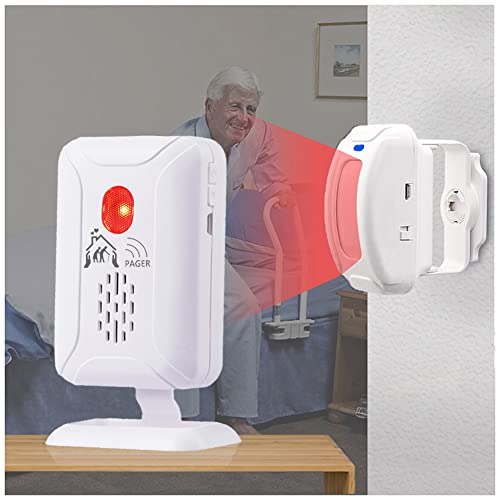
- Motion-sensor alerts for caregiver notification
- Five volume levels for flexible use
- Wireless setup for bedrooms and nearby bathroom paths
Best For: Caregivers who need an early-warning alarm for nighttime movement and bathroom trips.
Best for Doorway Warnings
Ideal Security Pressure Floor Mat Alarm

- Pressure mat triggers an audible warning when stepped on
- Wired alarm and chime suit doorway and bathroom placement
- Simple anti-wandering option for caregivers
Best For: Caregivers needing a straightforward mat alarm for bathroom entries and exit routes.
Best for Silent Early Warning
Lunderg Wireless Bed Alarm System

- Alerts caregivers before the person gets up
- No loud in-room alarm to reduce startling
- Wireless setup works well for nighttime monitoring
Best For: Caregivers who want a quieter early-warning system for dementia-related nighttime movement.
Best Budget Exit Alarm
Floor Mat Exit Alarm for Seniors

- 24" x 48" pressure mat for doorway, bedside, or bathroom entry monitoring
- Audible alarm with adjustable volume, tone options, and visual alerts
- Economy system includes both the mat and monitor
Best For: Caregivers seeking an affordable floor mat alarm for wandering or fall-risk monitoring near bathrooms and doors.
Best for Continuous Monitoring
Secure Safety Solutions 24x36 Floor Mat Bed Alarm

- Large 24" x 36" reversible pressure mat
- 120 dB alert with adjustable volume and flashing light
- Useful for wandering and fall prevention at bedside or doorway
Best For: Caregivers needing a dependable floor-mat alert system for dementia patients who may get up unexpectedly.
Best for Doorway Alerts – Smart Caregiver Floor Mat Alarm and Pager System
For families comparing bathroom floor alarms for dementia patients, this Smart Caregiver mat-based system is a simple way to catch movement the moment a foot hits the floor. The large 24in x 48in sensor mat pairs with a wireless pager, making it useful in bedrooms, hallways, or just outside the bathroom where quick alerts matter.
Best For: Caregivers who want a pressure-mat alert system that can be placed where nighttime wandering or bathroom trips usually begin.
Pros:
- Large floor mat provides a clear step-triggered alert zone
- Wireless pager lets caregivers receive alerts without staying in the same room
- Simple setup for monitoring common fall-risk areas
- Durable mat size is practical for bedside or bathroom entry placement
Cons:
- Only alerts when weight is placed on the mat, so placement is critical
- Best for entry/exit monitoring rather than full-room coverage
- May be less helpful if the person avoids stepping directly on the sensor
Overall, this is a straightforward choice if you want bathroom floor alarms for dementia patients that focus on fast, localized alerts instead of a more complex monitoring system. It works best when you know the high-traffic spot and want a dependable warning before a wandering or bathroom-related fall risk becomes a bigger problem.
Best for Wander Alerts – CallToU Bed Alarm with Vibrating Pager
If you need bathroom floor alarms for dementia patients that can warn you before someone fully stands up, this CallToU system is built for early motion detection and flexible alerting. The floor sensor sits beside the bed and picks up feet touching down, while the portable receiver can use sound, vibration, or silent mode to fit day and night care.
Best For: Caregivers who want an early bed-exit alert for a loved one who may wander at night, especially in home or hospital settings.
Pros:
- Detects movement before the person is fully standing, giving caregivers a helpful head start.
- Receiver offers 5 volume levels, 18 ringtones, plus vibration or silent mode.
- Portable receiver and replaceable AAA batteries make it easier to move around the home.
- 360° sensor rotation helps reduce false alarms from restless sleep or incontinence.
Cons:
- Works best as a bed-exit alert, not a full room-wide monitoring system.
- Requires battery management for the sensor and charging for the receiver.
- May be more than you need if you only want a simple floor mat alarm.
For families comparing bathroom floor alarms for dementia patients, this model stands out more for early warning and customizable alerts than for a traditional mat-style setup. It’s a practical choice if you want a portable caregiver alarm that can reduce overnight surprises without constant noise.
Best for Hands-Free Fall Alerts – Smart Caregiver Cordless Floor Monitor
If you’re comparing bathroom floor alarms for dementia patients, this cordless floor mat monitor is designed to alert caregivers when someone steps on the mat, helping you respond quickly without adding a wearable device. The large 24 in x 48 in mat can be placed beside a bed, doorway, or bathroom entrance for a simple, low-profile monitoring setup.
Best For: Caregivers who want a contact mat alert system for monitoring movement near bathrooms, beds, or exits.
Pros:
- Cordless monitor setup keeps installation simple and reduces trip hazards
- Large floor mat provides a clear alert zone for foot traffic
- Useful for non-wearable monitoring when a dementia patient may not keep a device on
Cons:
- Requires the person to step on the mat to trigger an alert
- Best suited to specific placement areas rather than full-room coverage
Overall, this is a practical choice if you want bathroom floor alarms for dementia patients that focus on simple, step-triggered alerts instead of more complex systems. It works best when placed where wandering or unsupervised bathroom trips are most likely to happen.
Best for Early Fall Alerts – Wireless Bed Alarm with Pager
If you’re comparing bathroom floor alarms for dementia patients, this wireless bed alarm is a practical option when you want advance notice before someone gets up and starts moving. The under-mattress sensor, early and exit alert modes, and long wireless range make it better suited to fall prevention than a basic door chime or motion-only alarm.
Best For: Families, caregivers, and facilities that want an under-mattress alert system for dementia or mobility support, especially where early warning matters.
Pros:
- Early alarm mode can alert as soon as the user sits up
- 400-foot wireless range works well across rooms or floors
- Pager offers sound, vibration, and LED alert options
- Replaceable battery design can lower long-term replacement costs
Cons:
- Works best with an 8- to 12-inch mattress
- Not ideal for extra-thick mattresses over 16 inches
For buyers comparing bathroom floor alarms for dementia patients, this model stands out more as a bed-exit warning system than a floor sensor, but that early notification can still be very helpful for preventing risky nighttime trips. It’s a strong fit if you want simple setup, discreet placement, and a pager that can reach another room.
Best for Cordless Room-to-Room Coverage – Smart Caregiver Cordless Monitor with 24×36 Floor Mat
If you want a simple alert setup for bathroom floor alarms for dementia patients, this Smart Caregiver bundle pairs a cordless monitor with a 24 x 36-inch floor mat that triggers when stepped on. It’s a practical option for reducing unsupervised bathroom trips, and the cordless design makes placement easier in tight hallways or beside a toilet.
Best For: Caregivers who need a portable, no-fuss floor alarm for monitoring bathroom movement and nearby entry points.
Pros:
- Cordless monitor and cordless mat make setup more flexible
- 24 x 36-inch mat gives a larger detection area than many compact pads
- Adjustable volume with low-battery indicator and chime/off option
- Can run on batteries or AC adapter for different placement needs
Cons:
- Batteries and AC adapter are not included
- Mat size may be too large for very small bathrooms
- Not a full room alert system, so placement matters
For caregivers comparing bathroom floor alarms for dementia patients, this model stands out for its cordless convenience and larger mat surface, but it works best when you place it where foot traffic is most likely to happen. If you need a straightforward alert mat rather than a more advanced monitoring system, it’s a solid, low-complexity choice.
Best for Motion-Triggered Coverage – Upgraded Bed Sensor Alarm for Elderly
If you’re comparing bathroom floor alarms for dementia patients, this bed sensor alarm is a practical option for catching movement before a fall risk escalates. It’s designed to alert a caregiver when the user gets up or moves, making it useful for nighttime wandering, bedside monitoring, and early warning near the bathroom.
Best For: Caregivers who want a wireless motion alarm that can help monitor elderly adults with dementia and reduce unobserved nighttime movement.
Pros:
- Motion-sensor alerting helps notify caregivers as soon as movement is detected
- Five volume levels make it easier to adjust for different home layouts
- Wireless setup is convenient for bedrooms, hallways, and nearby bathroom routes
Cons:
- It’s a bed sensor alarm, not a dedicated in-bathroom floor mat system
- Effectiveness depends on placement and how consistently the user triggers movement
For households that want an early alert system rather than a true floor-mounted alarm, this is a flexible safety aid that can complement bathroom floor alarms for dementia patients and improve overnight supervision.
Best for Doorway Warnings – Ideal Security Pressure Floor Mat Alarm
If you’re comparing bathroom floor alarms for dementia patients, this pressure mat system is a simple way to detect foot traffic and trigger an alert before wandering becomes a bigger problem. It uses a wired alarm and chime, so it can work well near a bathroom doorway, bedside, or any other high-risk exit path where a clear audible warning is useful.
Best For: Caregivers who want a straightforward floor-mat alert for bathroom entries, doorways, or other monitored walk paths.
Pros:
- Pressure mat design detects when someone steps on it
- Wired alarm and chime provide an immediate audible alert
- Useful for anti-wandering setups near bathrooms and exits
- Can also double as a welcome mat or pet alert mat
Cons:
- Wired setup is less flexible than fully wireless options
- Floor mat placement may need occasional adjustment
- More of a doorway alert than a dedicated medical monitoring system
As a practical pick, this is a good fit when you want a low-tech alert layer rather than a complex system. For bathroom floor alarms for dementia patients, its biggest strength is dependable pressure-based detection where footstep monitoring matters most.
Best for Silent Early Warning – Lunderg Wireless Bed Alarm System
If you’re comparing bathroom floor alarms for dementia patients, the Lunderg Wireless Early Alert Bed Alarm System is a practical option when you want to know before someone gets up, not after they’re already walking. It uses a caregiver receiver instead of a loud in-room alarm, which helps avoid startling a loved one while still giving you time to respond.
Best For: Caregivers who want a quieter early-warning system for nighttime wandering, bedside movement, and fall prevention.
Pros:
- Alerts caregivers before the person fully stands up, giving more reaction time.
- No loud alarm in the room, which is gentler for people with dementia.
- Wireless design is easier to place and move around the home.
- Useful for overnight monitoring near the bed and path to the bathroom.
Cons:
- It is a bed alarm, so it may not replace dedicated floor-mat alerts.
- Works best when caregivers are close enough to hear the receiver.
For families focused on bathroom floor alarms for dementia patients, this Lunderg system stands out as a calmer, earlier alert solution rather than a hard-trigger floor sensor. That makes it a strong fit if the goal is to prevent unsafe nighttime trips without adding confusion or panic.
Best Budget Exit Alarm – Floor Mat Exit Alarm for Seniors
Floor Mat Exit Alarm for Seniors Fall Prevention & Anti-Wandering - Economy System
Check Price On AmazonIf you want a simple alert system for bathroom floor alarms for dementia patients, this economy mat-and-monitor setup gives caregivers an audible warning when someone steps onto the pressure mat. It’s a practical choice for doorways, bedsides, and bathroom entrances where early notice matters more than extra smart features.
Best For: Caregivers who need an affordable, no-frills floor mat alarm to help monitor wandering or fall-risk movement near bathrooms, beds, or doors.
Pros:
- Large 24″ x 48″ pressure mat helps catch movement as someone steps through a key area.
- Audible alarm includes adjustable volume, tone options, and visual alert indicators.
- Economy system includes the monitor and mat, making it easy to get started.
- Battery or AC-capable monitor features add flexibility for placement.
Cons:
- Batteries are required for use and are not included.
- It does not work with AC adapters, despite offering battery/AC power language in the features.
- Simple design lacks advanced wireless or app-based monitoring.
For caregivers comparing bathroom floor alarms for dementia patients, this model stands out as an affordable, straightforward alert option rather than a premium monitoring system. It’s best when you want dependable step-on detection and an easy audible response without unnecessary complexity.
Best for Continuous Monitoring – Secure Safety Solutions 24×36 Floor Mat Bed Alarm
If you’re comparing bathroom floor alarms for dementia patients, this floor-mat system is a practical choice for monitoring movement at a doorway, bedside, chair, or wheelchair. The pressure sensor alerts caregivers as soon as the mat is stepped on, making it useful for wandering prevention and fall-risk monitoring in home or facility settings.
Best For: Caregivers who want a reliable floor-mat alarm for dementia or Alzheimer’s patients who may get up unassisted and need quick alerting.
Pros:
- Large 24″ x 36″ reversible mat gives a generous detection area
- 120 dB monitor with adjustable volume, tone, and flashing light
- Slip-resistant, liquid-resistant, latex-free mat designed for long-term use
- Includes batteries and mounting hardware for immediate setup
Cons:
- Not a true waterproof bathroom-specific alarm system
- Requires placement and cord routing to avoid tripping hazards
- May be louder than needed in quieter home environments
Overall, this is a strong fit if you need dependable alerting rather than a specialized bathroom unit. For buyers seeking bathroom floor alarms for dementia patients, its large mat and fast caregiver notification make it a versatile safety option near exits and high-risk areas.
How We Picked These Bathroom Floor Alarms for Dementia Patients
We prioritized products that are practical for home caregiving: fast activation, clear caregiver notification, reliable floor or pressure sensing, and straightforward installation. We also considered alert options such as pager, vibration, and volume control, since the best choice depends on whether you want a loud alarm, a discreet notice, or both.
Quick Comparison
At a glance, floor-mat systems are best for detecting footsteps near a doorway or bedside path, while bed sensors work better for early exit warning before a person stands up. Wireless systems are usually easier to place and relocate, but wired models can be a good fit if you want a simple, low-cost setup with no charging concerns.
Key Buying Factors for Bathroom Floor Alarms for Dementia Patients
Detection Point
Decide where you need the alert most. A bathroom entry mat is useful when wandering starts at the doorway, while a bedside mat or bed pad may give you more advance notice before the person heads to the bathroom.
Alert Type
Look for a system that notifies the caregiver without startling the person who is being monitored. Pager-based alerts, vibration, and silent mode can be especially helpful in shared living spaces or overnight care.
Range and Reliability
Wireless convenience matters only if the signal is dependable across walls and doors. Check the stated range and whether the unit is designed to avoid missed alerts during normal household use.
Size, Placement, and Safety
Choose a mat size that matches the area you need to monitor. For bathroom use, a mat should sit flat and stay in place to reduce tripping risk. Low-profile designs and durable surfaces are especially important in busy hallways and doorways.
Ease of Use
Caregivers often need a system that is simple to set up, easy to test, and quick to reset after an alert. Battery life, indicator lights, and volume controls can make day-to-day use much easier.
Who Should Buy Which Bathroom Floor Alarms for Dementia Patients?
If you need the most straightforward doorway monitoring, choose a floor-mat alarm with a wireless pager. If nighttime wandering is the main concern, an early-exit bed alarm may be the better fit. If you want a budget-friendly solution for a single high-traffic spot, a basic wired mat alarm can still provide effective coverage. For most households, the best Bathroom Floor Alarms for Dementia Patients are the ones that match the person’s routine, the caregiver’s response style, and the layout of the home.