Choosing the right bedroom monitoring sensors for elderly care can make overnight support safer, faster, and less stressful for everyone involved.
In this roundup, we focus on systems that alert caregivers before a bed exit becomes a fall risk, with options for different room sizes, care settings, and monitoring needs.
Best 10 Bedroom Monitoring Sensors for Elderly Picks for 2026
Quiet Early-Alert System
Early warning without a loud bedside alarm

- Wireless pager alerts the caregiver before the person gets fully out of bed.
- No Wi‑Fi, app, or tools needed for setup.
- Pager offers adjustable volume or vibration and up to 400 ft. range.
Best For: Caregivers who want a discreet wireless bed alert for dementia or fall prevention.
Central Monitoring Hub
Central control for up to 40 sensors

- Tracks up to 40 wireless sensor components.
- Large display shows which sensor is alerting.
- No monthly fees and up to 300 ft. range.
Best For: Larger homes, assisted living, or caregivers building a multi-sensor system.
Non-Contact Motion Alert Kit
Fast, private alerts with sensor ID display

- Infrared motion sensing helps reduce false alarms from shifting or incontinence.
- Pager display shows the exact sensor ID that triggered.
- 1000 ft. range with vibration, chimes, and LED alert options.
Best For: Caregivers who want private, non-contact monitoring with clear alert location info.
Traditional Bed Exit Alarm
Simple pressure-pad monitoring for nighttime safety
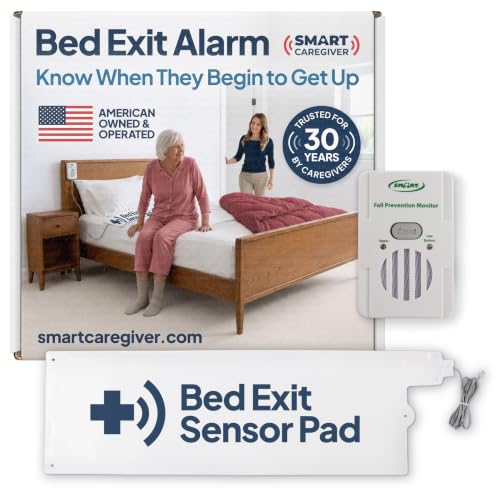
- Pressure pad triggers when weight is removed from the bed.
- Incontinence-resistant 10" x 30" vinyl pad is easy to clean.
- Optional wireless add-on kit is available separately.
Best For: Caregivers who want a basic, durable bed-exit alarm with simple operation.
Bedside Exit Alert
Bed Alarm for Elderly Care with 2 Motion Sensors

- 2 motion sensors plus 1 plug-in receiver
- Chime and flashing light alerts
- No WiFi, app, or wearable needed
Best For: A simple bedside or doorway alert for one main area
Portable Pager Monitor
Smart Caregiver Wireless Motion Sensor Alarm System

- Includes a caregiver pager and mountable motion sensor
- Monitors bed or door movement
- Battery powered and portable
Best For: A pager-style alert system for remote bedside or doorway monitoring
Whole-Home Dual Alert
Bed Alarm for Elderly Care with 2 Sensors

- 2 sensors and 2 plug-in receivers
- Chime and flashing light alerts in multiple rooms
- No WiFi, app, or wearable needed
Best For: Larger homes or caregivers who need alerts in more than one room
Bed Exit Alert
Upgraded Wireless Bed Sensor Alarm
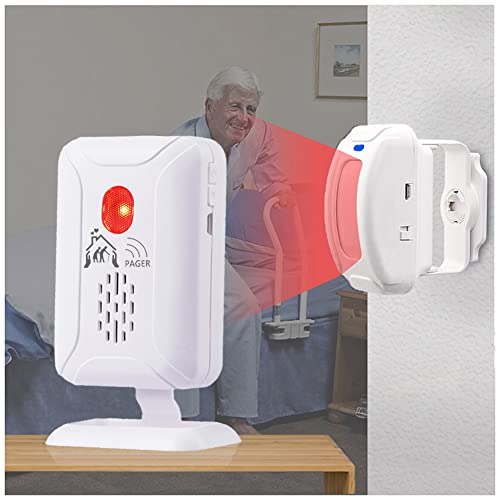
- Under-bed or doorway placement for exit monitoring
- Silent alert in the patient’s room
- LED and sound reminders with wireless receiver
Best For: silent caregiver alerts for bed exits and doorway monitoring
Multi-Point Monitor
Wireless Bed Alarm with 2 Motion Sensors

- Two motion sensors for broader coverage
- Silent in-room sensor with portable pager
- DINGDONG chime or ALARM siren modes
Best For: multi-area indoor monitoring with two sensor points
Simple Bed Exit Monitor

- Single-sensor setup for basic monitoring
- Silent alert in the resident’s room
- Portable pager with chime or siren modes
Best For: simple home monitoring with one alert point
Quiet Early-Alert System – Early warning without a loud bedside alarm
For bedroom monitoring sensors for elderly care, this Lunderg system is built to alert the caregiver before a loved one fully gets out of bed. It uses a wireless sensor pad and handheld pager, so there’s no Wi‑Fi, app, or bedside blast to manage. The setup is simple, and the pad is designed for long-term, low-fuss daily use.
Best For: Caregivers who want a quiet, wireless early-alert bed monitoring setup that preserves dignity.
Pros:
- Wireless alerts go to a pager you carry instead of sounding loudly in the room.
- Patented PreRise pad placement is designed to alert before the person is fully out of bed.
- No Wi‑Fi, app, or tools required for setup.
- Includes adjustable pager volume or vibration only, plus up to 400 ft. range.
Cons:
- Requires carrying the pager, so the caregiver needs to keep it nearby.
- Works as a bed alert system rather than a multi-room sensor hub.
- May be more specialized than simple in-room alarm options.
This is a strong pick if you want a more discreet approach to nighttime monitoring and value a wireless alert that aims to reduce disturbance. The included pager, long pad life, and simple setup make it practical for everyday caregiving.
Central Monitoring Hub – Central control for up to 40 sensors
If you need bedroom monitoring sensors for elderly care across multiple rooms, this Smart Caregiver unit works as a central alert point for a larger wireless system. It supports up to 40 sensors, shows which sensor is alerting, and provides audible and visual notifications. The compact unit is designed for home use, assisted living, or staffed care settings.
Best For: Homes or care settings that need one central monitor for many wireless sensors.
Pros:
- Supports up to 40 wireless sensor components for expanded coverage.
- Large display helps identify which sensor triggered the alert.
- 300 ft. range suits larger homes or multi-room environments.
- No monthly fees or subscription costs.
Cons:
- Sensors and pagers are sold separately.
- By itself, it is a monitor hub rather than a complete sensor kit.
- Best value depends on building a compatible wireless system around it.
This is a practical choice when one caregiver needs to oversee several rooms or residents from a single station. It’s especially useful if you want a scalable system without recurring fees.
Non-Contact Motion Alert Kit – Fast, private alerts with sensor ID display
For bedroom monitoring sensors for elderly care, this PILSAMAS motion-sensor set uses infrared detection to flag movement without relying on a pressure pad. That can help reduce false alarms from shifting or incontinence, and the pager shows the exact sensor ID so you know where attention is needed. The wireless, no-subscription design is aimed at private, whole-home monitoring.
Best For: Caregivers who want non-contact motion alerts with clear sensor identification.
Pros:
- Infrared motion sensing avoids pressure-pad triggers from shifting or incontinence.
- Pager display shows the triggering sensor ID for quicker response.
- Offers 5 alert modes, 4 volume levels, vibration, and LED flashes.
- 1000 ft. range supports wider home and yard coverage.
Cons:
- Motion sensors must be positioned carefully to reduce pet triggers.
- It is not a contact-style bed pad system.
- Works best when installed at the recommended height range.
This set makes sense if you prefer a non-contact approach and want alerts that are easy to identify at a glance. The long range and expandable design make it suitable for broader monitoring needs.
Traditional Bed Exit Alarm – Simple pressure-pad monitoring for nighttime safety
This Smart Caregiver system is a straightforward option for bedroom monitoring sensors for elderly adults who need bed-exit alerts. The pressure-sensing pad triggers when weight is removed, and the monitor can sound an in-room alarm unless you add the separate wireless kit. It’s a simple, practical setup for caregivers who want a traditional bed alarm with basic safety features.
Best For: Caregivers who want a basic bed-exit alarm with a durable sensor pad.
Pros:
- Pressure pad alarms when the person gets up from bed.
- Optional wireless add-on kit is available if you want alerts sent to the caregiver.
- 10″ x 30″ vinyl pad is incontinence resistant and easy to clean.
- Includes low battery and sensor status lights for easier monitoring.
Cons:
- Default operation includes an in-room alarm, which may be startling.
- Wireless caregiver alert requires a separate add-on kit.
- Only two volume settings are offered.
This is a dependable, no-frills bed alarm if you want a familiar pressure-pad setup and clear alert behavior. It’s a good fit for straightforward fall-prevention needs where simplicity matters most.
Bedside Exit Alert – Bed Alarm for Elderly Care with 2 Motion Sensors
For bedroom monitoring sensors for elderly care, this CallToU set offers a straightforward way to spot when someone gets up at night or moves toward a doorway. It uses two motion sensors and a plug-in receiver with chime and flashing light, so you can monitor a bedside, hallway, or entry path without WiFi, an app, or a wearable device.
Best For: Caregivers who want a simple bedside or doorway motion alert in one main area.
Pros:
- Includes 2 motion sensors plus 1 plug-in receiver for one key monitoring area
- Receiver provides both audible chime and flashing light alerts
- No WiFi, app, monthly fees, or wearable device needed
- Suitable for bedside, bedroom doorway, hallway, or home entry monitoring
Cons:
- Designed for a single main monitoring area rather than whole-home coverage
- Placement matters to avoid false alerts from curtains, fans, sunlight, pets, or busy walkways
This is a practical fit if you want a low-tech alert system focused on one important movement point. The 500-foot maximum range and plug-in receiver make it easy to keep alerts where they matter most.
Portable Pager Monitor – Smart Caregiver Wireless Motion Sensor Alarm System
This Smart Caregiver system is a practical option for bedroom monitoring sensors for elderly users when you want a wireless motion alert that moves with the caregiver. The mountable detector can monitor bed or door movement and send alerts to the pager, helping reduce alarm noise at bedside while keeping watch over wandering or fall-risk movement.
Best For: Caregivers who want a portable pager-based motion alarm for bed or door monitoring.
Pros:
- Wireless motion sensor alarm with a caregiver pager included
- Mountable detector works for bed or door movement monitoring
- Helps remove alarm noise from the bedside
- Battery powered and designed for remote caregiver awareness
Cons:
- Range is listed at up to 300 feet, so it may not suit larger homes
- Batteries are sold separately for the pager and motion sensor
- This is a standalone system and cannot be used with other Smart Caregiver products
If you want a simple monitored signal rather than a receiver that stays in one room, this pager system keeps the setup focused and mobile. It is best when you need basic motion awareness for bed or doorway movement without added app features.
Whole-Home Dual Alert – Bed Alarm for Elderly Care with 2 Sensors
For bedroom monitoring sensors for elderly care, this two-sensor, two-receiver set is built for broader awareness than a single-room alarm. You can place the sensors near a bedside and doorway, then keep plug-in receivers in different rooms so movement alerts are easier to notice around the home without WiFi, an app, wearable device, or hardwiring.
Best For: Larger homes or multiple caregivers who want alerts in more than one room.
Pros:
- Includes 2 motion sensors and 2 plug-in receivers
- Receivers provide both chime and flashing light alerts
- Useful for bedside, hallway, doorway, upstairs, or downstairs monitoring
- No WiFi, app, monthly fees, or wearable device required
Cons:
- Still requires careful placement to reduce false alerts from pets, fans, sunlight, curtains, or busy walkways
- Best suited to motion alert monitoring rather than full medical alert functionality
This set makes sense if you want alerts to travel with the house rather than stay in one spot. The dual receiver design is the main advantage for caregivers who need to notice motion from multiple rooms.
Bed Exit Alert – Upgraded Wireless Bed Sensor Alarm
If you’re comparing bedroom monitoring sensors for elderly loved ones, this wireless bed alarm is built to flag bed exits and room departures without sounding in the patient’s room. The floor sensor can be placed under the bed to detect when a foot is about to touch the ground, or near a doorway to monitor leaving the room. It’s designed for caregiver awareness with a receiver that can be heard and seen from elsewhere in the home.
Best For: Caregivers who want a silent-in-room alert for bed exits or doorway monitoring.
Pros:
- Motion sensor can be placed under the bed to detect when a foot reaches the floor.
- Can also be positioned at a door to monitor room exits.
- Wireless receiver works up to 918 ft in open areas.
- Dual reminders with LED light and sound, plus battery or Micro USB power options.
Cons:
- Sensor enters a self-test mode for about 20 seconds after powering on.
- Placement and sensing direction should be tested before fixing in place.
- Only one motion sensor and one caregiver pager are included.
Overall, this is a practical bed-exit alert for home monitoring when you want the caregiver alerted early without startling the person in bed. Its flexibility under the bed or at the doorway makes it a useful fit for simple fall-prevention setups.
Multi-Point Monitor – Wireless Bed Alarm with 2 Motion Sensors
For bedroom monitoring sensors for elderly care, this kit stands out because it includes two motion sensors and one portable pager for broader coverage. You can use it in the bedroom, by the bedside floor, at a doorway, or on other indoor surfaces, and the silent sensor stays out of the resident’s room while the caregiver receives the alert. The movable stand and included mounting accessories add flexibility for home or care settings.
Best For: Caregivers who need two sensor points for wider indoor monitoring.
Pros:
- Includes two wireless motion sensors for multiple monitoring areas.
- Up to 500 feet operating range in open areas.
- Silent sensor keeps alerts out of the resident’s room.
- Pager offers both DINGDONG chime and ALARM siren modes.
Cons:
- Uses 8 AA batteries total, which is more than the single-sensor version.
- Mounting options may take some setup to position correctly.
- Designed as a motion sensor system, not a bed pad style alarm.
This is a strong choice if you want one system to cover more than one area, such as a bed exit zone and a doorway. The second sensor gives it extra versatility for fall prevention and general elder monitoring.
Simple Bed Exit Monitor – Wireless Bed Alarm with Pager
This wireless option is a straightforward pick for bedroom monitoring sensors for elderly care when you only need one sensor point. It can be used on the bedside floor, at a doorway, or on other horizontal or vertical surfaces, and the motion sensor stays silent in the resident’s room while the caregiver pager handles the alert. The compact pager can be carried in a pocket or clipped to a belt for day-to-day use.
Best For: Families wanting a basic one-sensor alert system for home use.
Pros:
- Works in the bedroom, doorway, bedside floor, or other indoor spots.
- Wireless sensor is silent in the patient’s room.
- Pager is portable and can be clipped to a belt or carried in a pocket.
- Offers both DINGDONG chime and ALARM siren alert modes.
Cons:
- Includes only one motion sensor and one pager.
- Uses 5 AA batteries, so battery management is still required.
- Best suited to simple setups rather than multi-zone monitoring.
For a no-frills bed exit or doorway alert, this model covers the essentials without extra complexity. It’s a practical fit if you want a simple monitor for elderly safety at home.
How We Picked the Best Bedroom Monitoring Sensors for Elderly
We prioritized Bedroom Monitoring Sensors for Elderly users that are practical for real-world caregiving: dependable alerts, simple setup, and a clear way to notify a caregiver without disturbing the sleeper. We also looked for options with useful range, expandable systems, and enough flexibility for dementia care, bedside monitoring, or multi-room coverage.
Quick Comparison
At a glance, the biggest differences come down to alert style and system scale. Some models use a weight-sensing bed pad for direct bed-exit detection, while others rely on motion sensors to watch for movement near the bed, doorway, or hallway. A few systems are built around a central receiver or pager, which is ideal if you want alerts in another room or to support several sensors at once.
Key Buying Factors for Bedroom Monitoring Sensors for Elderly
Alert Type
Choose between bed pads, motion sensors, or hybrid setups. Bed pads are best when you want to detect when someone gets out of bed. Motion sensors can cover more area and may work better for wandering prevention or doorway monitoring.
Alarm Delivery
Look for a quiet, caregiver-focused alert instead of a loud in-room alarm. Many families prefer a pager, central monitor, or receiver that can be kept within reach overnight.
Range and Coverage
Range matters if the caregiver sleeps in another room or if you want to monitor a bedroom, hallway, or bathroom route. Larger homes and memory-care situations benefit from systems with stronger wireless range or multiple sensors.
Ease of Setup
The best Bedroom Monitoring Sensors for Elderly care should be straightforward to install, replace, and test. Simpler systems are usually better for home caregivers who need reliable protection without a complicated app or learning curve.
Volume and Sensitivity Options
Adjustable volume, alert modes, and sensor sensitivity can help reduce nuisance alarms while keeping the system responsive. This is especially useful for restless sleepers or shared bedrooms.
Who Should Buy Which Bedroom Monitoring Sensors for Elderly?
If you want direct bed-exit detection, choose a bed pad-based system. If wandering or doorway movement is a concern, motion-sensor kits are often the better fit. Caregivers covering a larger home or more than one person should look for expandable systems with multiple sensors and receivers. For quieter, overnight peace of mind, prioritize systems that notify the caregiver without startling the senior.
For most buyers, the best choice is the system that matches the person’s mobility, sleep habits, and daily care routine—not just the longest range or highest sensor count.