Choosing a chair alarm for elderly care can make day-to-day supervision safer and less stressful. The right system helps caregivers respond quickly when someone tries to stand, transfer, or wander.
Below, we focus on practical differences that matter most: alert style, sensor reliability, wireless range, comfort, and ease of use for home or facility settings.
Best 10 Chair Alarm for Elderly Picks for 2026
Best for Early Bed + Chair Monitoring
Lunderg Wireless Early Alert Bed & Chair Alarm Set

- Early-alert bed pad warns before the person gets fully out of bed.
- Chair sensor triggers immediately when they stand up.
- Wireless pager includes volume control, vibration, and up to 400 ft. range.
Best For: Dementia care and fall prevention when you want one simple bed-and-chair alert system.
Best for Easy Setup
Patient Aid Chair Alarm with Motion Pad

- Quick setup with flexible mounting options
- Loud alarm, chime, or music sound settings
- Slim, wipe-clean pad for everyday use
Best For: Caregivers who need a simple, dependable chair-exit alert for elderly users.
Best for Quiet Alerts
Lunderg Wireless Chair Alarm System

- No in-chair alarm helps reduce startle risk
- Wireless pager with volume and vibration control
- Easy setup; works on chairs, wheelchairs, and recliners
Best For: Caregivers who want a calm, wireless alert system for elderly users at risk of standing up unsafely.
Best for Adjustable Alerts
Patient Aid Chair Alarm with Motion Sensor Pad

- 10" x 15" sensor pad detects attempts to stand
- Mounts on chair rails, walls, or flat surfaces
- Alarm or music chimes with 80dB or 90dB volume
Best For: Caregivers who want a configurable chair alarm with multiple mounting methods and louder alert choices.
Best Weight-Sensing Pick
Smart Caregiver Weight-Sensing Chair Pad Monitor
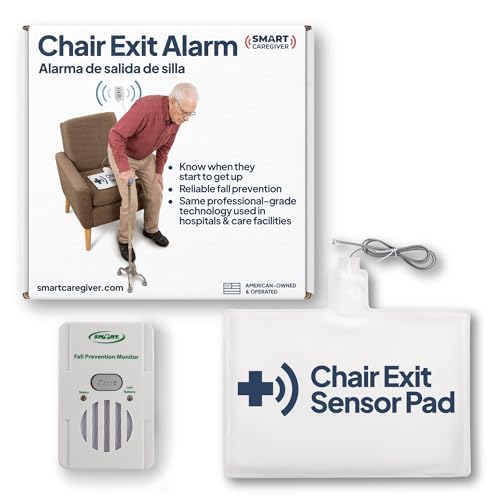
- Alerts caregiver when the user gets up from the chair.
- Adjustable volume plus reset, low-battery, and pad-lost alerts.
- Soft, wipe-clean pad with a 1-year warranty.
Best For: Caregivers who need a simple, dependable chair-exit alert with useful safety features.
Best for Wireless Range
Briidea Wireless Chair Alarm for Elderly

- 600ft-class wireless monitoring with flexible receiver placement.
- Three alarm modes for quiet or noisy caregiving environments.
- Waterproof PVC pad is easy to clean and supports multiple pads.
Best For: Caregivers who need a flexible wireless alert system for chairs, beds, or wheelchairs.
Best for Audible + Visual Alerts

- 80 dB alarm with flashing LED light
- Waterproof, easy-to-clean PVC seat pad
- Flexible mounting options for quick setup
Best For: Caregivers who want a simple wired alert system for seniors and wheelchair users.
Best for Early Stand Alerts
Chair Sensor Pad & Pager for Dementia Care
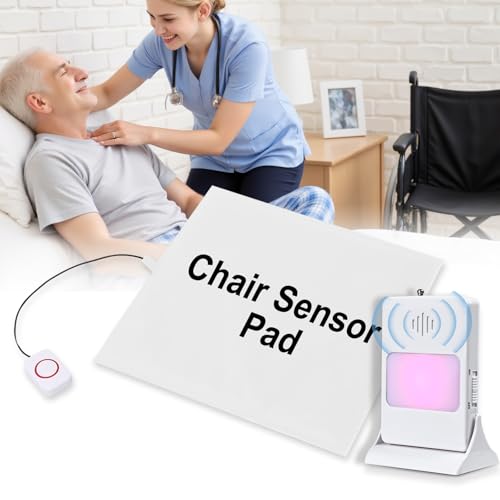
- Loud chime and flashing LED alerts
- Wireless pad works on chairs, recliners, and wheelchairs
- Wipe-clean, water-resistant sensor pad
Best For: Caregivers who need a simple chair alarm for elderly fall prevention with fast alerts and no Wi-Fi setup.
Best for Flexible Monitoring
- Wireless range up to 600 feet
- Three alarm modes for quieter or louder spaces
- Supports up to three sensor pads
Best For: Caregivers who need a flexible chair alarm for elderly loved ones across multiple seats or rooms.
Best for Loud Alerts
Secure Safety Solutions Chair Exit Alarm

- 80 dB alarm plus flashing light for fast alerts
- Automatic reset simplifies caregiver monitoring
- Includes pad, monitor, holder, and battery
Best For: Caregivers who need a loud, ready-to-use chair or wheelchair exit alarm.
Best for Early Bed + Chair Monitoring – Lunderg Wireless Early Alert Bed & Chair Alarm Set
If you want a chair alarm for elderly care that alerts you before your loved one actually gets up, this Lunderg set is built around early warning and caregiver convenience. It pairs a bed pad and chair pad to one wireless pager, so you can monitor both common fall-risk spots without apps, Wi‑Fi, or a noisy in-room alarm.
Best For: Dementia care, nighttime bed-exit monitoring, and day-to-day chair monitoring when you want one simple wireless system with early alerts.
Pros:
- Early-alert bed pad is positioned at hip level to warn before the user is fully out of bed.
- Chair sensor alerts as soon as the person stands up, giving you faster response time.
- Wireless pager has adjustable volume, vibration mode, and up to 400 ft. range.
- No Wi‑Fi, app, or tools required; setup is straightforward and caregiver-friendly.
Cons:
- It only covers bed and chair monitoring, not full-room or motion tracking.
- Requires carrying the pager, so it works best when a caregiver stays nearby.
- More expensive than basic single-pad alarm options.
As a chair alarm for elderly users who need quieter, dignity-preserving fall prevention, this Lunderg set stands out for combining early bed alerts with immediate chair exit detection. It’s a practical pick if you want a reliable, no-fuss system that covers both sitting and sleeping routines.
Best for Easy Setup – Patient Aid Chair Alarm with Motion Pad
If you want a practical chair alarm for elderly loved ones who may try to stand without warning, this Patient Aid model keeps things straightforward: a wired alarm unit, a slim pressure pad, and multiple mounting options. It’s built for quick placement on chairs, with loud alert settings and simple controls that make it easy to use in home care or assisted living settings.
Best For: Caregivers who want a simple, flexible chair alarm for elderly fall and wandering prevention without a complicated setup.
Pros:
- Multiple mounting options: chair rail, wall, or flat surface.
- Loud alert choices with ring chimes, alarm, or music modes.
- Durable, easy-to-clean pad is tear- and water-resistant.
- Includes AC adapter and 9V battery for flexible power use.
Cons:
- Wired design is less convenient than wireless alarms.
- Not suitable for patients with pacemakers or defibrillators.
- Best used as a monitoring aid, not a full safety solution.
Overall, this is a solid chair alarm for elderly users when you need dependable seat-exit alerts and an installation process that doesn’t take much time. The loud sound options and versatile mounting make it especially useful for caregivers balancing ease of use with everyday fall prevention.
Best for Quiet Alerts – Lunderg Wireless Chair Alarm System
If you want a chair alarm for elderly loved ones that helps prevent falls without startling them, the Lunderg Wireless Chair Alarm System is a strong fit. The chair sensor sends alerts to a pager you carry, so your loved one can stand up calmly while you stay informed right away.
Best For: Caregivers who want a wireless, easy-to-set-up chair alarm for elderly family members in wheelchairs, recliners, or regular chairs.
Pros:
- No in-chair alarm, which helps avoid panic and sudden movement.
- Wireless pager alerts with adjustable volume or vibration mode.
- Works on chairs, wheelchairs, lift chairs, and recliners.
- No Wi-Fi, app, or tools required for setup.
Cons:
- Requires the caregiver to carry the pager to receive alerts.
- May be more than needed if you only want a basic alarm.
For caregivers who prioritize calm, fast notifications over loud bedside-style alerts, this chair alarm for elderly users offers a thoughtful balance of safety and convenience. Its wireless design makes it especially practical for home care and recovery settings.
Best for Adjustable Alerts – Patient Aid Chair Alarm with Motion Sensor Pad
If you need a practical chair alarm for elderly monitoring, this Patient Aid setup focuses on early stand-up alerts, flexible mounting, and clear sound options. The 10″ x 15″ sensor pad is designed for chair use, while the wired alarm unit can be placed out of reach to reduce tampering.
Best For: Caregivers who want a configurable chair alarm with multiple mounting methods and louder alert choices.
Pros:
- Motion sensor pad alerts when the user tries to stand up
- Multiple mounting options: chair rail, wall, or flat surface
- Selectable chimes and volume levels up to 90dB
- Tear- and water-resistant, latex-free pad for easier cleaning
Cons:
- Requires setup and placement to work effectively
- Not suitable for patients with pacemakers or defibrillators
Overall, this chair alarm for elderly users is a solid pick if you want straightforward wandering and fall-prevention coverage with enough sound and placement flexibility to fit different rooms and care routines.
Best Weight-Sensing Pick – Smart Caregiver Weight-Sensing Chair Pad Monitor
If you want a straightforward chair alarm for elderly loved ones, this Smart Caregiver monitor is designed to alert you the moment they stand up. The weight-sensing pad is easy to place on a chair, and the system adds useful caregiver-focused features like adjustable volume, a reset button, and pad-lost alerts.
Best For: Caregivers who want a reliable chair-exit alarm with a simple setup and practical alert controls.
Pros:
- Weight-sensing pad triggers as soon as the user gets up.
- Includes reset button, low-battery indicator, and pad-lost alert.
- Soft vinyl pad is easy to wipe clean and resists incontinence.
- 1-year warranty on both the monitor and pad.
Cons:
- Requires a 9V battery, which is not included.
- AC power adapter must be purchased separately.
- Only works for chair monitoring, not bed or floor use.
Overall, this chair alarm for elderly users is a practical pick when you want dependable chair-exit alerts without extra complexity. It focuses on the core job well, making it a strong fit for home caregivers and care settings that need clear, immediate notification.
Best for Wireless Range – Briidea Wireless Chair Alarm for Elderly
If you need a chair alarm for elderly loved ones that can alert you from across the room, Briidea’s wireless system is built for practical day-to-day monitoring. It combines a waterproof seat pad, three alert modes, and support for multiple pads, making it a flexible choice for home caregiving setups.
Best For: Caregivers who want a wireless chair alarm with multiple alert options, easy-clean padding, and the ability to expand monitoring to more than one seat or bed.
Pros:
- Wireless receiver offers long-range monitoring and flexible placement options.
- Three alarm modes let you match the alert to quiet rooms or louder environments.
- Waterproof PVC pad is easy to wipe clean after spills or incontinence.
- Supports up to three pads for broader use on chairs, beds, or wheelchairs.
Cons:
- The alarm options may feel more complex than a simple single-mode system.
- Requires setting up the receiver and pad placement for reliable use.
For caregivers who want a chair alarm for elderly users that prioritizes range and expansion, this Briidea model is a strong fit. Its mix of wireless flexibility, washable pad design, and multiple alert types makes it useful in both quiet homes and busier care environments.
Best for Audible + Visual Alerts – Briidea Wheelchair Alarm
If you need a chair alarm for elderly loved ones who may stand up without warning, this Briidea model adds both sound and light alerts to help caregivers react fast. It’s a practical pick for wheelchairs, nursing settings, and home use where quick fall-prevention alerts matter more than advanced features.
Best For: Caregivers who want a simple wired alarm with both audible and visual alerts for seniors, dementia patients, or wheelchair users.
Pros:
- Loud up to 80 dB alarm plus flashing LED light for dual alert coverage
- Waterproof PVC seat pad is durable and easy to clean
- Simple wired setup with screw, adhesive, or lanyard mounting options
Cons:
- Wired design is less flexible than wireless alternatives
- Focused on alarm alerts only, with no extra smart monitoring features
Overall, this chair alarm for elderly users is best when you want dependable, no-frills monitoring that prioritizes immediate alerts and easy installation. It’s especially useful in care environments where visibility and quick response are the main goals.
Best for Early Stand Alerts – Chair Sensor Pad & Pager for Dementia Care
If you need a practical chair alarm for elderly loved ones who may try to stand without help, this sensor pad and pager setup adds fast, low-effort monitoring. The pressure-sensitive pad triggers loud chimes and flashing LEDs, making it a simple option for caregivers who want immediate alerts without Wi-Fi or complicated installation.
Best For: Caregivers watching seniors with dementia, Alzheimer’s, or mobility limits who need a straightforward chair alarm for elderly fall prevention.
Pros:
- Dual-alert output with loud chimes and flashing LED lights
- Wireless, no-Wi-Fi design works on chairs, recliners, wheelchairs, and sofas
- Wipe-clean, water-resistant pad suits everyday caregiving and incontinence care
- High-sensitivity pressure sensing helps catch movement early
Cons:
- Pad replacement is recommended after extended use
- May be more alert-oriented than a fully integrated bed-and-chair monitoring system
- Alarm volume and light behavior may need adjustment for some rooms
This is a solid fit if you want a chair alarm for elderly care that focuses on quick alerts and easy setup rather than advanced connectivity. Its strength is dependable, no-fuss monitoring for everyday fall-prevention routines.
Best for Flexible Monitoring – Briidea Wireless Chair Alarm
If you need a dependable chair alarm for elderly loved ones who may try to stand up unassisted, this Briidea system offers a practical mix of range, flexibility, and alert options. It’s designed to give caregivers quick notice before a fall-risk moment turns into an injury.
Best For: Caregivers who want a wireless chair alarm for elderly dementia patients that can also be used on beds, wheelchairs, and sofas.
Pros:
- Wireless setup with up to a 600-foot range for easier caregiver monitoring
- Three alarm modes, including vibration plus louder audio alerts for different environments
- Easy-clean waterproof PVC pad helps with spills and incontinence care
- Supports up to three pads for broader coverage across multiple seating areas
Cons:
- Not as simple as a basic single-purpose alarm if you only need one seat monitored
- Audio alerts may be too loud for very quiet or sensitive environments
- Receiver placement and mounting may take a little setup planning
Overall, this chair alarm for elderly users stands out for caregivers who want flexible coverage rather than a bare-bones alert system. The combination of multiple alarm modes, washable pad, and multi-pad support makes it a strong fit for home care and dementia monitoring.
Best for Loud Alerts – Secure Safety Solutions Chair Exit Alarm
If you want a straightforward chair alarm for elderly care that prioritizes fast caregiver notice, this Secure Safety Solutions set is built for that job. It combines a 12″ x 12″ sensor pad, an 80 dB audible alarm, and a flashing alert light to help staff react quickly when someone tries to stand up unassisted.
Best For: Nursing homes, assisted living, hospitals, or home caregivers who need a loud, easy-to-monitor chair or wheelchair exit alarm.
Pros:
- 80 dB alarm with flashing light makes alerts hard to miss.
- Automatic reset reduces extra steps after the patient returns to the pad.
- 12″ x 12″ pad is latex-free, easy to clean, and built for healthcare use.
- Includes monitor, pad, mounting holder, and battery for immediate setup.
Cons:
- Designed for pressure-pad monitoring, so placement matters for reliable use.
- May be louder than some home users want in quieter settings.
Overall, this is a practical chair alarm for elderly patients when the priority is clear, immediate alerting rather than advanced features. It’s a strong fit for caregivers who want a dependable, ready-to-use fall-prevention alarm system with simple monitoring.
How We Picked the Best Chair Alarm for Elderly
We prioritized chair alarms that are practical for real caregiving: dependable activation, clear caregiver alerts, simple installation, and features that fit common use cases like dementia care, fall prevention, and wheelchair monitoring. We also looked for models with useful setup options, such as wireless transmitters, adjustable chimes, and mountable receivers.
Quick Comparison
The best Chair Alarm for Elderly users depends on where it will be used and how quickly caregivers need to be notified. Wireless systems are typically easier to place across rooms, while wired models can be a good fit when the caregiver stays nearby. Larger sensor pads may improve coverage, but smaller pads can work well in tighter chairs or wheelchairs.
Key Buying Factors for Chair Alarm for Elderly
Alert Type
Look for a system that matches the care environment. Audible alarms are straightforward, but sound-and-light alerts or pager-based monitors may be better when the caregiver needs a quieter or more flexible response.
Sensor Pad Size and Placement
Pad dimensions affect comfort and detection. A larger pad can catch movement more consistently, while a compact pad may be easier to position on wheelchairs or smaller seats. Make sure the pad sits flat and is compatible with the chair being used.
Wired Vs. Wireless
Wireless chair alarms for elderly users offer more placement freedom and less cable management. Wired systems may be simpler for short-range monitoring and can reduce concerns about pairing or signal issues.
Adjustability and False Alerts
Systems with multiple sound modes, sensitivity settings, or caregiver volume control can be easier to tailor. The goal is to minimize false alarms without missing real movement.
Durability and Cleaning
Because these products are used daily, waterproof or easy-clean pad materials are a plus. Durable construction matters most in long-term care, dementia care, and high-use settings.
Who Should Buy Which Chair Alarm for Elderly?
If you need coverage across a room or want a cleaner setup, choose a wireless system. If you want the simplest budget-friendly monitoring near the chair, a wired alarm may be enough. For dementia care or higher-risk users, prioritize louder or more customizable alerts, reliable pad sensing, and easy cleaning. For wheelchair use, confirm the pad size, mounting options, and whether the alert style suits the caregiving environment.