Pressure around the tailbone can make sitting difficult, especially when mobility is limited or a sore is developing. The right cushion can help redistribute weight, but its shape and fit matter as much as its material.
These 10 options include cutout foam cushions, donut pillows, and gel wheelchair pads. Use the guide below to narrow your choices—and check with a clinician if you have an existing pressure injury.
Best 10 Coccyx Protectors for Pressure Sores Picks for 2026
Roomy Contoured Pick
GleeWarm Extra-Large Coccyx Cushion

- 19.69-inch-wide seating surface
- Contoured front and tailbone cutout
- Vented foam; washable cover
Best For: Wider support during long sitting sessions
Thick Donut Pick

- Center opening and tailbone cutout
- 4.3-inch-thick memory foam
- Grippy base; washable mesh cover
Best For: Thick support with open space under sensitive areas
Adjustable-Height Pick
Stackable Gel Wheelchair Cushion

- Two zip-together, separable pads
- Gel and memory-foam construction
- Angled seat with non-slip bottom
Best For: Changing cushion height across seating setups
Portable Gel Donut Pick

- Compact 16.3-by-13.2-inch footprint
- Gel-topped memory foam
- Washable cover and non-slip base
Best For: Portable, firm donut-style seating support
Adjustable Bed Cushion
Dual-Piece T-Cutout Memory Foam Cushion

- T-shaped pressure-relief opening
- Liftable two-piece construction
- Washable cover and firm foam
Best For: Adjustable support while sitting or lying down
Portable Donut Pick
PT-Endorsed Memory Foam Seat Cushion

- Donut opening with U-shaped cutouts
- Rated for users up to 240 lb
- Non-slip base; washable cover
Best For: Moving a seated cushion between chairs and car seats
Wheelchair-Friendly Pad
Cross-Zoned Gel Memory Foam Cushion

- Cross-shaped pressure-relief zoning
- 18 x 16 x 3-inch seating surface
- Gel layer and washable cover
Best For: Medium-soft support on wheelchairs and standard chairs
Cooling Gel Pick
Jumbo Honeycomb Gel Seat Cushion

- 19-by-18-inch seating area
- Breathable honeycomb gel
- Washable, non-slip cover
Best For: Large seats and cooler long-sitting comfort
Zoned Support Pick
Gel-and-Foam Wheelchair Cushion
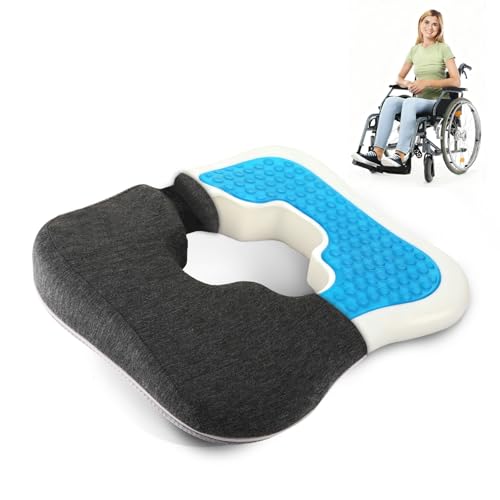
- Three-inch gel-and-foam build
- Zoned, sloped seating surface
- Waterproof removable cover
Best For: Thicker, contoured everyday seating support
Best Simple Pick
Cotton-Filled Square Seat Cushion

- Cotton fill and velour surface
- Portable across seating locations
- Dimensions not specified
Best For: A portable cushion for varied seats
Roomy Contoured Pick – GleeWarm Extra-Large Coccyx Cushion
For shoppers comparing coccyx protectors for pressure sores, this extra-large GleeWarm cushion offers a contoured way to redistribute sitting pressure. Its W-shaped front supports the thighs, while the rear contour and U-shaped cutout are designed to reduce pressure around the tailbone and other sensitive areas.
Best For: People who want a wider cushion for long periods at a desk, in a car, or in a wheelchair.
Pros:
- 19.69-inch width provides more sitting room than a standard 17-inch cushion.
- Twenty-four ventilation holes promote airflow through the memory foam.
- Removable, machine-washable cover simplifies cleaning.
Cons:
- At 3.09 pounds, it may be less convenient to carry between seats.
- The pronounced contours may not suit someone seeking a flat seating surface.
The wider build and shaped support make this a practical option for everyday sitting comfort. If you have an existing pressure sore, confirm that its contours do not put pressure directly on the affected area.
Thick Donut Pick – AUVON Ergonomic Donut Cushion
Among coccyx protectors for pressure sores, the AUVON cushion stands out for its combination of a center opening and a U-shaped tailbone relief area. Its 18-by-16-inch footprint and 4.3-inch height offer substantial memory-foam support for sensitive sitting.
Best For: People seeking a thick, medium-firm cushion with open space beneath the center and tailbone.
Pros:
- Center hollow and rear U-shaped area are designed to take pressure off sensitive spots.
- Sloped front supports the thighs while sitting.
- Honeycomb mesh cover is removable and washable; silicone particles help the base grip the seat.
Cons:
- At 4.3 inches high, it noticeably raises the seating position.
- The center opening may not align with every pressure-sensitive area.
This is a strong fit when both seat height and targeted open space are useful. Check the position of any sore against the opening before relying on it for pressure relief.
Adjustable-Height Pick – Stackable Gel Wheelchair Cushion
For buyers looking at coccyx protectors for pressure sores, this gel-and-memory-foam wheelchair cushion offers an unusual feature: two zip-together pads that can also be used separately. The angled design is intended to spread sitting weight, while the modular construction lets you adjust the height.
Best For: Wheelchair or chair users who want to switch between a thicker stacked cushion and separate pads.
Pros:
- Two cushions zip together or separate for different seating setups.
- 18-by-15-inch footprint is intended to fit most adult wheelchairs and common chairs.
- Angled support and a non-slip bottom address weight distribution and shifting.
Cons:
- The stated 4-inch height may change how you sit when the pads are stacked.
- A sloped cushion may not be suitable for every wheelchair seating setup.
The adjustable configuration is the main reason to choose this model. For pressure-sore concerns, verify both seat fit and where the angled surface places pressure before extended use.
Portable Gel Donut Pick – AnboCare Donut Sitting Pillow
For shoppers considering coccyx protectors for pressure sores, the AnboCare donut pillow is a compact option with a center opening, memory-foam support, and a cooling gel layer. At 16.3 by 13.2 inches, it is sized for moving between office chairs, vehicles, and other seats.
Best For: Adults who prefer a portable donut-style cushion with firm support.
Pros:
- Donut opening leaves space beneath the central sitting area.
- Gel layer sits above the memory foam for a cooler feel.
- Non-slip base and removable, machine-washable mesh cover add everyday convenience.
Cons:
- Smaller footprint may feel restrictive compared with wider seat cushions.
- The seller describes the support as firm, which may not suit those who want a soft pillow.
This is a straightforward choice if portability and a center opening matter most. Because a donut shape shifts pressure to its surrounding ring, make sure that ring does not rest against an existing sore.
Adjustable Bed Cushion – Dual-Piece T-Cutout Memory Foam Cushion
Among coccyx protectors for pressure sores, this firm memory-foam cushion stands out for its T-shaped opening and two-piece construction. The cutout is designed to keep pressure off the tailbone and sitting-bone areas, while one section can be lifted for position adjustments.
Best For: Adults who want a cushion they can adjust while sitting or lying down.
Pros:
- T-shaped opening leaves space around sensitive areas.
- Dual-piece design lets you lift one side to adjust positioning.
- Removable, machine-washable cover simplifies cleaning.
- Includes a textured massage surface.
Cons:
- Firm feel may not suit shoppers who prefer a softer cushion.
- Two-piece design may take more setup than a single-piece pad.
Its main advantage is positioning flexibility across a bed, wheelchair, or chair. Check that the T-shaped opening aligns with the area you need to offload.
Portable Donut Pick – PT-Endorsed Memory Foam Seat Cushion
If you need coccyx protectors for pressure sores that can move between seats, this medium-firm donut cushion is a portable option. Its central opening and U-shaped cutouts are designed to redistribute pressure around the tailbone during sitting.
Best For: Adults seeking a travel-friendly sitting cushion for office chairs, car seats, or wheelchairs.
Pros:
- Firm memory foam is rated for body weights up to 240 pounds.
- Non-slip base helps keep it in place on a seat.
- Removable, machine-washable cover supports routine cleaning.
- Lightweight 17.5-by-14-inch size is easy to move between seats.
Cons:
- Not specified for users over 240 pounds.
- Foam requires spot cleaning; only the cover is machine washable.
This is the more conventional seated donut option of the three. Confirm that its opening, overall dimensions, and firm feel fit your seating setup.
Wheelchair-Friendly Pad – Cross-Zoned Gel Memory Foam Cushion
For shoppers comparing coccyx protectors for pressure sores, this 18-by-16-inch pad offers a broad seating surface with a cross-shaped pressure-relief design. It combines memory foam, a cooling gel layer, and a 15-degree slope for seated support.
Best For: Adults wanting a medium-soft cushion sized for many wheelchairs and standard chairs.
Pros:
- Cross-shaped zoning is designed to reduce pressure at sensitive seated areas.
- 18-by-16-by-3-inch dimensions fit many wheelchairs and chairs.
- Cooling gel layer offers a cooler-feeling surface.
- Removable, machine-washable cover makes upkeep easier.
Cons:
- Its 3-inch height will raise the seated position.
- The rectangular shape may not fit every wheelchair or chair; check seat dimensions.
Choose this one if a wider, medium-soft pad appeals more than a donut-style opening. Measure the intended seat and consider the added height before buying.
Cooling Gel Pick – Jumbo Honeycomb Gel Seat Cushion
Among coccyx protectors for pressure sores, this jumbo gel cushion is worth considering if you want a broad seating surface and a cooler feel during long sitting sessions. Its 19-by-18-inch honeycomb design is intended to distribute weight and allow airflow.
Best For: People seeking a large, cooling cushion for a wheelchair, office chair, or car seat.
Pros:
- Large 19-by-18-inch surface with a 1.65-inch profile.
- Breathable honeycomb gel is designed to limit heat buildup.
- Removable, machine-washable cover has a non-slip underside.
Cons:
- The 1.65-inch thickness is lower than that of the 3-inch foam-and-gel option in this roundup.
- No dedicated coccyx cutout is specified.
Choose this one for seat coverage and cooling rather than targeted tailbone offloading. Check that its generous footprint fits your chair before buying.
If you are comparing coccyx protectors for pressure sores, this 18-by-16-by-3-inch cushion offers a thicker gel-and-memory-foam construction. Its cross-shaped zoning and 15-degree slope are designed to distribute seated pressure across the buttocks and coccyx.
Best For: Adults who want a thicker, contoured cushion for a wheelchair or other everyday seat.
Pros:
- Three-inch profile combines memory foam with a cooling gel surface.
- Zoned, sloped design is intended to reduce concentrated pressure.
- Removable waterproof cover and anti-slip bottom add practical convenience.
Cons:
- The 18-by-16-inch footprint may not match every seat; measure first.
- No dedicated coccyx cutout is specified.
This is the more structured choice for those prioritizing cushioning depth and pressure distribution. Its design may improve sitting comfort, but it should not be treated as a guarantee against pressure sores.
For shoppers considering coccyx protectors for pressure sores across multiple seating locations, this cotton-filled cushion is a portable option. The listing describes a widened square design with a velour surface and pressure-relief uses for the coccyx and pelvic area.
Best For: People who want a carry-along cushion for a wheelchair, office chair, car, or travel seat.
Pros:
- Cotton-filled design with a soft velour surface.
- Described for use on wheelchairs, office chairs, cars, and travel seats.
- Listed as portable and machine washable.
Cons:
- Dimensions and thickness are not provided in the supplied details.
- The exact shape of any pressure-relief opening is not specified.
Consider this cushion if portability matters most, but verify its dimensions and opening design before relying on it for targeted tailbone pressure relief.
How We Picked the Best Coccyx Protectors for Pressure Sores
We focused on seating products that aim to reduce pressure around the coccyx, including cutout foam cushions, donut-style pillows, and gel pads. We compared their stated shapes, materials, intended seating locations, and practical features such as size and slip resistance. Product descriptions alone cannot establish whether a cushion prevents or treats pressure injuries, so we did not treat those claims as proof of clinical performance.
Quick Comparison of Cushion Types
Tailbone cutout cushions leave space behind the coccyx and may suit someone whose main concern is pressure directly over the tailbone. Donut cushions create a central opening, but their raised ring can put pressure around the opening; ask a wound-care clinician before using one for an existing sore. Gel wheelchair pads offer a broader sitting surface and may appeal to people who prefer gel over contoured foam. A gel layer alone does not guarantee adequate pressure redistribution.
Key Buying Factors for Coccyx Protectors for Pressure Sores
Match the Cushion to the Pressure Area
A rear cutout, center opening, and flat gel pad shift weight differently. If you have an open wound, persistent redness, or reduced sensation, have a clinician assess the pressure location before choosing a design. A cushion that feels comfortable can still concentrate force at its edges.
Check Fit and Stability
Measure the chair or wheelchair seat before buying. A cushion that overhangs, bunches up, or slides can affect posture and create friction. Check its height, weight capacity, cover texture, and whether it stays stable during transfers. Wheelchair users should also confirm that added cushion height does not compromise foot support or positioning.
Plan for Skin Care and Cleaning
Look for a cover you can remove and clean according to its care instructions. Moisture, heat, and prolonged sitting affect skin as well as comfort. Inspect vulnerable skin regularly, follow your care team’s repositioning plan, and avoid relying on a cushion as your only pressure-relief measure.
Who Should Buy Which Coccyx Protectors for Pressure Sores?
For tailbone-focused discomfort: Start by comparing rear-cutout foam options that fit your chair without tipping your pelvis. For a wheelchair: Prioritize seat dimensions, secure placement, and compatibility with your existing positioning setup; seek a seating assessment if you sit for much of the day. For occasional sitting discomfort: A donut or gel cushion may be worth considering based on where you need relief. For an existing pressure sore or high risk of one: Speak with a wound-care or seating professional before purchasing. The best Coccyx Protectors for Pressure Sores support an appropriate care plan—they do not replace wound treatment or scheduled pressure relief.