Finding the right communication cards can make everyday interactions calmer, clearer, and more meaningful for people living with dementia.
Below, we’ve focused on practical options that support speech, memory, and connection for patients, caregivers, and family members.
Best 10 Communication Cards for Dementia Patients Picks for 2026
Best for Clear Everyday Communication
Plastic Communication Board for Non Verbal Adults

- 4-board set covers common daily needs
- Simple pictorial layout is easy to follow
- Durable plastic build for repeated use
Best For: Care settings and home use when a simple low-tech communication aid is needed.
Best for Reminiscence Therapy
ThinkPsych Golden Memories Memory Game

- 160 prompts designed to spark positive memories
- Large-print, durable cards for easier reading
- Suitable for home, groups, and memory care
Best For: Caregivers and families who want structured conversation prompts for seniors with dementia or Alzheimer’s.
Best Adult AAC Cards
Aphasia Communication Cards for Adults, 50 PCS
- 50 adult-focused cards for common daily needs and requests
- Wipeable, reusable, and easy to keep by the bedside or in a care bag
- No app, battery, Wi-Fi, or charging needed
Best For: Seniors and adults with dementia, aphasia, or stroke-related speech challenges who need simple point-and-show support.
Best for Guided Conversation
Conversation Cards for Dementia
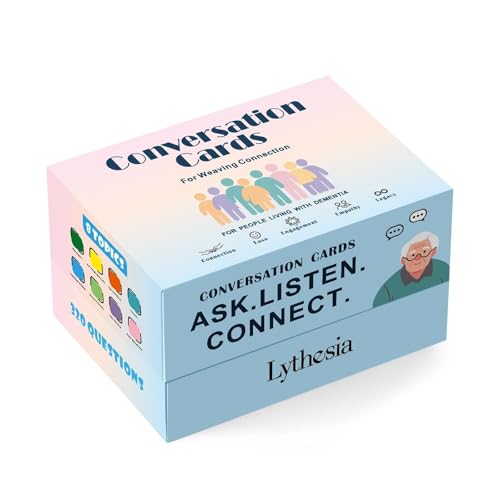
- 300+ prompts across 8 conversation categories
- Laminated, large-print cards for everyday durability
- Easy 3-step format for families and caregivers
Best For: Families and care teams who want an easy conversation starter for dementia support.
Best Portable
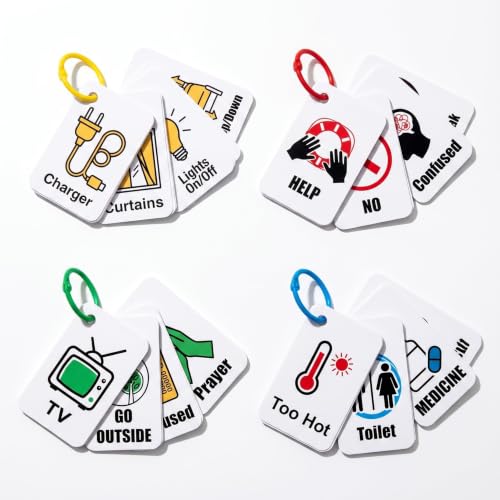
Plastic Communication Cards, 60 Basic Communication

- 60 picture words on 30 double-sided cards
- Ring binder keeps cards organized and portable
- Works for dementia care, autism, and speech support
Best For: Caregivers and families who need a simple, portable nonverbal communication aid.
Best for Everyday Use
Golden Memories 220 Dementia Cards
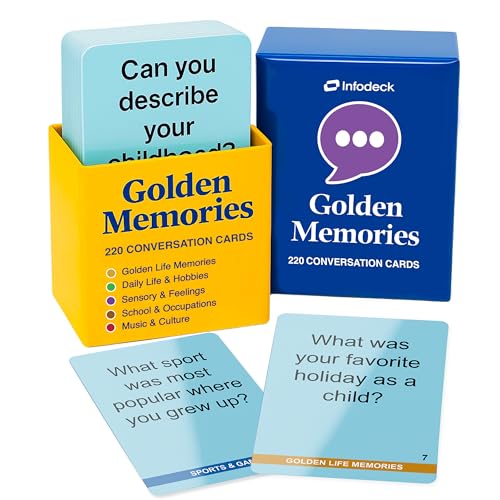
- 220 cards with six color-coded conversation categories
- Large print and open-ended prompts for easier engagement
- Laminated finish for wipe-clean, everyday use
Best For: Caregivers and seniors who want simple, memory-friendly conversation prompts for one-on-one or group activities.
Best for Multi-Need Communication
Picture-Based Cue Cards for Adults

- Picture-based format supports simple requests and needs
- Works for dementia, stroke, TBI, autism, and more
- Helpful for everyday use at home or in care settings
Best For: Caregivers who need a simple visual communication aid for nonverbal or cognitively impaired adults.
Best for Meaningful Conversation
Share a Moment Conversation Cards

- 300 prompts across eight conversation categories
- Mostly present-based questions reduce memory stress
- Laminated, water-resistant cards for repeated use
Best For: Families, caregivers, and care settings wanting gentle conversation starters for dementia.
Best for Guided Conversations
Dementia & Alzheimer’s Conversation Cards

- Double-sided prompts with caregiver guidance
- 150 talk starters for repeat use
- Suitable for one-on-one or group engagement
Best For: Caregivers and families who want structured conversation support for seniors with dementia or Alzheimer’s.
Best for All Stages
Keeping Busy Conversation Cards

- 224 prompts across 6 everyday and memory-based topics
- Large, clear text with sturdy laminated cards
- Person-centered design for respectful conversation
Best For: Families and caregivers looking for gentle conversation cards usable across different stages of dementia.
Best for Clear Everyday Communication – Plastic Communication Board for Non Verbal Adults
If you need communication cards for dementia patients that are simple to read and easy to carry, this plastic board set is built for practical everyday use. It is designed to help adults express needs, preferences, and requests in hospitals, care homes, and at home without a complicated setup.
Best For: Caregivers and family members looking for a durable, straightforward communication aid for non-verbal adults, including dementia, aphasia, and stroke support.
Pros:
- Includes 4 specialized boards for different communication needs
- Simple layout helps users point to needs quickly and clearly
- Durable plastic construction suits frequent use
- Compact and lightweight for easy transport
Cons:
- Not a digital or voice-output communication device
- May be too basic for users who need highly personalized symbols
- Works best when a caregiver is nearby to guide use
Overall, this is a solid low-tech option if you want communication cards for dementia patients that prioritize clarity, portability, and durability over extra features. It fits well in settings where quick, visual communication matters most.
Best for Reminiscence Therapy – ThinkPsych Golden Memories Memory Game
If you’re comparing communication cards for dementia patients, ThinkPsych Golden Memories is a strong choice for guided conversation, memory sharing, and calming social interaction. The 160 prompts are designed to spark positive recollections, making it useful for caregivers, family visits, and activity groups.
Best For: Caregivers, families, and senior activity leaders who want structured conversation prompts that support reminiscence and engagement.
Pros:
- 160 psychologist-designed prompts focused on positive memories and storytelling
- Works well for one-on-one use, group activities, and memory care settings
- Large-print, durable cards are easier for seniors to read and handle
- Can help encourage mood, social engagement, and family bonding
Cons:
- More conversation-focused than task-based dementia activities
- May be less useful for people who prefer very simple visual cues
- Best results depend on caregiver participation and facilitation
Overall, these communication cards for dementia patients are a practical pick when the goal is meaningful conversation rather than games with rules. Their strength is the mix of structure, readability, and reminiscence-friendly prompts that can work across different care settings.
Best Adult AAC Cards – Aphasia Communication Cards for Adults, 50 PCS
If you need practical communication cards for dementia patients, this 50-card adult AAC deck is built for simple point-and-show communication at home, in hospitals, and in long-term care. It focuses on everyday needs, comfort, and basic requests so caregivers can understand the user faster without depending on speech.
Best For: Seniors, stroke survivors, and adults with dementia or aphasia who need a straightforward low-tech way to express daily needs.
Pros:
- 50 adult-focused cards cover common needs like water, food, restroom, pain, and personal care.
- Wipeable, reusable cards work well for bedside care, assisted living, and hospital visits.
- No battery, app, Wi-Fi, or charging required, so the deck is always ready to use.
- Simple illustrations are age-appropriate and less childlike than many visual aids.
Cons:
- Not a full communication system for complex conversations.
- Users must be able to point to or indicate the correct card.
- May need caregiver guidance at first to learn the deck layout.
This is a strong low-tech option if you want communication cards for dementia patients that are easy to keep nearby and quick to use during daily care. It’s especially useful when clarity, portability, and simplicity matter more than advanced AAC features.
Best for Guided Conversation – Conversation Cards for Dementia
If you want communication cards for dementia patients that make conversations easier without adding pressure, this set is built for practical everyday use. With 300+ prompts across 8 categories, it gives caregivers, family members, and staff a simple way to start calm, meaningful interactions.
Best For: Families, caregivers, and care teams who want a ready-to-use conversation tool for dementia and Alzheimer’s support.
Pros:
- 300+ guided questions across 8 categories for flexible use
- Large-print, laminated cards that are durable and easy to read
- Simple 3-step format makes it approachable for non-experts
- Designed with input from dementia communication specialists
Cons:
- Works best for conversation, not for memory training or games
- May be too structured for users who prefer open-ended discussion
- Some caregivers may want more topic variety over time
Overall, these communication cards for dementia patients are a strong pick if you need a low-effort way to reduce awkward silence and keep interaction flowing. The mix of structure, readability, and thoughtful prompts makes them especially useful in home care, assisted living, and visiting situations.
Best Portable – Plastic Communication Cards, 60 Basic Communication
If you want simple, portable communication cards for dementia patients, this set offers a practical visual aid for daily needs, feelings, and basic requests. The ring-bound format keeps the cards together, and the 75 x 75 mm size makes them easy to carry, share, and use in one-on-one care settings.
Best For: Caregivers, families, and support staff who need a compact nonverbal communication tool for everyday interactions.
Pros:
- 30 double-sided cards provide 60 clear picture words for quick communication.
- Ring binder design keeps cards organized and easy to flip through.
- Portable size works well at home, in hospitals, or on the go.
- Useful for dementia care, special needs, autism, and speech support.
Cons:
- Picture-based cards may be too basic for users who need more advanced language support.
- Not a dedicated dementia-specific product, so some icons may need caregiver explanation.
For communication cards for dementia patients, this is a straightforward choice when the priority is simplicity and portability over customization. It works best as a quick reference tool for everyday needs rather than a full communication system.
Best for Everyday Use – Golden Memories 220 Dementia Cards
If you’re comparing communication cards for dementia patients, Golden Memories is built for easy, low-pressure conversations at home or in care settings. The 220-card set uses large print, open-ended prompts, and six color-coded categories to help spark memories, reduce silence, and support calm social engagement.
Best For: Seniors with dementia or Alzheimer’s who benefit from large-print prompts, plus caregivers looking for an easy activity for one-on-one or group use.
Pros:
- 220 cards provide plenty of variety for repeated use without feeling stale
- Large, easy-to-read text is helpful for visual or cognitive challenges
- Open-ended questions encourage storytelling, connection, and gentle mental stimulation
- Laminated cards are easy to wipe clean for daily use
Cons:
- Focused on conversation, so it may be less engaging for users who prefer action-based games
- Best results depend on caregiver participation or a guided setting
As communication cards for dementia patients, this deck stands out for its simple structure, readable design, and thoughtful question prompts. It’s a strong choice if you want a comforting activity that supports memory, companionship, and relaxed conversation rather than more complex gameplay.
Best for Multi-Need Communication – Picture-Based Cue Cards for Adults
If you need communication cards for dementia patients that are simple, visual, and easy to point to, this picture-based set is designed to help bridge everyday conversations when speech is limited. It can be a practical choice for caregivers supporting Alzheimer’s, dementia, stroke recovery, TBI, or other cognitive and speech challenges.
Best For: Caregivers and family members who want a straightforward picture cue system for nonverbal or hard-to-understand communication needs.
Pros:
- Picture-based format makes requests and basic needs easier to understand
- Useful across multiple conditions, including dementia, stroke, TBI, and autism
- Good option for quick daily communication at home or in care settings
Cons:
- May not cover highly specific or advanced communication needs
- Effectiveness depends on the user recognizing and responding to images
As a practical aid, this set is a solid fit if you want communication cards for dementia patients that focus on clarity over complexity. It’s most useful when the goal is to reduce frustration and support simple, repeatable exchanges throughout the day.
Best for Meaningful Conversation – Share a Moment Conversation Cards
If you want communication cards for dementia patients that focus on connection instead of testing memory, Share a Moment is a strong pick. With 300 prompts across eight categories, it’s designed to make visits easier, reduce awkward silence, and support calm, person-centered conversation.
Best For: Families, caregivers, and care settings looking for easy, non-stressful conversation starters for people living with dementia or Alzheimer’s.
Pros:
- 300 conversation prompts across eight relatable topic categories
- Mostly present-based questions help reduce memory pressure
- Laminated, water-resistant cards are easy to wipe clean and reuse
- Includes simple instructions and customizable “Create Your Own!” cards
Cons:
- Not ideal if you want structured cognitive exercises or memory games
- Some users may prefer even larger cards for visibility
As communication cards for dementia patients, this set stands out for its practical, person-centered approach. It’s a thoughtful option when you want a simple way to spark conversation, share memories, and make time together feel more natural.
Best for Guided Conversations – Dementia & Alzheimer’s Conversation Cards
If you’re comparing communication cards for dementia patients, this deck stands out for its double-sided format and built-in caregiver guidance. The 150 talk starters are designed to make conversations easier to begin, keep on track, and adapt to different memory and attention levels.
Best For: Caregivers, family members, and activity coordinators who want a structured, low-pressure way to spark conversation and memory engagement.
Pros:
- Double-sided cards add flexibility for prompts and follow-up support.
- Includes caregiver guidance, which helps make sessions more effective.
- 150 conversation starters offer plenty of variety for repeat use.
- Works well for both one-on-one chats and small group activities.
Cons:
- Not a substitute for personalized dementia communication strategies.
- Some users may prefer larger-format cards for easier handling.
Overall, this is a practical pick if you want communication cards for dementia patients that balance structure, variety, and caregiver support. It’s especially useful when you need an approachable tool that makes conversations feel easier and more natural.
Best for All Stages – Keeping Busy Conversation Cards
If you want communication cards for dementia patients that feel respectful, flexible, and easy to use, this deck is built around open-ended prompts that can support conversation across a wide range of abilities. The mix of everyday topics and reminiscence-based questions makes it a practical choice for caregivers, family visits, and senior activity programs.
Best For: Families, caregivers, and activity professionals who want conversation cards that can work in one-on-one or group settings.
Pros:
- 224 prompts across 6 topics for varied, repeatable use
- Designed to be gentle and person-centered, without stigmatizing language
- Large text and sturdy laminated cards are easier to read and handle
- Works for short visits or longer engagement sessions
Cons:
- Conversation-based format may not suit users who prefer structured games
- Some prompts may feel more familiar than others depending on life experience
As communication cards for dementia patients, this set stands out for its thoughtful tone and broad usability rather than flashy features. It is a strong pick if you want a simple, dignified way to encourage reminiscence and connection.
Choosing Communication Cards for Dementia Patients is less about novelty and more about clarity, comfort, and ease of use. The best sets reduce frustration, encourage response, and fit the person’s stage of communication ability.
How We Picked the Best Communication Cards for Dementia Patients
We looked for cards and conversation tools that are easy to understand, visually clear, and suitable for common caregiving settings such as home care, hospitals, and senior communities. We also favored products with practical formats like picture symbols, simple prompts, large text, and caregiver-friendly organization.
Quick Comparison
Picture-based cards are best for people with limited speech or stronger visual recognition. Conversation and reminiscence decks work better for users who can still talk but need help starting or sustaining dialogue. Larger sets offer more variety, while smaller sets are often easier to manage for short daily routines or focused therapy sessions.
Key Buying Factors for Communication Cards for Dementia Patients
Clarity and Readability
Look for large fonts, high-contrast colors, and simple wording. Images should be familiar and easy to interpret, avoiding cluttered layouts or abstract symbols that can confuse users.
Communication Level
Match the deck to the person’s needs. Nonverbal or late-stage users may benefit more from picture symbols and basic request cards, while early- to mid-stage dementia users may respond well to conversation starters and memory prompts.
Durability and Handling
Thicker laminated cards or plastic cards are useful for repeated use, cleaning, and handling by caregivers or patients with limited dexterity.
Care Context
Some sets are better for bedside care, meals, toileting, or hospital communication. Others are designed for family visits, activities, and reminiscence therapy. Choose based on the most common use case, not just the number of cards.
Ease of Caregiver Support
The strongest options help caregivers guide communication without adding complexity. Clear categories, instructions, or conversation cues can make sessions smoother and more productive.
Who Should Buy Which Communication Cards for Dementia Patients?
If the person is mostly nonverbal or has advanced communication loss, choose picture-based communication cards with essential needs and yes/no options. If they can still engage in short exchanges, conversation and memory cards may be the better fit. For caregivers who want one flexible tool for daily use, a mixed-format set with both visual cues and talk starters can be the most practical choice.
In short, the best Communication Cards for Dementia Patients are the ones the user can understand quickly and use comfortably every day. Start with the person’s abilities, then choose the format that supports the easiest possible interaction.