The best daily living aids solve a specific frustration without making a routine more complicated. A reacher may help with dropped items, while a sock aid or built-up utensils can make dressing or meals easier on stiff hands.
These 10 picks cover common tasks around the home, from getting dressed to standing up. Use the guide below to match an aid to the person, the task, and the space where it will be used.
Best 10 Daily Living Aids for Elderly Picks for 2026
Transfer Support

- Pivoting bar offers multiple handholds
- Installs without wall drilling
- Fits flat ceilings 7 ft. to 9 ft. 6 in.
Best For: Standing and transfers beside a bed, chair, or toilet
Caregiver Alert
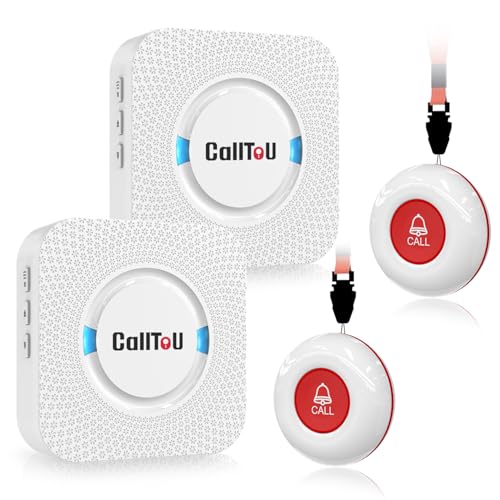
- Includes two buttons and two receivers
- 55 tones and five volume levels
- Stated 500+ ft. open-area range
Best For: Audible caregiver alerts around the home
Kitchen Grip

- Eight openings for 1–3 in. lids
- Hooks assist with larger lids and pull tabs
- Long handle adds leverage
Best For: Opening common jars, bottles, and ring-pull cans
Dressing Aid

- Helps put on socks with less bending
- Flexible shell and foam handles
- For regular socks and feet up to 5 in. wide
Best For: Putting on regular socks with limited bending
Easier Mealtimes
Nourislif 4-Piece Adaptive Utensils
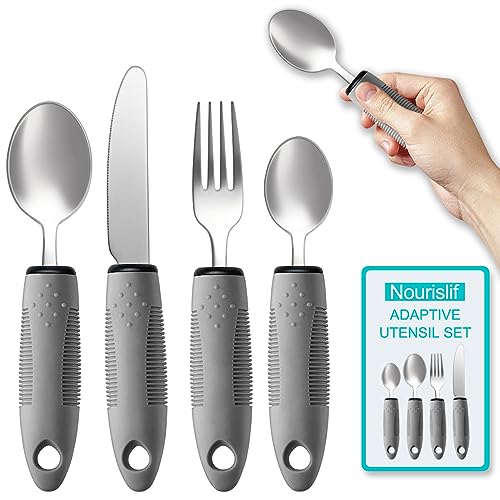
- Contoured, 1.25-inch-wide handles
- Four dishwasher-safe stainless steel utensils
- Lightweight, non-weighted design
Best For: Adults who prefer larger utensil handles at meals
Chair Transfer Support
Able Life Universal Stand Assist
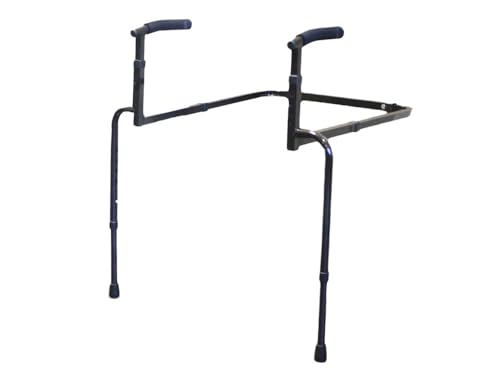
- Padded handles rated for up to 300 pounds
- Adjustable handle height
- Requires compatible chair dimensions
Best For: Adults needing handholds to rise from a compatible chair
Bathing & Skin Care
AmazerBath Curved Lotion Applicator
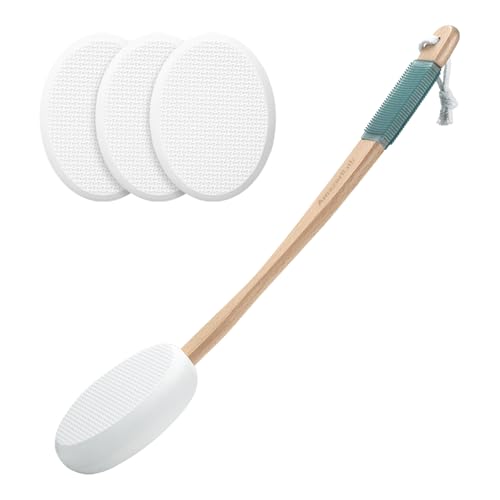
- Curved 17-inch handle
- Four replaceable EVA pads
- Textured non-slip grip
Best For: Applying skin products to hard-to-reach areas
Everyday Reaching
32-Inch Folding Grabber Reacher
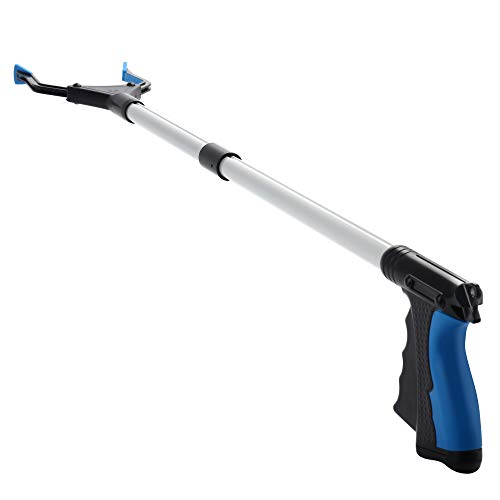
- 32-inch reach
- Folds for storage
- Head rotates up to 90 degrees
Best For: Retrieving light items without bending or stretching
Getting Dressed
Phantawell Adjustable Dressing Stick

- Adjusts to 22.5 or 35.5 inches
- Shoehorn and dressing hook
- Helps remove socks
Best For: Shoes and clothing tasks with less bending
Transfer Support – Stander Wonder Pole
Among daily living aids for elderly adults who need support when standing or sitting, the Stander Wonder Pole offers a floor-to-ceiling pole with a pivoting grab bar for several handhold positions.
Best For: People who want a standing or transfer aid beside a bed, chair, or toilet without drilling into a wall.
Pros:
- Pivoting grab bar provides multiple handrails for sitting and standing.
- Tension mounting requires no wall mounts or drilling.
- Adjusts for flat ceilings from 7 feet to 9 feet 6 inches.
Cons:
- Not compatible with vaulted ceilings.
- Cannot be installed inside a bathtub or shower.
This is a flexible choice when support is needed in different parts of the home, provided the intended spot has a suitable flat ceiling. It can help near a bathing area, but it is not an in-shower grab bar.
Caregiver Alert – CallToU Wireless Pager
For households comparing daily living aids for elderly family members, this CallToU pager provides a way to request help at the touch of a button. The set includes two call buttons and two plug-in receivers.
Best For: A caregiver who needs an audible call alert while moving between rooms.
Pros:
- Buttons can be worn on a neck strap or secured with the included mounting options.
- Offers 55 ringtone choices and five volume levels, up to 110 dB.
- Buttons and receivers are described as waterproof and dustproof.
- Receivers can be moved between outlets; the stated range is over 500 feet in an open area.
Cons:
- Receivers must be plugged into electrical outlets.
- The open-area range does not establish how far the signal will reach in every home.
This set is useful for a straightforward call-for-help setup, especially where two buttons and two receiver locations are helpful. Check outlet placement and signal reach in the intended rooms.
Kitchen Grip – Otstar Jar & Bottle Opener
The Otstar opener is a compact addition to daily living aids for elderly cooks who find tight lids difficult to grip. Its long handle, rubber lining, and multiple openings are designed to help with jars, bottles, and ring-pull cans.
Best For: People with weak hands who want one manual tool for several common container closures.
Pros:
- Eight circular openings accommodate small and medium lids measuring 1 to 3 inches in diameter.
- A hook can break the seal on larger lids; another helps open ring-pull cans.
- Long handle and rubber lining provide leverage and grip.
- Slim design fits in a drawer or hangs on a hook.
Cons:
- You need to select and position the opening that fits each lid.
- It is a manual opener, so some hand movement and pulling are still required.
This is a practical option for handling several lid styles without storing separate openers. Its usefulness will depend on matching the tool to the lid and having enough hand strength to operate it.
Dressing Aid – RMS Deluxe Sock Aid
For someone who struggles to bend down while dressing, the RMS Deluxe Sock Aid is one of the more focused daily living aids for elderly adults. A sock slides over its flexible shell, then the user pulls the foam handles to draw the sock onto the foot.
Best For: People with limited mobility who want to put on regular socks with less bending.
Pros:
- Flexible contoured shell is designed to make loading a sock easier for users with weak hand strength.
- Foam handles provide a comfortable, non-slip grip.
- Rope length can be adjusted by tying new knots.
- A foam pad helps keep the sock from slipping off the shell.
Cons:
- Not intended for compression socks, sheer anklets, or other very thin hosiery.
- Suitable only for foot widths of 5 inches or less.
The key buying checks are sock type and foot width. For compatible regular socks, its simple pull-up design can reduce the need to reach down to the feet.
Easier Mealtimes – Nourislif 4-Piece Adaptive Utensils
Among daily living aids for elderly adults, these built-up utensils address a specific challenge: holding standard cutlery with a weak grip or limited dexterity. The four-piece set includes a tablespoon, teaspoon, fork, and knife.
Best For: Adults who want larger, contoured handles for everyday meals.
Pros:
- 1.25-inch-wide, contoured handles offer a more substantial grip.
- Rustproof stainless steel utensils are dishwasher safe.
- Includes four common utensil types and a one-year guarantee.
Cons:
- Lightweight, non-weighted design may not suit shoppers looking for weighted utensils.
- The set includes only one of each utensil type.
This is a practical choice when grip size is the priority; if added utensil weight is important, consider a different design.
For shoppers comparing daily living aids for elderly adults who have trouble bending or reaching, this 34-inch grabber helps bring items within reach. Its rotating, rubberized jaw can be positioned for objects on the floor, shelves, or in tighter spaces.
Best For: People who need a portable reacher for routine item retrieval.
Pros:
- 34-inch length extends reach without bending as far.
- Rotating jaw and full-hand trigger offer flexible handling.
- Folds in half for storage or travel and weighs 7.83 ounces.
Cons:
- The 34-inch length may be more reach than needed in compact spaces.
- A grasping tool cannot replace hands-on help for tasks beyond picking up objects.
Its combination of reach, a rotating jaw, and foldable storage makes it a useful option for everyday retrieval tasks.
Among daily living aids for elderly adults, the Able Life Universal Stand Assist focuses on getting up from and sitting down on a couch or recliner. Its padded handles provide a place to grip, but furniture measurements are essential before buying.
Best For: Adults who need added handholds when rising from a compatible couch or recliner.
Pros:
- Padded grips provide support for sitting and standing; rated for up to 300 pounds.
- Handles adjust 7 to 10 inches above the horizontal frame.
- Can install around or under fixed, stitched, or removable cushions, depending on the furniture.
Cons:
- Only fits furniture within the specified cushion height, width, and depth ranges.
- At 7.8 pounds, it is less portable than a small handheld aid.
Measure the intended chair first: the stated cushion ranges are 12–21 inches high, 19–26 inches wide, and 24–27 inches deep.
Bathing & Skin Care – AmazerBath Curved Lotion Applicator
Among daily living aids for elderly shoppers, this lotion applicator addresses a specific challenge: applying cream to the back, legs, or feet without reaching by hand. Its curved, 17-inch handle and textured rubber grip help guide the pad across hard-to-reach areas.
Best For: Applying lotion, sunscreen, or skin cream to areas that are difficult to reach.
Pros:
- Curved handle extends reach to the back, legs, and feet.
- Soft EVA pads spread product without absorbing it.
- Includes four replaceable pads and a lanyard for hanging to dry.
Cons:
- Designed for applying skin products, not for washing or scrubbing.
- Pads need rinsing after each use.
If skin care is the sticking point, this is a focused choice. The replaceable pads are a useful feature for regular application, provided you are comfortable rinsing and drying them between uses.
For shoppers comparing daily living aids for elderly family members, this 32-inch grabber offers a way to pick up small items or litter without reaching down by hand. It folds for storage, and its head rotates up to 90 degrees to change the grabbing angle.
Best For: Picking up everyday objects from the floor or other awkward spots.
Pros:
- 32-inch reach helps retrieve items at a distance.
- Folding design makes it easier to store or carry.
- Rotating head and trigger handle allow different grabbing positions.
Cons:
- Rated to grab objects up to 3 pounds; not suited to heavier items.
- The trigger must be squeezed to operate the claw.
This is a practical pick for light retrieval tasks, especially where storage space matters. Check the 3-pound limit against what you expect to lift.
Getting shoes and clothes on can involve awkward bending and twisting. Among daily living aids for elderly users, this combined shoehorn and dressing stick is a versatile option: it adjusts to 22.5 or 35.5 inches and has an S-shaped hook for handling clothing and removing socks.
Best For: Putting on shoes and managing clothing with less bending or reaching.
Pros:
- Two length settings accommodate use while sitting or standing.
- Hook assists with shirts, pants, skirts, socks, and picking up clothes.
- Smooth edges are designed to avoid snagging hands, shoes, or fabrics.
Cons:
- Requires assembly before use.
- No sock-pulling attachment is listed; the hook is described for removing socks.
Choose this if you want one tool for several dressing tasks rather than a shoehorn alone. The adjustable length is particularly useful when your preferred dressing position changes.
How We Picked These Daily Living Aids for Elderly Adults
We focused on common at-home challenges: reaching, dressing, eating, opening containers, applying lotion, standing up, and calling a caregiver. The selection includes simple handheld tools and larger supports, with attention to how each is used, whether it needs installation or setup, and what a buyer should check before ordering. No single aid is right for everyone; a tool should match the person’s grip, balance, mobility, and home layout.
Quick Comparison by Task
For dropped items or objects on shelves, compare the two reachers by length, jaw design, and storage needs. For getting dressed, a sock aid helps pull on regular socks, while a long-handled shoehorn and dressing stick can reduce bending for shoes and clothing. Built-up utensils and a jar opener address different grip challenges at mealtimes. A long-handled lotion applicator helps reach the back or feet.
Standing supports serve a different purpose: the chair-based stand assist is intended for getting up from a suitable seat, while the floor-to-ceiling pole provides a handhold where it can be installed correctly. The caregiver pager lets someone request help; it does not physically assist with a transfer or guarantee an emergency response.
Key Buying Factors for Daily Living Aids for Elderly People
Match the Aid to the Limitation
Start with the exact task that is difficult. Limited bending calls for a different solution than weak grip or unsteady standing. Check whether the user can hold, position, and control the tool without strain. If an aid increases pain or creates a new balance risk, it is not a good fit.
Check Fit, Setup, and Maintenance
Measure before buying. Reacher length should suit the user without encouraging overreaching; dressing tools should work with the socks, shoes, and clothing they actually wear. For a stand assist, check chair compatibility and floor space. A tension-mounted pole needs a suitable floor and ceiling and must be installed according to its instructions. Also consider cleaning requirements, replaceable parts, and whether the aid can be stored within easy reach.
Know the Safety Limits
Check stated weight limits and intended use for any standing support. Reachers are for light objects, not for supporting body weight. A caregiver pager depends on its operating range, power, and someone being available to answer. For frequent falls, difficult transfers, or rapidly changing mobility, ask a clinician or occupational therapist to assess the setup rather than relying on a product alone.
Who Should Buy Which Daily Living Aids for Elderly?
Choose a reacher or dressing tool for someone who can use a handheld aid but wants to bend less. Try a jar opener or built-up utensils when grip and hand control are the main obstacles. Consider a chair assist or transfer pole only after checking the user’s abilities and the installation or furniture requirements. A caregiver pager may suit a household where help is nearby but not always in the same room. Buy for the task the person struggles with today, then reassess as their needs change.