A GPS watch can help caregivers locate a loved one and offer a way to call for help. But the right choice depends on more than the features listed on the box: coverage, battery life, ease of use, and monthly costs matter just as much.
These 10 selections emphasize location tracking and safety features. Use the guide below to decide which features fit your loved one’s routine and your family’s response plan.
Best 10 Dementia Gps Watches Picks for 2026
Everyday Safety Pick

- Automatic fall alerts to preset contacts
- GPS tracking with geo-fence notifications
- One year of data included; calls need a voice SIM
Best For: Families prioritizing wandering and fall alerts
Video Contact Pick

- Video contact option and 1.56-inch touchscreen
- GPS safe zones and fall alerts
- Voice calls require a separate compatible SIM
Best For: Caregivers who want video check-in options
Simple-Button Pick

- One-button help and automatic fall detection
- GPS location and its own calling number
- Paid service starts at listed $14.99/month annually
Best For: Wearers who prefer a simple help button
Best for Included Data
Fall Detection Watch with GPS and Video Calls

- One year of data service included
- GPS tracking and geo-fence alerts
- Voice calls need a separate voice-capable SIM
Best For: Families prioritizing tracking and fall alerts with included initial data
Best for Daily Health Features
4G Safety Watch with GPS Tracking

- GPS and geo-fence alerts
- Fall detection and SOS notifications
- Health tracking; calls need a voice-capable SIM
Best For: Caregivers seeking safety alerts and basic wellness trends
Best for Straightforward Calling

- GPS tracking and geo-fence alerts
- Fall detection and press-and-hold SOS
- 4G calls; service requirements unspecified
Best For: Families prioritizing two-way voice contact and safety alerts
Ready-to-Track Pick

- One year of included data service
- GPS safe zones and fall alerts
- Voice calls need a separate SIM
Best For: Caregivers focused on tracking and fall alerts at setup
Video-Call Pick

- Advertised 4G HD video calls
- GPS geofencing and fall alerts
- Compatible Nano SIM not included
Best For: Families seeking video check-ins and safety alerts
Caregiver-App Pick
- Up to one month of route history
- Safe zones and configurable contacts
- Included data SIM cannot make calls
Best For: Caregivers who value location history and app controls
Everyday Safety Pick – 4G GPS Watch With Fall Alerts
Among dementia gps watches, this model combines location tracking and geo-fence alerts with automatic fall detection. Caregivers can check the wearer’s location in an app and receive alerts when they leave a designated area.
Best For: Families who want wandering alerts and fall detection in one everyday watch.
Pros:
- Automatic fall detection can notify preset emergency contacts.
- GPS tracking and geo-fencing support remote location checks.
- Large touchscreen, IP67-rated design, and magnetic charging suit daily wear.
Cons:
- The included one-year data-only SIM does not support voice calls; calling requires a separate SIM with voice service.
- Blood pressure readings are described as reference data, not a substitute for medical measurements.
This is a practical choice if fall and location alerts matter most. Plan for a compatible voice SIM if two-way calling is part of your care routine.
Video Contact Pick – Fajocru V46 GPS SOS Watch
For shoppers comparing dementia gps watches, the Fajocru V46 adds video contact options to GPS location checks, geo-fence alerts, and fall detection. Its 1.56-inch touchscreen offers a larger interface for everyday use.
Best For: Caregivers interested in video check-ins alongside location and safety alerts.
Pros:
- Fall detection and SOS alerts can notify preset contacts.
- App-based location checks and safe-zone alerts help monitor wandering.
- Supports video contact and includes one year of data service.
Cons:
- The included data-only SIM does not support voice calls; those require a separate compatible SIM.
- Blood pressure information is listed as reference data rather than a medical reading.
The video feature distinguishes this watch, but confirm the SIM setup for the type of contact you expect to use before relying on calling.
Simple-Button Pick – AtsCares GPS Alert Watch
This option takes a simpler approach than many dementia gps watches: the wearer can request help with one button, while automatic fall detection and GPS location support caregiver response. It has its own phone number for incoming and outgoing calls under the listed service plan.
Best For: Wearers who need a straightforward help button rather than a feature-heavy touchscreen.
Pros:
- One-button emergency help and automatic fall detection.
- GPS location can help caregivers find a disoriented wearer.
- Listed service includes unlimited calls and can be canceled without a contract.
Cons:
- Requires a paid service plan: listed at $14.99 per month when paid annually or $19.99 when paid monthly.
- The supplied specifications list no display, so it is not a conventional screen-based smartwatch.
Its appeal is the uncomplicated button-and-calling setup. Factor the ongoing service cost into your comparison, especially if you prefer monthly billing.
Data-Plan Value Pick – Fajocru V46 GPS Tracker
Among dementia gps watches, this Fajocru V46 stands out for clearly stated location-data costs: its pre-installed data-only SIM includes one year of service, with renewal listed at about $30 per year. The app supports GPS checks, route history, geo-fences, and fall alerts.
Best For: Caregivers comparing ongoing costs for app-based tracking and safety alerts.
Pros:
- GPS location, route history, and safe-zone alerts support wandering oversight.
- Fall detection can send app alerts to preset contacts.
- One year of location data is included; the listing says the app has no fee.
Cons:
- Voice calls require a separate SIM with voice service; the included SIM is data-only.
- Data service needs renewal after the included year.
Consider this model if predictable tracking-data costs are a priority. If SOS calling is essential, budget for and set up a voice-capable SIM separately.
Best for Included Data – Fall Detection Watch with GPS and Video Calls
Among dementia gps watches, this model combines app-based location tracking and geo-fence alerts with automatic fall detection and an SOS button. It also includes a data-only SIM with one year of data service, but voice calls require a separate SIM with voice service.
Best For: Families who want location and fall alerts with included initial data service.
Pros:
- Real-time GPS tracking and safe-zone notifications through the app.
- Automatic fall alerts and a manual SOS option.
- Large touchscreen, magnetic charging, and IP67 water resistance.
Cons:
- The included data-only SIM does not support voice calling; a separate voice-capable SIM is needed for calls.
- The notes specify one year of included data but do not state the cost afterward.
The included data is a useful starting point for tracking, while calling capability depends on choosing and installing the right SIM.
Best for Daily Health Features – 4G Safety Watch with GPS Tracking
For shoppers comparing dementia gps watches, this option pairs real-time location and geo-fence alerts with fall detection, SOS notifications, and app-synced activity features. Its listed heart-rate, sleep, and step tracking add everyday information alongside the safety functions.
Best For: Caregivers who want location alerts and basic wellness trends in one watch.
Pros:
- GPS tracking and notifications when the wearer leaves a set safe zone.
- Automatic fall detection plus SOS alerts to preset contacts.
- Listed heart-rate, sleep, and step tracking, with an IP67-rated design.
Cons:
- The pre-installed SIM provides data only; voice calls require a separate SIM with voice service.
- One year of data is included, but the notes do not specify subsequent data costs.
This is a feature-rich choice on paper, but check the SIM arrangement before relying on its advertised video and voice calling.
Best for Straightforward Calling – Vexorium 4G Safety Wristband
This Vexorium wristband covers the core features many shoppers seek in dementia gps watches: GPS positioning, geo-fence alerts, automatic fall detection, and a press-and-hold SOS button. Its listed 4G two-way voice calling offers a way to speak with the wearer.
Best For: Families prioritizing voice calling alongside location and emergency alerts.
Pros:
- GPS tracking with alerts when a safe-zone boundary is crossed.
- Fall detection and a dedicated SOS button for calling a preset number.
- 4G two-way voice calling, step counting, and an activity reminder.
Cons:
- The notes do not specify SIM requirements or ongoing service costs.
- Battery life is described as extended standby without a stated duration.
It emphasizes calling and safety basics; confirm service compatibility and battery expectations before purchasing.
Ready-to-Track Pick – 4G GPS Watch With Fall Alerts
Among dementia gps watches, this model is worth considering if you want location tracking and fall alerts without arranging a data plan before setup. Its pre-installed data-only SIM includes one year of service, while the companion app supports real-time GPS tracking and safe-zone alerts.
Best For: Caregivers who prioritize location and fall notifications over calling straight out of the box.
Pros:
- Automatic fall detection can alert preset emergency contacts.
- GPS tracking and geofencing help caregivers monitor wandering.
- Large touchscreen, magnetic charging, and IP67 rating suit everyday wear.
Cons:
- The included data-only SIM does not support voice calls; calling requires your own voice-capable SIM.
- Blood-pressure readings are described as a reference, not a medical assessment.
The included data service makes the tracking features easier to get started with, but budget for a different SIM if two-way calling is essential.
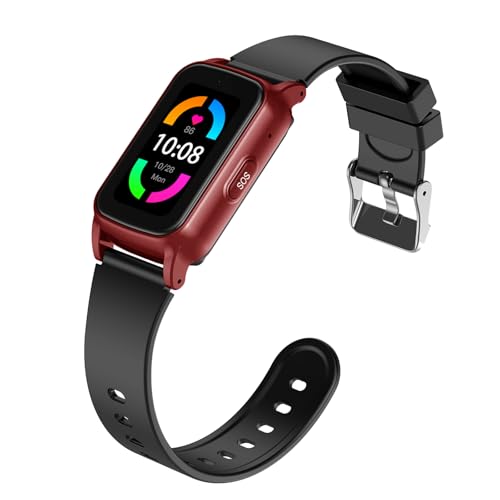
Video-Call Pick – Red 4G GPS Safety Watch
If face-to-face check-ins matter, this red model stands out among dementia gps watches for its advertised 4G HD video calling. It also combines real-time GPS tracking, geofence notifications, SOS alerts, and automatic fall detection in a wrist-worn design.
Best For: Families who want video calling alongside location and fall alerts and can supply a compatible SIM.
Pros:
- Supports video calls, voice chat, and voice messages.
- GPS safe zones can notify caregivers when the wearer leaves a designated area.
- Includes an IP67 rating, a high-contrast touchscreen, and magnetic charging.
Cons:
- No SIM is included; setup requires a compatible Nano SIM with mobile data and calling service.
- Blood-pressure monitoring is presented as a reference rather than a diagnostic feature.
This is the communication-focused option of the three, but confirm SIM compatibility and service costs before buying.
Caregiver-App Pick – GPS Watch With Route History
For shoppers comparing dementia gps watches by caregiver controls, this Fajocru model offers GPS safe-zone alerts and up to a month of location history through the Se Tracker2 app. A pre-installed data-only SIM includes one year of data service for getting tracking started.
Best For: Caregivers who want route history, configurable contacts, and included tracking data.
Pros:
- App supports up to 30 contacts, three emergency numbers, and safe-zone notifications.
- Includes advertised automatic fall alerts and HD video-call capability.
- Pre-installed SIM provides one year of data service; silicone strap and IP67 rating support daily wear.
Cons:
- The included data-only SIM cannot make voice calls; calling requires a separate SIM with voice and data service.
- SOS calling requires the wearer to hold the power button for three seconds.
The route history and contact settings make this a flexible caregiver option. Treat calling and video calling as features to plan for separately, since the included SIM does not provide voice service.
How We Picked the Best Dementia Gps Watches
We focused on watches marketed for older adults or dementia care that list GPS tracking alongside safety features such as SOS buttons, fall alerts, and two-way calling. We also considered practical ownership questions: whether a caregiver can check location easily, how the wearer contacts help, and whether cellular service may add a recurring cost. Several selected listings use nearly identical names, so confirm the exact model, seller, specifications, and service terms before ordering. Listed features are not a substitute for independent testing or a guarantee of emergency response.
Quick Comparison of Dementia Gps Watches
Start with the feature your household needs most. For someone who may leave home unexpectedly, prioritize accessible location updates and caregiver alerts. If the wearer can use a watch independently, an easy-to-press SOS button and two-way voice calling may be more valuable than extra fitness data. Video calling may appeal to families who want a visual check-in, but it can add complexity for the wearer. Fall detection is a useful backup feature, not a reason to skip a clear check-in and escalation plan.
Key Buying Factors for Dementia Gps Watches
Location and Coverage
Check how often the app refreshes location, whether it offers safe-zone alerts, and how it behaves indoors. GPS accuracy varies by surroundings, and cellular-enabled features require compatible coverage where the wearer spends time. Ask whether the watch needs a SIM card, a specific carrier, or an active subscription.
Alerts and Calling
Look for a simple SOS control, a clear calling workflow, and a caregiver app that the people responding to alerts can actually use. Check who receives fall or SOS notifications, whether alerts repeat if unanswered, and whether emergency services are contacted directly or only designated contacts. Fall detection can miss falls or trigger accidentally.
Daily Wear and Total Cost
A watch only helps when it is charged and worn. Consider strap comfort, water resistance, charging difficulty, and realistic battery life with tracking enabled. Compare the purchase price with activation fees and monthly service charges; verify any advertised monthly price before committing. Privacy matters too: review who can see location history and how access is managed.
Who Should Buy Which Dementia Gps Watches?
Choose a straightforward GPS-and-SOS watch if the priority is finding a wearer quickly and giving them one clear way to ask for help. Consider a model with two-way calling when regular voice check-ins are important; choose video calling only if the wearer can use it comfortably. If falls are a primary concern, look closely at alert settings and response procedures rather than relying on the feature name alone. For advanced dementia, prioritize a comfortable watch the person will keep on and a caregiver setup that works without requiring them to navigate menus. If the wearer routinely removes watches, a watch-based tracker may not be the right sole safety measure.