Choosing the right clock can make everyday routines easier, safer, and less frustrating for people with reduced vision. The best options prioritize bold numerals, strong color contrast, and displays that are easy to read at a glance.
In this roundup of high-contrast clocks for low vision, we focused on designs that help with timekeeping in bedrooms, kitchens, living rooms, and care settings.
Best 10 High-Contrast Clocks for Low Vision Picks for 2026
Talking Aid Clock
Talking Clock for Blind, Elderly, Large Red Display

- Speaks time and date with one button
- Large high-contrast red face
- Easy-set alarm with audio instructions
Best For: Low-vision users who need a simple talking tabletop clock
Wall Clock Pick
Low Vision Quartz Wall Clock, White on Black

- 14-inch face with large numerals
- Black face and white hands for strong contrast
- Sweeping second hand, easy mounting
Best For: Bedrooms or living spaces that need an easy-read wall clock
Bedside Digital Clock
Oversized Digital Clock with Dimming and USB Port

- 7.5-inch display with bold red numbers
- 0% to 100% brightness control
- 30 alarm volume levels plus USB charging
Best For: Bedroom users who want a large digital clock with adjustable brightness
Classic Wall Clock
Low Vision Wall Clock, White Face with Black Numbers

- 14-inch diameter with large numerals
- High-contrast white face and black numbers
- Simple battery-powered wall mount design
Best For: People who want a plain, readable low-vision wall clock
Cordless Visibility Pick
Large Digital 3" LED Clock with Night Mode

- 3-inch LED digits for easy reading
- 3 brightness levels with auto night mode
- Battery-powered and wall/table ready
Best For: Low-vision users needing a cordless, easy-to-read clock
Classic Red Display Pick
Low Vision Store 3" Red LED Clock

- 3-inch red LED numbers for visibility
- Adjustable brightness and alarm volume
- Includes 9-minute snooze
Best For: Bedside shoppers who want a simple large-number alarm clock
Clear Day Clock
Extra Large 8-inch Dementia Clock

- Large digital display spells out time, day, month, and date
- Auto-dimming helps visibility in different lighting
- Battery backup and up to 5 alarms add reliability
Best For: tabletop use for seniors who need readable time and reminders
High-Contrast Wall Clock
18" Super Low Vision Quartz Wall Clock

- White face and 2-inch black numerals improve contrast
- 18-inch size is easy to read across a room
- Silent quartz movement keeps noise to a minimum
Best For: wall mounting in indoor spaces where simple readability matters
Large RGB Visibility Clock
16.5" Large Digital Wall Clock with Remote
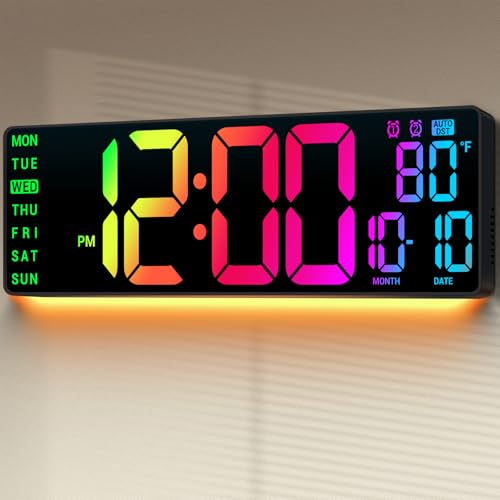
- 16.5-inch screen with ultra-large, high-contrast numbers
- Remote control, dual alarms, and timer functions
- Auto DST and light-sensor dimming reduce upkeep
Best For: large indoor spaces where visibility and convenience are priorities
Talking Aid Clock – Talking Clock for Blind, Elderly, Large Red Display
Talking Clock for Visually impaired, Blind, Elderly. Large and high Contrast (Red)
Check Price On AmazonIf you want high-contrast clocks for low vision that also speak the time, this talking clock keeps things simple. The large red display is easy to spot, and the big-button controls make it straightforward for a user to hear the time or date without dealing with a complicated setup.
Best For: Blind or low-vision users who want an easy-to-use talking clock with a clear red display.
Pros:
- Large, high-contrast red display for easier viewing
- Big button announces the time, then the date on the next press
- Easy-set alarm with audio instructions
- Clear North American accent male voice
Cons:
- Requires 3 AAA batteries, which are not included
- Analog display may not suit buyers who prefer digital readouts
This is a practical pick if spoken output matters as much as visibility. It focuses on simplicity and accessibility rather than extra features, which makes it a solid bedside or tabletop option.
Wall Clock Pick – Low Vision Quartz Wall Clock, White on Black
For shoppers comparing high-contrast clocks for low vision, this wall clock is built around readability first. The black face with white hands and large numerals is easy to scan at a glance, and the 14-inch size gives it enough presence for bedrooms or other rooms where clear viewing matters.
Best For: Anyone who wants a simple, readable low-vision wall clock with a bold black-and-white face.
Pros:
- Large 14-inch face for easier visibility
- 1 1/2-inch numerals improve readability
- Black face with white hands creates strong contrast
- Sweeping second hand adds a clean, modern look
Cons:
- No alarm feature
- Battery-powered, so it needs periodic battery replacement
This is a straightforward wall clock for buyers who mainly need contrast and size. It keeps the design uncluttered, which is often exactly what low-vision households are looking for.
Bedside Digital Clock – Oversized Digital Clock with Dimming and USB Port
This oversized digital option fits well in a roundup of high-contrast clocks for low vision because it pairs large red digits with adjustable brightness. It is aimed at easy bedside reading, and the 7.5-inch display should be simple to see from a distance or across a room.
Best For: Low-vision users who want a bright, easy-read bedside alarm clock with flexible dimming.
Pros:
- 7.5-inch display with large bold red numbers
- Brightness adjusts from 0% to 100%
- 30 alarm volume levels for more control
- Top touch snooze and USB charging port
Cons:
- Outlet-powered, so it depends on corded power for full operation
- Battery backup keeps settings only; the screen goes blank during outages
- May be more feature-heavy than buyers want in a basic clock
If you want a readable bedside clock with more customization, this model offers a lot of flexibility. The combination of large digits, dimming control, and adjustable alarm volume makes it a practical bedroom choice.
Classic Wall Clock – Low Vision Wall Clock, White Face with Black Numbers
Among high-contrast clocks for low vision, this quartz wall clock keeps the design as clear as possible. The white face and black numbers make the time easy to read, while the large 14-inch diameter gives the clock enough size for everyday use in an indoor setting.
Best For: Buyers who want a simple, no-frills low-vision wall clock with strong black-on-white contrast.
Pros:
- Large 14-inch diameter for better visibility
- 1 1/2-inch numerals are easy to read
- White face with black numbers provides strong contrast
- Sweeping second hand and easy mounting
Cons:
- No alarm feature
- Battery-powered, so it needs an AA battery
- Basic design may not appeal to buyers wanting extra features
This is a dependable choice if clarity is more important than bells and whistles. It is a good fit for anyone who wants a traditional low-vision wall clock that stays easy to read at a glance.
Cordless Visibility Pick – Large Digital 3" LED Clock with Night Mode
For shoppers comparing high-contrast clocks for low vision, this battery-powered digital model focuses on the basics that matter most: oversized 3-inch LED digits, adjustable brightness, and a bold black background that keeps the time easy to read. Its cordless design also makes placement simple in bedrooms, living rooms, kitchens, RVs, or on a wall.
Best For: Seniors, visually impaired users, and anyone who wants a readable cordless clock without outlet limitations.
Pros:
- Huge 3-inch LED numbers are designed for quick reading across the room.
- 3 brightness levels plus auto night mode help balance visibility and comfort.
- Battery operation keeps it fully cordless for flexible placement.
- Can sit on a table or mount on a wall for more setup options.
Cons:
- Requires 2 D batteries, which are not included.
- Digital style may not suit buyers who prefer an analog clock face.
This is a practical low-vision clock if you want large digits, simple placement, and nighttime dimming in one compact unit.
Classic Red Display Pick – Low Vision Store 3" Red LED Clock
If you want high-contrast clocks for low vision with a straightforward large-number display, this red LED alarm clock keeps the focus on readability. The 3-inch digits, adjustable brightness, and adjustable volume make it a simple option for bedside use where clear time checks and an easy alarm matter most.
Best For: Bedside users who want a large red LED clock with basic alarm and brightness controls.
Pros:
- 3-inch LED numbers are large enough to stand out at a glance.
- Adjustable brightness helps tailor the display to the room.
- Adjustable high-low alarm volume adds flexibility for waking up.
- 9-minute snooze offers a familiar, easy-to-use alarm feature.
Cons:
- AC powered, so it depends on an outlet for normal use.
- 9V backup battery is not included.
This clock is a solid pick if you want a no-frills large-number alarm clock with a red LED display and simple bedside controls.
Silent Wall Readability Pick – Crosstime 16" High-Contrast Analog Clock
For buyers searching for high-contrast clocks for low vision in a larger wall format, this 16-inch analog clock keeps the design simple and readable. The bold black numerals on a crisp white face are meant to be seen from across the room, while the silent quartz movement avoids ticking noise in quiet spaces.
Best For: Rooms that need a large, silent wall clock with strong black-on-white contrast.
Pros:
- Extra-large 16-inch face offers strong visibility from a distance.
- Black numerals on a white background create clear contrast.
- Silent, non-ticking quartz movement is suitable for bedrooms and offices.
- Simple battery setup with no wiring required.
Cons:
- Runs on 1 AA battery, which is not included.
- Analog format may be less direct than a digital display for some users.
This is a good choice if you want a large wall clock that prioritizes contrast, silence, and easy room-to-room visibility.
Clear Day Clock – Extra Large 8-inch Dementia Clock
If you want high-contrast clocks for low vision that also help with daily routines, this 8-inch digital day clock is built for clarity. It spells out the time, day, month, and date in large, easy-to-read letters, and the auto-dimming display helps it stay visible in bright rooms or at night.
Best For: Seniors, caregivers, and anyone who wants a simple tabletop clock with alarms and clear day/date display.
Pros:
- Large, high-contrast digital display with full day, month, and date wording
- Auto-dimming screen adjusts to room lighting for easier reading
- Up to 5 daily alarms for medication and appointment reminders
- Battery backup helps preserve timekeeping during outages
Cons:
- Tabletop design may not suit buyers looking for a wall-mounted clock
- 8-inch screen is compact compared with oversized wall displays
This is a practical choice if you need more than just a big display: it combines readability, reminders, and backup power in one straightforward package. The tradeoff is size, but for a bedside or desk setup, it covers the essentials well.
High-Contrast Wall Clock – 18" Super Low Vision Quartz Wall Clock
This wall clock fits the high-contrast clocks for low vision category in a very straightforward way: it uses a white face with large black numerals that are easy to pick out at a glance. The 18-inch size and silent quartz movement make it especially useful in rooms where you want clear visibility without ticking noise.
Best For: People who need a simple, high-contrast wall clock with oversized numerals and quiet operation.
Pros:
- White dial with large 2-inch black numerals for strong contrast
- 18-inch diameter makes the time easier to see from across a room
- Silent quartz movement avoids distracting ticking
- Lightweight metal build with secure wall mounting
Cons:
- Analog display does not show date, alarms, or reminders
- Battery is required but not included
If you only need a highly legible clock face, this model keeps things simple and effective. It is a good fit for living rooms, offices, or any indoor space where readability matters more than extra features.
Large RGB Visibility Clock – 16.5" Large Digital Wall Clock with Remote
For shoppers comparing high-contrast clocks for low vision, this 16.5-inch digital wall clock stands out for its oversized numbers and bright display options. It is designed to be easy to read without glasses, and the included remote, dual alarms, and temperature/date readouts make it more feature-rich than a basic clock.
Best For: Classrooms, offices, and homes that need a large, easy-read digital clock with extra features and remote control.
Pros:
- Ultra-large, high-contrast numbers are designed for easy reading without glasses
- 11 RGB color modes plus a night light for customizable visibility
- Remote control manages dual alarms, countdowns, and temperature units from up to 40 feet away
- Auto DST and light-sensor dimming reduce manual adjustments
Cons:
- Must stay plugged in for display power
- Battery backup is for memory storage only, not continuous display
This is a strong pick if you want a big digital clock that does more than show time. It works well in larger spaces where visibility and convenience both matter, though it is less portable than battery-powered options.
How We Picked the Best High-Contrast Clocks for Low Vision
We looked for clocks that are genuinely easy to read from a typical viewing distance, with features that matter most for low-vision users: strong contrast, oversized numerals or digits, clear hands or displays, and practical alarm or dimming options where relevant. We also considered whether each clock is suitable for wall mounting, bedside use, or shared spaces.
Quick Comparison
When comparing High-Contrast Clocks for Low Vision, think in terms of display style first. Analog wall clocks are often best for quick room-wide visibility, while digital clocks can be better for users who prefer larger numerals, date readouts, or alarms. Talking clocks add accessibility for users who rely on audio confirmation, and day clocks can reduce confusion by showing the day or time of day clearly.
Key Buying Factors for High-Contrast Clocks for Low Vision
Contrast and Legibility
The most important factor is how easily the time stands out from the background. Look for dark numerals on a light face, bright digits on a dark screen, or other high-contrast combinations that reduce glare and visual clutter.
Size and Viewing Distance
Bigger is not always better, but the display should match the room. Large wall clocks are ideal for common areas, while compact digital models may work better on a nightstand or desk. Check whether the clock is meant for close-up reading or across-the-room visibility.
Power, Brightness, and Accessibility Features
Battery-operated clocks can be easier to place anywhere, while plug-in models often support brighter displays and extra features. For digital options, dimming, auto-night mode, adjustable volume, and battery backup can make daily use more comfortable and reliable.
Who Benefits Most
People with macular degeneration, diabetic retinopathy, glaucoma, cataracts, or age-related vision loss may benefit from a clock that reduces the need to strain or lean in. Caregivers and family members may also prefer models with alarms, speaking functions, or date displays to support daily routines.
Who Should Buy Which High-Contrast Clocks for Low Vision?
If you want simple at-a-glance time reading, choose a bold analog wall clock with large black-on-white or white-on-black numerals. If you want features like alarms, dimming, or night visibility, a digital model is usually the better fit. If time orientation matters as much as time reading, consider a day clock or a talking clock. The best choice depends on where the clock will be used, how far away it needs to be seen, and how much assistance the user needs day to day.