If you’re helping an older adult live safely at home, the right motion sensor system can provide fast alerts without being complicated to use. These devices are designed to notify a caregiver when movement suggests a bed exit, wandering, or a possible fall.
We focused on practical options that balance range, alert style, setup ease, and everyday reliability for motion sensors for elderly living alone.
Best 10 Motion Sensors for Elderly Living Alone Picks for 2026
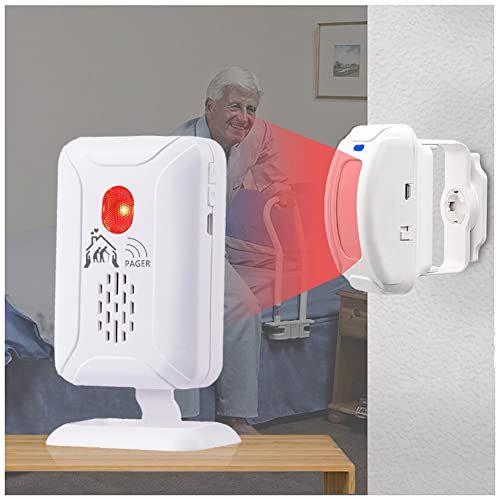
Wireless Bed/Door Alert
Smart Caregiver Motion Sensor Pager

- Wireless motion detector for bed or door alerts
- Pager receives movement alerts remotely
- Battery-powered with adjustable mounting bracket
Best For: Simple pager-based monitoring for bed or doorway movement
Rechargeable Bed-Exit Alert

- Infrared sensor targets bed-exit movement
- Rechargeable batteries reduce replacement needs
- 5 reminder modes with 4 volume levels
Best For: Bedside fall-prevention alerts with customizable reminders
Dual-Point Motion Monitoring
CallToU Bed Alarm with Receiver

- Covers bedside and doorway monitoring together
- Plug-in receiver uses chime plus flashing light
- No WiFi, app, or monthly fees required
Best For: Two-zone monitoring with a simple plug-in receiver
Expandable Budget Monitor
Smart Caregiver Economy Motion Sensor

- Basic wireless monitor and motion sensor set
- Adjustable volume with expandable system support
- Useful near bed, doorway, or walkway
Best For: Budget-friendly monitoring that can grow over time
Premium Whole-Home Motion Alerts
PILSAMAS Bed Alarm with Sensor ID Display

- Infrared motion sensing helps reduce false alarms from bed movement.
- Sensor ID display shows which sensor triggered the alert.
- 1000 ft range, no monthly fee, and up to 20-sensor expansion.
Best For: Privacy-conscious caregivers monitoring a larger home
Quick-Setup Fall Alert Kit
2026 Wireless Bed Alarm for Seniors

- Pre-paired setup activates in about 20 seconds.
- LED and 110 dB sound alerts offer clear notifications.
- 500+ ft range with battery or Micro USB power options.
Best For: Caregivers who need a simple, fast-install alert system
Budget Entry-Alert Monitor
EverNary Wireless Motion Sensor Pager

- Simple 1-sensor, 1-receiver setup for targeted monitoring.
- LED alerts plus 58 ringtones and 5 volume levels.
- Battery power with USB option and easy pairing support installation.
Best For: Smaller spaces or doorway monitoring on a basic budget
Bed Exit Alert
Wireless Bed Sensor Pager for Elderly Care
- Under-bed or doorway placement
- Caregiver receiver stays out of the room
- LED light and sound alerts
Best For: Caregiver alerts for bed exits and room departures
Dual Sensor Entry Alert
Motion Detector Alarm Kit with 2 Sensors

- Two sensors plus one plug-in pager
- 16.4 ft detection with 110° coverage
- 58 ringtones and 5 volume levels
Best For: Remote indoor movement monitoring with flexible alerts
Home Motion Monitor
2 Receiver Caregiver Alert Set

- Two receivers and two motion detectors
- 16.4 ft motion detection zone
- 58 tones with 5 volume settings
Best For: Multi-room caregiver alerts at home
Wireless Bed/Door Alert – Smart Caregiver Motion Sensor Pager
If you’re comparing motion sensors for elderly living alone, this Smart Caregiver system is built for a simple room-to-caregiver alert setup. The wireless motion detector can be mounted near a bed or door, and the pager helps a caregiver monitor movement remotely without bedside alarm noise.
Best For: Caregivers who want a basic wireless motion alert for bed or doorway movement with a pager.
Pros:
- Wireless motion detector supports fall and wandering prevention near a bed or door.
- Caregiver pager lets alerts be received remotely, away from the bedside.
- Optional adjustable mounting bracket adds placement flexibility.
- Battery-powered design works as a standalone paging system.
Cons:
- Listed as a standalone system that cannot be used with other Smart Caregiver products.
- Batteries are sold separately for both components in the product details.
- Range is listed at up to 300′ in the title, but the details also specify 8 meters.
This is a practical pick if you want a straightforward motion alarm for a bedroom or doorway, especially when you value a simple pager-based alert over app-based features. It’s best suited to basic monitoring rather than a broader connected care setup.
Rechargeable Bed-Exit Alert – Nesthao Infrared Bed Alarm
For motion sensors for elderly living alone, this rechargeable bed exit alarm focuses on detecting movement when someone is about to get out of bed. It uses infrared motion detection rather than a pressure pad, and the factory-paired setup is designed to be quick to turn on and place near the bedside.
Best For: Families wanting a rechargeable infrared bed-exit alert with multiple reminder modes.
Pros:
- Infrared motion detection is designed to trigger when a person crosses the detection zone.
- Rechargeable batteries reduce the need for routine battery replacement.
- Five reminder modes and four volume levels allow more alert options.
- Factory-paired devices simplify initial setup.
Cons:
- Designed around bedside exit detection, so it is less of a general home monitoring system.
- Details mention both rechargeable batteries and 2 AA batteries required, which may be confusing.
- The self-test startup delay means it is not instant right after powering on.
This is a good fit if your main concern is a loved one getting out of bed unexpectedly and you want a rechargeable system with configurable reminders. It is more specialized than a broad-motion home alarm, but that focus can be an advantage for bedside care.
Dual-Point Motion Monitoring – CallToU Bed Alarm with Receiver
If you want motion sensors for elderly living alone that cover more than one path, this CallToU set is designed for bedside and doorway monitoring together. With one motion sensor and a plug-in receiver, it can alert when movement is detected in the areas you place it, without needing WiFi or an app.
Best For: Monitoring a bed, doorway, or hallway with one plug-in receiver and an easy setup.
Pros:
- Supports bedside and doorway monitoring in one package.
- Plug-in receiver gives both chime and flashing light alerts.
- No WiFi, app, phone pairing, or monthly fees are needed.
- Can also be used for hallway, living room path, pet area, or entryway monitoring.
Cons:
- Only one motion sensor is included in the listing details.
- Placement still requires careful aiming to reduce false alerts from sunlight, fans, curtains, or pets.
- It is battery powered, so sensor batteries will need attention over time.
This is a flexible choice if you want a simple indoor alert system that can cover two important care points at once. It is especially useful for homes where a caregiver wants quick visual and audible notifications from a single receiver.
Expandable Budget Monitor – Smart Caregiver Economy Motion Sensor
For motion sensors for elderly living alone, this Smart Caregiver economy system keeps things simple: one cordless monitor and one motion sensor for a bed or doorway. It is a practical wireless option for watching for movement out of bed or out of a room, with adjustable volume and expansion support if you need more coverage later.
Best For: Caregivers who want a low-cost wireless motion sensor system that can expand later.
Pros:
- Designed for motion sensing near a bed, doorway, or walkway.
- Adjustable monitor volume gives some control over alert loudness.
- Expandable system can handle up to 6 cordless components.
- Compatible with several Smart Caregiver accessories listed in the details.
Cons:
- Batteries are not included.
- AC adapter is optional and also not included.
- This is an economy system, so it is more basic than newer alert units with richer reminder options.
This model makes sense if you want a straightforward starter setup and may add more sensors later. It is best for basic bedside or doorway monitoring rather than feature-heavy care alerts.
Premium Whole-Home Motion Alerts – PILSAMAS Bed Alarm with Sensor ID Display
For motion sensors for elderly living alone, this PILSAMAS set is built around fast, non-contact alerts that help a caregiver respond without walking room to room. The infrared sensors are designed to detect floor footsteps rather than bed movement, which helps reduce false alarms from shifting, incontinence, or other harmless motion.
Best For: Caregivers who want privacy-friendly, whole-home motion monitoring with clear sensor identification.
Pros:
- Sensor ID display shows exactly which sensor triggered, so you know where help is needed quickly.
- Motion-only detection avoids audio/video monitoring and comes with no monthly fees.
- 1000 ft range and clip-on pager make it easier to move around the home and yard.
- Expandable system supports up to 20 sensors for broader coverage.
Cons:
- Best results depend on installing sensors at the recommended 15-20 inch height.
- Uses batteries and USB-C power options, so ongoing charging or battery checks are still needed.
This is a strong pick if you want motion sensors for elderly living alone with a focus on fast location awareness and privacy. The combination of ID display, long range, and flexible alert modes makes it practical for larger homes.
Quick-Setup Fall Alert Kit – 2026 Wireless Bed Alarm for Seniors
If you need motion sensors for elderly living alone that are easy to deploy, this upgraded wireless alarm focuses on simple setup and immediate alerts. It detects bed exits and room departures, then notifies caregivers with either a loud sound or LED light, making it useful for day and night monitoring.
Best For: Caregivers who want a straightforward, fast-install motion alert system with loud and visual notifications.
Pros:
- Pre-paired design can be activated in about 20 seconds.
- Dual alert output includes LED light and 110 dB sound.
- Portable receiver with clip design supports use around the home.
- Flexible power options include AA batteries or Micro USB charging.
Cons:
- Includes only one sensor and one receiver in the kit.
- Coverage is strong at 500+ ft, but it is less than some longer-range alternatives.
This option makes sense if your priority is quick setup over advanced features. It covers the essentials well: motion detection, loud alerts, and easy portability for everyday caregiving.
Budget Entry-Alert Monitor – EverNary Wireless Motion Sensor Pager
For motion sensors for elderly living alone, this EverNary system works well as a basic indoor movement alert or doorway monitor. The sensor detects motion within a 16.4 ft range and sends a signal to the plug-in receiver, giving caregivers a straightforward way to track movement remotely.
Best For: Homes that need a simple motion-triggered alert for doorways, entry points, or smaller monitored spaces.
Pros:
- Compact setup includes one motion sensor and one plug-in receiver.
- Visual LED alerts can help if you want a light-based signal or need support for hearing impairment.
- 58 ringtones and 5 volume levels let you customize the alert.
- Battery power with USB option and easy pairing support flexible installation.
Cons:
- Motion detection range is limited to 16.4 ft, so it is better for targeted coverage than whole-home monitoring.
- Open-area transmission is much stronger than through walls or doors.
This is a practical entry-level choice if you only need to monitor a specific area. It is less advanced than the other options, but its simple design and customizable alerts can still be useful for everyday supervision.
Bed Exit Alert – Wireless Bed Sensor Pager for Elderly Care
If you need motion sensors for elderly living alone, this bed-exit alarm is built to alert a caregiver when someone gets up or leaves the room. The floor sensor can be placed under the bed to detect when a foot is about to touch the ground, or near a doorway for exit monitoring, while the receiver stays with the caregiver instead of sounding in the patient’s room.
Best For: Monitoring bed exits and room departures without startling the person being cared for.
Pros:
- Floor placement under the bed can detect the first step down
- Wireless signal reaches up to 918 ft in an open area
- Dual reminders with LED light and sound
- Includes battery and Micro USB power options
Cons:
- Needs a quick self-test after power-on before it enters working state
- Testing the sensing range and direction before fixing is recommended
Overall, this is a practical pick if your priority is early notice when a loved one gets out of bed. It’s especially useful when you want remote caregiver alerts rather than an alarm that wakes the person in the room.
Dual Sensor Entry Alert – Motion Detector Alarm Kit with 2 Sensors
For motion sensors for elderly living alone, this kit works as a remote movement alert for beds, doors, and other monitored areas. It includes two motion sensors and one plug-in pager, with visual and sound alerts that can help a caregiver notice movement from another room.
Best For: Monitoring movement remotely with two sensors and a plug-in receiver.
Pros:
- Includes 2 motion sensors and 1 plug-in receiver
- Detects motion within 16.4 ft and a 110° range
- Offers 58 ringtones and 5 volume levels up to 110 dB
- Can be battery powered or used with USB cable
Cons:
- Not waterproof for outdoor use without protection
- Detection range is shorter than some other alerts in this group
This is a straightforward choice if you want an easy-to-install motion alert with flexible placement. The two-sensor setup makes it more versatile for entryways or indoor caregiving zones.
Home Motion Monitor – 2 Receiver Caregiver Alert Set
If you’re comparing motion sensors for elderly living alone, this version is a good fit for covering more than one room because it comes with two receivers and two motion detectors. It sends a signal when motion is detected, giving caregivers a way to track movement from a distance while keeping alerts centralized.
Best For: Multi-room monitoring with two receivers and two motion detectors.
Pros:
- Includes 2 plug-in receivers and 2 motion sensors
- Motion detection covers 16.4 ft with a 110° angle
- Receivers offer 58 ringtones and 5 volume levels up to 110 dB
- Battery or USB power support adds flexibility
Cons:
- Wireless range is more limited than the longest-range option here
- Not waterproof, so outdoor use needs a cover
Compared with the single-receiver setup, this one is better if you want alerts in more than one location. It’s a practical, no-frills option for home monitoring where sound and visual cues both matter.
How We Picked the Best Motion Sensors for Elderly Living Alone
For this roundup, we prioritized systems that are easy to set up, practical for home caregiving, and suited to common safety needs such as bed-exit monitoring, room entry alerts, and wandering prevention. We also looked for useful caregiver features like audible chimes, flashing lights, clip-on pagers, motion sensitivity, and wireless range.
Because Motion Sensors for Elderly Living Alone are often used by family caregivers, we favored products that are simple to understand at a glance and flexible enough for bedrooms, hallways, and living spaces.
Quick Comparison
Most of the picks fall into three groups: bed-exit alarms for nighttime monitoring, wireless motion alerts for room-to-room awareness, and caregiver pager systems for portable notification. If you want the most straightforward setup, choose a plug-in receiver model. If you need mobility, a clip-on pager can be more convenient. For larger homes, range and signal stability matter more than extra features.
Key Buying Factors for Motion Sensors for Elderly Living Alone
Alert Type
Decide whether you want sound only, sound plus flashing light, or a pager that travels with the caregiver. A louder alert is useful in active homes, while flashing indicators help in noisy environments.
Placement and Monitoring Goal
Bed alarms are best for exit detection. Wall- or doorway-mounted motion sensors are better for tracking movement between rooms. Match the sensor to the behavior you want to monitor rather than buying a more complex system than needed.
Range and Reliability
Range matters if the caregiver may be in another room, outside, or on another floor. Look for products with a dependable wireless connection and a clear operating range suitable for your home layout.
Volume, Sensitivity, and Ease of Use
Adjustable volume and sensitivity can reduce missed alerts and nuisance alarms. For older adults and family caregivers alike, simple buttons, visible indicators, and easy pairing are major advantages.
Power Source and Maintenance
Rechargeable sensors can reduce battery hassle, while plug-in receivers are convenient for constant use. Before buying, consider how often you’re willing to charge, replace, or reposition components.
Who Should Buy Which Motion Sensors for Elderly Living Alone?
If your main concern is nighttime bed exits, choose a dedicated bed alarm. If you need awareness across a room or hallway, a motion sensor with a caregiver pager or plug-in receiver is usually the better fit. For families looking for a broader safety net, a multi-sensor kit may offer the most flexibility.
In short, the best choice depends on where the risk is highest and how you want to be notified. The right system should make caregiving faster, not harder.