When Parkinson’s affects balance or makes it hard to start walking, the right aid can make everyday movement feel more manageable. A quad cane offers a wider base, while a folding cane travels more easily; some people may benefit from walking poles or a visual cue for freezing episodes.
These 10 options cover different support styles, grips, and portability needs. The best choice depends on your gait, hand comfort, and the advice of a clinician who can assess you in person.
Best 10 Parkinsons Walking Canes Picks for 2026
Best for Two-Pole Walking
York Nordic Motivator Walking Poles

- Two adjustable poles with flip locks
- Contoured grips offer two thumb positions
- About 9.5 ounces per pole without rubber tips
Best For: Two-handed walking and rehabilitation
Best for Standing Assistance

- Self-standing four-pronged base
- Second handle for rising from a seat
- Adjustable from 31 to 38 inches
Best For: A broad base and extra standing-assist grip
Best Foldable Option

- Folds for storage and travel
- Self-standing four-pronged pivot tip
- Eight one-inch height settings
Best For: A packable, adjustable single cane
Best Visual Cue
Laser Cane for Parkinsons Disease

- Projects a line ahead of each step
- Designed to cue movement during freezing
- Aluminum shaft with rubber handle and base
Best For: Visual step cueing for Parkinson’s-related freezing
Best Two-Pole Option
Urban Poling ACTIVATOR Walking Poles

- Pair weighs 1.44 lb total
- Adjusts for heights 4'2"–6'
- CoreGrip handles and multiple tip options
Best For: Two-pole walking exercise or rehabilitation
Best Wide Quad Base
KINGGEAR Self-Standing Walking Cane

- Self-standing 4.3" quad base
- Six settings from 31"–36"
- Padded offset handle; folds for storage
Best For: A foldable, self-standing cane with a wide base
Best Compact Fold
HurryCane Freedom Edition Walking Cane
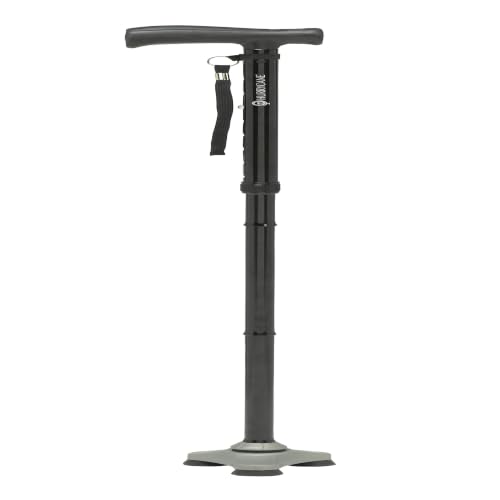
- Folds to 13.7"
- Adjusts from 30.5"–37.5"
- Pivoting three-point base
Best For: A compact-folding, height-adjustable cane
Wider Quad Base

- Self-standing, four-pronged base
- Adjusts from 29.5 to 38.4 inches
- 2.1 pounds; 300-pound capacity
Best For: Everyday support on smooth or mostly flat surfaces
Compact Quad Base

- Small, self-standing four-foot base
- 29- to 38-inch height adjustment
- 2 pounds; 300-pound capacity
Best For: Minimal walking support with a smaller cane footprint
Foldable Travel Pick

- Collapses to about 16 inches
- 31- to 38-inch adjustment
- Ergonomic grip; reversible base
Best For: Portable use with an ergonomic, ambidextrous setup
Best for Two-Pole Walking – York Nordic Motivator Walking Poles
For shoppers comparing parkinsons walking canes, these are a two-pole option for walking and rehabilitation rather than a single cane. Their contoured grips offer two thumb positions, and the flip-lock shafts adjust from 32 to 54 inches.
Best For: People who prefer using a pole in each hand for supported walking or therapist-guided rehab.
Pros:
- Two lightweight aluminum poles, about 9.5 ounces each without the optional rubber tip.
- Contoured grips offer alternative thumb positions that may reduce thumb-joint strain.
- Includes rubber feet, a travel bag, and snow baskets.
Cons:
- Requires using both hands rather than carrying one cane.
- Listed maximum weight support is 230 pounds.
Choose these if two-pole walking fits your mobility plan; they do not provide a Parkinson’s-specific visual cue.
Best for Standing Assistance – WHLICKS Dual-Handle Quad Cane
Among parkinsons walking canes, this WHLICKS model is worth considering when a broad base and an extra handle matter more than portability. Its four-pronged base stands on its own, while the lower assist handle is intended to help with rising from a seat.
Best For: Walkers who want a self-standing quad cane with an additional grip for seated-to-standing transitions.
Pros:
- Four rubber-tipped prongs provide a broad contact area on flat surfaces.
- Second handle provides another handhold when standing up.
- Adjusts from 31 to 38 inches and is rated to support up to 350 pounds.
Cons:
- At 2.2 pounds, it is heavier than the lighter single-cane option here.
- The wide base may be less convenient in tight spaces.
This is a practical choice if base stability and an extra grip are priorities, but it has no visual cueing feature for freezing episodes.
Best Foldable Option – REHAND Pivot Walking Cane
If you are comparing parkinsons walking canes for travel or everyday storage, the REHAND folds down and includes a travel bag. Its four-pronged pivoting tip is designed to stand upright, and the wider soft grip gives the palm more contact area than a traditional T-grip.
Best For: Someone who wants a packable single cane with a self-standing tip and adjustable height.
Pros:
- Collapsible aluminum shaft is easy to store or carry.
- Pivoting, rubber-padded four-pronged tip can stand on its own.
- Eight height settings in one-inch increments and an included wrist strap.
Cons:
- Pivoting tip may feel different from a fixed cane base.
- No Parkinson’s-specific visual cue is listed.
Its strongest selling point is convenience: a folding cane with a broader, pivoting tip, not a device designed to cue steps during freezing.
Best Visual Cue – Laser Cane for Parkinsons Disease
Unlike general-purpose parkinsons walking canes, this Laser Cane is described specifically for people who experience freezing episodes. It projects a bright line in front of the user as they step, providing a visual cue intended to help initiate movement and increase stride length.
Best For: Someone seeking a cane with a step-by-step visual cue for Parkinson’s-related freezing.
Pros:
- Projects a laser line ahead of each step as a visual cue.
- Designed with Parkinson’s-related freezing in mind.
- Uses an aluminum shaft with a rubber handle and base.
Cons:
- The supplied details do not specify battery requirements or adjustment settings.
- A visual cue may not help every person or every freezing episode.
If freezing is the main reason for shopping, this is the most purpose-specific option here; confirm its fit and operating details before buying.
Best Two-Pole Option – Urban Poling ACTIVATOR Walking Poles
Among parkinsons walking canes and other walking supports, the ACTIVATOR stands out as a pair of poles designed for balance and rehabilitation rather than a single cane. Its ergonomic CoreGrip handles and bell-shaped tips offer a different approach to supported walking.
Best For: Shoppers seeking two adjustable poles for walking exercise or rehabilitation.
Pros:
- Lightweight aluminum pair weighs 1.44 lb total.
- Adjusts for users 4’2″ to 6′ tall and collapses to 29″.
- Strapless CoreGrip handles support a neutral wrist position; interchangeable tips accommodate different surfaces.
Cons:
- Two poles may be less convenient to carry than one folding cane.
- Maximum stated user weight is 250 lb.
Choose these if you want a two-pole walking setup and the height and weight limits fit. They are not a direct substitute for a single-handed cane.
Best Wide Quad Base – KINGGEAR Self-Standing Walking Cane
For shoppers comparing parkinsons walking canes, the KINGGEAR offers a conventional one-handed cane with a self-standing, four-tipped rubber base. Its padded offset handle and folding design make it worth considering when grip comfort and storage matter.
Best For: Someone who wants a foldable cane with a wide, self-standing quad base.
Pros:
- 4.3″ quad base can stand on its own and has non-slip rubber tips.
- Six height settings span 31″–36″ in one-inch increments.
- EVA foam-padded offset handle is designed to reduce wrist pressure.
- Folds for storage and has a stated 300 lb load capacity.
Cons:
- Height range may not fit users who need a cane below 31″ or above 36″.
- The 4.3″ base takes up more floor space than a narrow cane tip.
The main draw is a broad base paired with a comfortable handle. Check the height range against your fitted cane height before buying.
Best Compact Fold – HurryCane Freedom Edition Walking Cane
If portability is a priority while comparing parkinsons walking canes, the HurryCane Freedom Edition folds to 13.7″ for storage. Its three-point SteadiGrip base uses a pivoting WhisperFlex design and can stand independently when needed.
Best For: Shoppers who want a height-adjustable cane that packs down compactly.
Pros:
- Folds to 13.7″ for travel or storage.
- Adjustable from 30.5″ to 37.5″.
- Three-point, 4.25″ SteadiGrip base offers independent standing.
Cons:
- Pivoting base may feel different from a fixed cane tip.
- Its 4.25″ base needs more clearance than a single-point tip.
This is the compact-storage pick of the three. Consider whether the pivoting base feels comfortable for your walking style before relying on it regularly.
Wider Quad Base – PELEGON Adjustable Cane
For shoppers comparing parkinsons walking canes, the PELEGON offers a medium-sized, four-pronged base that stands on its own and adds support on smooth indoor floors and most flat outdoor surfaces. Its height adjusts from 29.5 to 38.4 inches.
Best For: Someone who wants a self-standing cane with a broader quad base for everyday use on relatively flat surfaces.
Pros:
- Four rubber-tipped prongs provide multiple points of ground contact.
- Adjustable height accommodates a range of users.
- Weighs 2.1 pounds and is rated to support up to 300 pounds.
Cons:
- The medium-sized base may be less convenient in tight spaces than a small-base quad cane.
- Its stated surface suitability centers on smooth floors and mostly flat outdoor ground.
Choose this model if base size and self-standing convenience matter more to you than keeping the cane’s footprint compact. Check the height range against your fit before buying.
Among parkinsons walking canes, the Medline is a straightforward small-base quad option for someone seeking modest walking support. Its four-foot design stands on its own, while the foam handle provides a comfortable grip.
Best For: Someone who prefers a smaller quad-cane footprint and needs minimal support while walking.
Pros:
- Small, self-standing quad base offers support without a large footprint.
- Adjusts from 29 to 38 inches and supports up to 300 pounds.
- Lightweight aluminum construction weighs 2 pounds.
Cons:
- Described as providing minimal support, so it may not suit someone needing a more substantial mobility aid.
- The foam handle may not appeal to those who prefer a molded ergonomic grip.
This is the compact pick of the three: consider it if a small base and simple height adjustment are priorities, and confirm that a cane provides enough support for your needs.
For buyers researching parkinsons walking canes who also need easy storage, the Rehand combines a four-pronged base with a collapsible shaft that packs down to about 16 inches. Its base can be oriented for right- or left-handed use.
Best For: Someone who wants a portable quad cane with an ergonomic handle and right- or left-hand setup.
Pros:
- Folds to about 16 inches and includes a strap for securing the folded cane.
- Eight height settings span 31 to 38 inches.
- Wider, longer grip pairs firm PP support with softer TPR contact.
- Weighs 16 ounces.
Cons:
- Its 31-inch minimum is taller than the minimum settings of the other two canes here.
- The notes do not specify a weight capacity.
Rehand stands out for portability and grip design. Check that its height range works for you, and verify the missing capacity information if that specification is important.
How We Picked the Best Parkinsons Walking Canes
We selected a range of designs relevant to shoppers comparing Parkinsons Walking Canes: wide- and small-base quad canes, folding and pivoting canes, two-pole options, and a laser-cue cane. We considered stated adjustability, grip design, base style, portability, and listed weight capacities where available. These are product-feature comparisons, not clinical tests or proof that a device will prevent falls.
Quick Comparison: Which Style Fits Your Needs?
Quad canes have four ground contact points and can be useful when you want a cane that stands more readily between steps. A wider base generally takes up more floor space; a smaller base may be easier to position in tight areas. Single-point, folding, and pivoting canes prioritize a smaller footprint or portability, but they may not provide the same stationary support as a quad base. Walking poles engage both arms and may suit people who can coordinate a reciprocal stride; they are not a substitute for a weight-bearing walker. A laser-cue cane is worth discussing with a clinician if freezing of gait is the main concern: the visual line may help some users initiate a step, but results vary.
Key Buying Factors for Parkinson’s Walking Canes
Match the Aid to Your Gait
Think about where difficulty occurs: starting, turning, walking through doorways, or standing still. Parkinson’s symptoms can change during the day, so an aid that feels steady in a straight hallway may behave differently during a turn or a freezing episode. A physical or occupational therapist can assess your gait and help determine whether a cane, poles, or a walker offers appropriate support.
Check Fit, Grip, and Capacity
Choose a height-adjustable model and have it fitted while wearing your usual shoes. A handle should feel secure without forcing an awkward wrist position; larger or ergonomic grips may be easier for some hands. Confirm the manufacturer’s weight rating, especially if you lean heavily on the device. Check that adjustment locks, folding joints, and rubber tips are secure before use.
Consider the Places You Walk
A large quad base can be cumbersome on stairs, narrow paths, or uneven ground. A self-standing design may be convenient indoors, but it should still be placed where it will not become a trip hazard. For travel, compare folded length and setup effort—not just weight. Replace worn tips promptly, and practice with a new aid in a safe setting before relying on it outside.
Who Should Buy Which Parkinsons Walking Canes?
Choose a wide-base quad cane if a broader stationary footprint is the priority and you have room to maneuver it. Consider a small-base quad cane for a more compact option. Pick a folding cane if storage matters and a clinician confirms that its level of support is suitable. Try walking poles if you can comfortably use both hands and want a coordinated walking aid. If freezing is your chief difficulty, ask a clinician whether a laser-cue cane is appropriate. If you need substantial weight-bearing support or fall frequently, ask whether a walker would be safer than any cane here.