A good activity book should feel inviting, not like a test. The right choice depends on the reader’s interests, vision, energy, and how much help they want while completing a page.
These 10 senior activity books span large-print puzzles, memory games, coloring, writing prompts, and activities designed for people living with cognitive decline. Use the guide below to narrow the options before you buy.
Best 10 Senior Activity Books Picks for 2026
Best for Shared Play

- Solo and group puzzles
- Large print with varied difficulty
- Answers after each section
Best For: Older adults who enjoy puzzles with family or friends
Best for Easy Activities

- 99 approachable activities
- Extra-large print
- Created by occupational therapists
Best For: Seniors who prefer straightforward, large-print tasks
Best for Varied Solo Puzzles
Memory Activity Book for Senior Women

- 100 exercises in five categories
- Large print without tiny grids
- Difficulty builds gradually
Best For: Senior women seeking a varied solo puzzle routine
Best for Calm Sessions
Fun and Relaxing Activities for Adults
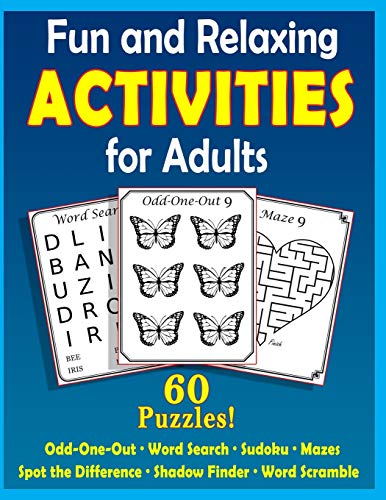
- 60 puzzles across seven types
- Large print and simple directions
- Includes caregiver tips
Best For: People with mild dementia seeking low-pressure activities
Most Puzzle Variety

- 501 varied exercises
- Large-print, 8.5-by-11-inch pages
- Solutions and 60 quiz questions
Best For: Seniors who enjoy mixed puzzles and self-checking
Gentle Activity Pick
Over 90 Easy and Fun Dementia Activities

- 90-plus activities in five categories
- Large-print pages
- Answers included
Best For: Seniors with dementia who enjoy varied, easy activities
Relaxed Puzzle Pick
Stress Relief Memory Activity Book for Seniors

- Mix of memory activities and puzzles
- Large-print, 8.5-by-11-inch format
- 155 pages
Best For: Seniors seeking casual, large-print puzzle time
Gentle Memory Pick
Memory Activity Workbook for Seniors

- 100 easy brain games
- Large-print, 150-page workbook
- Mix of word, number, memory, and visual activities
Best For: Low-pressure memory activities with clear instructions
Variety Pick
Relaxing Brain Activities for Seniors

- Puzzles, coloring, writing, and memory exercises
- Easy-to-medium, large-print activities
- Solutions printed at the back
Best For: Readers who want many activity types in one book
Follow-Up Workbook Pick
Memory Activity Workbook for Seniors Volume 2

- 100 easy brain games
- Large-print, 152-page follow-up
- Word, number, memory, and visual activities
Best For: More gentle activities in the Memory Support & Activity Series
Best for Shared Play – Memory Games for Seniors
Among senior activity books, this large-print collection stands out for combining solo puzzles with games designed for two players or groups. Its 122 pages include word searches, crosswords, picture puzzles, and memory exercises arranged across four skill categories.
Best For: Older adults who enjoy varied puzzles and playing alongside family or friends.
Pros:
- Large print and instructions at the start of each game.
- Two or three difficulty levels per game offer room to adjust the challenge.
- Hand-drawn visual puzzles add variety beyond word games.
- Answers follow each section for convenient checking.
Cons:
- The more advanced challenges may not suit someone seeking only easy activities.
- Its 8.5-by-11-inch format is less compact for travel.
Choose this one when opportunities to play together matter as much as puzzle variety; the graduated challenges make it more flexible than an easy-only collection.
Best for Easy Activities – The Activity Book for Seniors
If you’re shopping for senior activity books for someone who benefits from straightforward tasks, this collection offers 99 large-print activities. Created by experienced occupational therapists, it includes matching, word searches, finishing phrases, copying designs, and other approachable exercises.
Best For: Seniors with dementia, cognitive decline, or impaired vision who prefer easy activities.
Pros:
- Extra-large print on 8.5-by-11-inch pages.
- 99 activities span words, drawing, matching, and categories.
- Designed by experienced occupational therapists.
Cons:
- The emphasis on easy exercises may feel too simple for avid puzzlers.
- Its full-size pages are less portable than a smaller book.
This is a practical choice when accessibility and a sense of accomplishment take priority over difficult puzzles.
Best for Varied Solo Puzzles – Memory Activity Book for Senior Women
For shoppers comparing senior activity books with plenty of solo variety, this large-print title offers 100 exercises created for senior women. Five categories cover visual challenges, reasoning, word puzzles, memory exercises, and gentle math, with difficulty designed to build gradually.
Best For: Senior women who want a varied, independent puzzle routine.
Pros:
- Five exercise categories help keep the pages varied.
- Large print and clean layouts avoid tiny grids.
- Gradual difficulty offers a gentler starting point.
Cons:
- Even gentle math may not appeal to readers who want word puzzles only.
- The 8.5-by-11-inch, 145-page book is less compact for carrying around.
Pick this for someone who likes moving between puzzle types rather than working through page after page of the same game.
Best for Calm Sessions – Fun and Relaxing Activities for Adults
Among senior activity books intended for people with mild dementia, this large-print option focuses on calm, accessible puzzling. Its 60 exercises range from extremely easy to slightly more challenging and include mazes, word searches, sudoku, and spot-the-difference puzzles.
Best For: People with mild dementia who enjoy short, reassuring activities, alone or with a caregiver.
Pros:
- Simple instructions, large text, and easy-to-read solutions.
- Seven puzzle types provide variety.
- Includes practical tips for caregivers using the book together.
- Activity pages avoid mentioning dementia or memory loss.
Cons:
- With 60 puzzles across 88 pages, it is shorter than some larger collections.
- Sudoku and word scrambles may not appeal to every reader.
This is the gentler pick for low-pressure activity sessions, especially when a caregiver wants guidance on making the time enjoyable.
Most Puzzle Variety – Memory Games for Seniors
Among senior activity books, this large-print, 110-page option stands out for its stated 501 exercises. It mixes brainteasers and logic puzzles with recall, concentration, and general-knowledge questions, so readers can switch activities rather than work through one puzzle type.
Best For: Seniors who want a broad mix of puzzles and quizzes with answers for self-checking.
Pros:
- 501 exercises with varying difficulty levels.
- Large-print edition with 8.5-by-11-inch pages.
- Includes solutions and 60 general-knowledge quiz questions.
Cons:
- The varying difficulty may not suit someone seeking only easy activities.
- The 110-page format may feel compact for the stated exercise count.
Choose this one for variety and a sizable exercise count; readers who prefer consistently gentle activities may be better served by a more narrowly focused book.
Gentle Activity Pick – Over 90 Easy and Fun Dementia Activities
For shoppers comparing senior activity books for a person with dementia, this large-print book offers more than 90 activities organized into five areas: attention, memory, language, numbers, and drawing. The mix includes matching, word puzzles, easy math, and coloring-style tasks.
Best For: Seniors with dementia who would enjoy a range of easy, large-print activities, with support as needed.
Pros:
- More than 90 activities across five categories.
- Large-print, 8.5-by-11-inch format.
- Answers at the back for checking completed puzzles.
Cons:
- The mix of activity types may not suit someone who prefers a single familiar format.
- The publisher reports corrections to several pages in updated versions; buyers may want to check which version they receive.
This is a practical choice when variety and accessible print matter. Its activities are intended for engagement, not as a substitute for dementia care or treatment.
Relaxed Puzzle Pick – Stress Relief Memory Activity Book for Seniors
If you want senior activity books geared toward casual puzzle time, this 155-page collection presents memory activities, brain games, and puzzles in a large-print layout. Its 8.5-by-11-inch format is designed for working through activities at home or while traveling.
Best For: Seniors who want a large-print assortment of puzzles and games for relaxed, independent use.
Pros:
- Combines memory activities, puzzles, and brain games.
- Large-print layout on 8.5-by-11-inch pages.
- 155 pages offer room for extended use.
Cons:
- The supplied description does not specify the number of activities or difficulty levels.
- No answer key is mentioned in the supplied details.
Pick this for its straightforward, leisure-focused format, but consider another title if a stated puzzle count or confirmed solutions are important to you.
Gentle Memory Pick – Memory Activity Workbook for Seniors
Among senior activity books, this 150-page workbook is a low-pressure choice for readers who prefer easy games to challenging puzzles. Its large-print activities mix words, numbers, memory prompts, and visual exercises.
Best For: Seniors and caregivers looking for simple, calming activities with clear instructions.
Pros:
- Includes 100 easy brain games across several activity types.
- Large-print, 8.5-by-11-inch format is designed for comfortable reading.
- Emphasizes enjoyment and confidence rather than a clinical approach.
Cons:
- The deliberately easy exercises may not satisfy experienced puzzle solvers.
- Its memory-focused approach offers less emphasis on classic puzzle variety than a broader activity collection.
Choose this one when an approachable routine matters more than increasing difficulty; it is presented as an enjoyable activity book, not a medical treatment.
Variety Pick – Relaxing Brain Activities for Seniors
If you want senior activity books with more than one style of puzzle, this 180-page collection covers word searches, sudoku, mazes, crosswords, coloring, trivia, and memory exercises. Activities range from easy to medium difficulty.
Best For: Beginners and seniors who enjoy switching between puzzles, creative activities, and memory prompts.
Pros:
- Wide selection of puzzles, visual games, coloring, and writing activities.
- Large-print letters, numbers, and grids in an 8.5-by-11-inch format.
- Instructions identify the skills associated with each game, and solutions are printed at the back.
Cons:
- Medium-level activities may be less suitable for someone seeking only very easy exercises.
- Readers who want a dedicated memory workbook may find the broad mix less focused.
This is the stronger fit for activity variety and printed answer keys, though its skill-building language should not be taken as a guarantee of health outcomes.
Follow-Up Workbook Pick – Memory Activity Workbook for Seniors Volume 2
For shoppers looking for more senior activity books in the Memory Support & Activity Series, Volume 2 offers another 100 easy brain games. The 152-page large-print workbook combines word, number, memory, and visual activities in a gentle format.
Best For: Readers who want a follow-up volume of simple activities or caregivers seeking an approachable daily option.
Pros:
- Offers 100 easy games with a mix of activity types.
- Large-print, 8.5-by-11-inch pages and clear instructions support ease of use.
- Low-pressure approach emphasizes enjoyment and small wins.
Cons:
- Easy difficulty may feel repetitive to confident puzzle solvers.
- Its described format closely resembles the first volume, so shoppers seeking a different style may prefer a broader collection.
Volume 2 makes sense if the first workbook’s gentle format appeals to you; its listed activities are for engagement and enjoyment, not a substitute for clinical care.
How We Picked These Senior Activity Books
We looked for a useful range of formats and intended audiences across the 10 selected books: general puzzle collections, relaxing mixed-activity books, workbooks, and titles aimed at people living with dementia or other cognitive changes. Large-print presentation and approachable activities were recurring considerations. A book’s title or description can indicate its intended use, but it cannot establish that its exercises improve memory or treat cognitive decline.
Quick Comparison: Which Type Fits?
- For puzzle fans: Look at collections centered on word searches, crosswords, and memory games, especially if the reader already enjoys those formats.
- For variety: Mixed-activity books offer a change of pace between puzzles, coloring, writing, and visual exercises.
- For shorter, simpler sessions: Books labeled easy or intended for people living with dementia may be a better starting point than dense puzzle collections.
- For a workbook routine: The 100-game workbook titles provide a more structured format; check the sample pages to see whether the instructions and difficulty feel comfortable.
Key Buying Factors for Senior Activity Books
Readable Pages
“Large print” is helpful, but font size alone is not enough. Preview interior pages when possible for clear contrast, uncrowded layouts, legible instructions, and enough space to write. If the reader uses a magnifier or has limited hand dexterity, pay particular attention to the size of answer boxes and the book’s binding.
Enjoyable Difficulty
Match the activities to what the person likes doing now, rather than choosing a book based solely on an age label. Too-easy pages can feel repetitive; overly difficult ones can be discouraging. Familiar puzzle types and a mix of difficulty levels can help, provided the reader wants a challenge.
Cognitive and Care Needs
For someone living with dementia, prioritize clear instructions, familiar themes, and pages that can be enjoyed without pressure to finish or get every answer right. A caregiver may want activities they can do together and pause at any time. No activity book should be treated as a medical intervention, even when its cover makes brain-health claims.
Format and Value
Check the page count, activity variety, answer-key availability, and whether puzzles repeat. A high exercise count may offer value for an enthusiastic puzzler, but page design matters more than volume for someone who tires easily.
Who Should Buy Which Senior Activity Books?
Choose a puzzle-heavy collection for an independent reader who regularly completes word games. Pick a mixed-activity book for someone who prefers switching between quiet pastimes. If you are buying for a person with cognitive decline, start with an easy, clearly laid-out title and review a few pages together before committing to a longer routine. For a gift, favor familiar interests and readable pages over promises about mental performance.