Calling from another room should not require shouting, carrying a phone, or navigating a complicated device. The right home intercom can make everyday check-ins easier for an older adult and the people who support them.
These 10 picks include hands-free voice intercoms, room-to-room systems, and caregiver alert buttons. The best choice depends on whether you need a conversation, a simple call for help, or both.
Best 10 Senior Friendly Home Intercom Systems Picks for 2026
Best Plug-In Four-Pack

- Four plug-in intercom units
- Full-duplex, hands-free conversation
- Optional five-second Auto Answer
Best For: Multiroom homes with convenient outlets
Best Rechargeable Two-Pack
- Two portable rechargeable units
- Full-duplex conversations
- Status LEDs and eight volume levels
Best For: Two-room check-ins without constant plug-in power
Best Caregiver Alert Bundle

- Two wearable or mountable call buttons
- Two plug-in pager receivers
- Separate radios for conversation
Best For: Caregiver alerts plus a separate talk option
Best Expandable Rechargeable Pair

- Two rechargeable units; no Wi-Fi needed
- Pair more units to ring together
- One-press, hands-free two-way talk
Best For: Portable room-to-room use with room to expand
Most Complete Care Kit
CallToU Pager and Walkie-Talkie Set

- Two call buttons and two plug-in receivers
- Two separate walkie-talkies for conversation
- Waterproof, dustproof buttons and receivers
Best For: Two-location alerts alongside separate voice communication
Best Compact Care Kit
CallToU Pager and Intercom Set

- One-touch alert button and plug-in receiver
- Two rechargeable intercoms for daily talks
- No Wi-Fi, app, or subscription needed
Best For: Single-location help alerts and room-to-room check-ins
Best for Hands-Free Talk
CallToU WT42 Two-Way Intercoms

- VOX hands-free mode and large talk buttons
- Up to 36 hours of stated standby time
- No separate call-button pager included
Best For: Portable voice check-ins indoors or outdoors
Best for Flexible Channels
Wuloo 10-Channel Home Intercom
- Two-station set with adjustable volume
- 10 channels and three digital codes
- Talk, Monitor, VOX, Group, and Calling modes
Best For: Households willing to learn extra controls for more channel options
Easiest Setup
Nexytrix Plug-and-Play Intercom

- Preconfigured; no Wi-Fi or app needed
- Large buttons and push-to-talk controls
- Two units with batteries and charging bases
Best For: Seniors and caregivers seeking quick setup and simple controls
Best for Hands-Free Talking
Full-Duplex Rechargeable Intercom

- Hands-free, full-duplex conversation
- Rechargeable with a charging base
- Matching A/B settings for setup
Best For: Users who need to answer calls without pressing a button
Best Plug-In Four-Pack – Hosmart UltraSpeak HY812
For shoppers comparing senior friendly home intercom systems, the Hosmart UltraSpeak offers four room-to-room units with full-duplex conversation: both people can talk without holding a button. Plug them in, select a channel, and start talking without pairing.
Best For: Households wanting four always-powered stations and hands-free conversations across several rooms.
Pros:
- Four units are included for placement in multiple rooms.
- Auto Answer can pick up after five seconds of ringing, so the recipient need not press a button.
- The stated range is approximately 1,200 feet in an open outdoor environment.
Cons:
- Every unit needs an outlet; “wireless” refers to communication, not battery operation.
- The advertised range is an outdoor figure, not a guaranteed indoor distance.
This is a practical choice when outlets are available where you need stations. Auto Answer may be especially useful when getting to a button quickly is difficult.
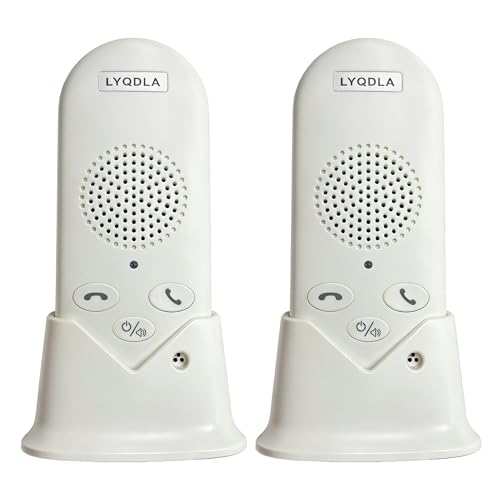
Best Rechargeable Two-Pack – LYQDLA D20
The LYQDLA D20 is a two-unit option among senior friendly home intercom systems for people who do not want stations tethered to outlets. Its rechargeable battery, full-duplex talking, and visible status indicators support straightforward daily check-ins.
Best For: Two-room communication where portable, rechargeable units are more useful than plug-in stations.
Pros:
- Both sides can speak and listen at once without push-to-talk.
- LED indicators show talk, standby, charging, and low-battery status.
- Four ringtones and eight volume levels offer adjustment for the household.
Cons:
- The units need recharging; the stated week of normal use depends on the described light calling pattern.
- The 1,600-foot range is an outdoor figure, so indoor performance may differ.
Choose this pair if moving units around matters more than keeping them continuously powered. The status lights also make it easier to tell when a recharge is due.
Best Caregiver Alert Bundle – CallToU Pager and Radios
Unlike typical senior friendly home intercom systems, this CallToU bundle combines two call buttons and two plug-in pager receivers with two radios for conversation. A person needing help can wear a call button on the included neck strap, while a caregiver can use a receiver elsewhere in the home.
Best For: Caregiving setups that need a simple help alert as well as a separate way to talk.
Pros:
- Includes two call buttons, two receivers, and two radios.
- Call buttons can be worn or mounted; the receivers offer 55 tones and five volume settings.
- The call buttons and receivers are described as waterproof and dustproof.
Cons:
- Pager receivers must be plugged into outlets.
- The pager and radio systems are separate and cannot be paired with each other.
- The seller recommends keeping the pager system within 300 feet indoors, despite its 500-foot open-area figure.
This bundle makes the most sense when an alert button is the priority. Set up and explain the pager and radios as separate devices so everyone knows which one to use.
Best Expandable Rechargeable Pair – VJANW S10-W
The VJANW S10-W gives shoppers considering senior friendly home intercom systems a rechargeable two-pack that works without Wi-Fi, an app, or installation. Press once to start a hands-free, two-way conversation; there is no need to hold the button while speaking.
Best For: Households starting with two portable stations and considering additional compatible units later.
Pros:
- Works out of the box without Wi-Fi or an app.
- Additional units can be paired so a call rings the other units.
- Offers four ringtones, eight volume levels, an LED indicator, and a low-battery reminder.
Cons:
- Starting a conversation still requires a button press; it is not voice-activated.
- Only two intercoms can talk at once, even if more units are paired.
- The stated indoor range is 100–300 feet, rather than the 1,600-foot outdoor figure.
This is a flexible choice for a home that may add stations later. Its one-press operation is worth distinguishing from automatic answering if the intended user cannot easily reach a button.
Most Complete Care Kit – CallToU Pager and Walkie-Talkie Set
Among senior friendly home intercom systems, this six-piece CallToU kit combines two call buttons, two plug-in alert receivers, and two walkie-talkies. It suits households that want a simple way to request help as well as a separate way to talk.
Best For: Caregiver and senior pairs who want alert buttons in two locations plus room-to-room voice communication.
Pros:
- Two call buttons can be worn on neck straps or mounted where help may be needed.
- Receivers offer 55 chimes and five volume levels, with a stated maximum of 110 dB.
- Call buttons and receivers are waterproof and dustproof.
Cons:
- The pager and walkie-talkie systems are separate and cannot be paired with each other.
- Receivers must be plugged into outlets; the maker recommends staying within 300 feet indoors because obstacles affect range.
Choose this set if flexible button placement matters more than having every device work together as one system.
Best Compact Care Kit – CallToU Pager and Intercom Set
This CallToU set is a straightforward option among senior friendly home intercom systems: one call button triggers a plug-in receiver, while two rechargeable intercoms handle everyday conversation. It works without Wi-Fi, an app, or a subscription.
Best For: A senior and caregiver who need one dedicated help button and occasional room-to-room check-ins.
Pros:
- One-touch button sends an alert to the plug-in receiver.
- Two intercoms support direct voice check-ins without a phone.
- Waterproof button can be worn, kept bedside, or mounted; the intercoms provide low-battery reminders.
Cons:
- Only one call button and one alert receiver are included.
- The receiver needs an outlet, and the intercoms need recharging.
This is a sensible smaller kit when a single alert location is enough and the household also wants separate voice devices.
Best for Hands-Free Talk – CallToU WT42 Two-Way Intercoms
For shoppers comparing senior friendly home intercom systems primarily for conversation, this two-unit CallToU set offers voice-activated VOX operation and large push-to-talk buttons. Its stated maximum range is 3,300 feet, though actual coverage will depend on the surroundings.
Best For: Caregivers who want rechargeable, portable voice communication between rooms or outdoor areas rather than a separate help-button pager.
Pros:
- VOX mode allows speaking without holding the talk button.
- Rechargeable 1,000 mAh batteries offer up to 36 hours of standby time, according to the product notes.
- Sixteen channels, keypad lock, and water-resistant construction add flexibility.
Cons:
- No separate wearable call button or plug-in alert receiver is listed.
- Units need charging, and the advertised maximum range may not reflect indoor performance.
Pick these if hands-free check-ins are the priority; choose a pager kit instead if the senior needs a dedicated one-press alert button.
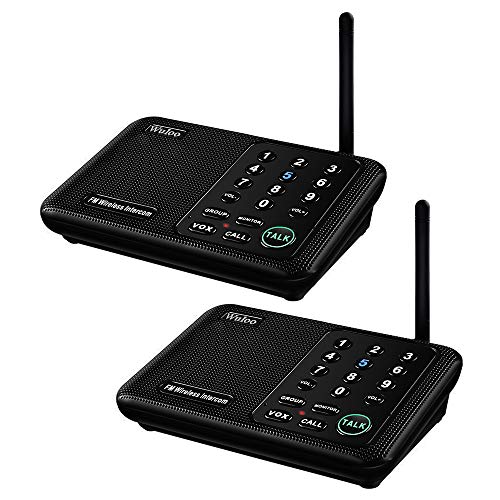
Best for Flexible Channels – Wuloo 10-Channel Home Intercom
For shoppers comparing senior friendly home intercom systems, this two-station Wuloo set offers room-to-room communication with adjustable volume and a stated range of up to one mile. Its 10 channels and three digital codes give households more setup options than a basic two-channel system.
Best For: Households that want multiple channel choices and can spend time learning the controls.
Pros:
- Includes two stations, a quick-start guide, and a detailed manual.
- Offers Talk, Calling, Monitor, VOX, and Group functions.
- Supports a compatible 5V/1A power bank for use away from an outlet.
Cons:
- Its range is a stated maximum; performance inside a home may vary.
- Multiple channels and functions may take practice for someone who wants only a simple call button.
The Wuloo is a versatile pick if channel flexibility matters, but a senior who prefers minimal controls may be happier with a simpler intercom.
Easiest Setup – Nexytrix Plug-and-Play Intercom
Among senior friendly home intercom systems, this two-unit Nexytrix model focuses on straightforward setup: the units come preconfigured and need no Wi-Fi or app. Large buttons and push-to-talk operation are designed to make calling between rooms less complicated.
Best For: Seniors and caregivers who prioritize simple controls and quick setup.
Pros:
- Preconfigured units can be used after connecting them to power.
- Large buttons and push-to-talk operation keep everyday use straightforward.
- Each unit has an 1800mAh battery and charging base for portable use.
Cons:
- Users must press to talk rather than converse hands-free.
- The manufacturer recommends keeping units docked for maximum readiness.
Its stated 3,280-foot maximum range may suit a larger property, though walls and layout can affect real-world coverage. Choose it primarily for its simple setup and familiar push-to-talk controls.
Best for Hands-Free Talking – Full-Duplex Rechargeable Intercom
If hands-free conversation is the priority when shopping for senior friendly home intercom systems, this rechargeable model offers full-duplex two-way audio, so answering a call does not require pressing a button. The supplied notes describe a simple setup using matching A or B frequency settings.
Best For: Someone who needs to answer from another room while keeping their hands free.
Pros:
- Full-duplex operation allows hands-free two-way conversation.
- Rechargeable design includes a charging base.
- Stated maximum range of half a mile offers flexibility for home and nearby outdoor use.
Cons:
- Only two frequency settings, A and B, are described.
- The supplied notes conflict on standby time, citing both 120 and 150 hours.
This model’s main advantage is answering without a push-to-talk step. Confirm the actual standby specification with the seller if time between charges is important.
How We Picked the Best Senior Friendly Home Intercom Systems
We focused on the needs that matter most in a senior-friendly setup: simple controls, audible communication, convenient placement, and a clear way to reach someone elsewhere in the home. The selected products include both two-way voice intercoms and caregiver pagers because they solve different problems. We also considered advertised features such as hands-free operation, full-duplex conversation, rechargeable power, and multi-room use. Feature claims are a starting point, not a guarantee of performance in every house.
Quick Comparison: Intercom or Alert Button?
Choose a two-way intercom when both people need to speak and listen, such as checking in between a bedroom and kitchen. A full-duplex model can allow more natural conversation without taking turns pressing a talk button; confirm how the specific unit operates before buying. Choose a caregiver pager when the priority is making it easy to signal for assistance with one press. An alert button alone may not let the person explain what they need. If both functions matter, look closely at the product’s stated voice and alert capabilities rather than assuming every device labeled an intercom offers both.
Key Buying Factors for Senior-Friendly Home Intercom Systems
Controls, Sound, and Conversation Style
Look for large, clearly labeled buttons, adjustable volume, and a straightforward calling process. Consider hearing needs and background noise in the rooms where the units will sit. Hands-free or full-duplex calling may suit someone who finds push-to-talk difficult, while a single call button may be easier for someone who only needs to summon help.
Coverage and Placement
Count the rooms and people who need to connect before choosing a kit. Check whether additional units can be added and whether calls can reach a specific room or every unit. Advertised long-range figures may reflect open conditions; walls, floors, and other electronics can affect reception. Test the system in its intended locations during the return period.
Power and Daily Reliability
Decide whether plug-in stations, rechargeable units, or a portable button best fit the routine. Plug-in devices need accessible outlets and will generally stop working during a power outage unless backed up. Rechargeable devices need a charging habit. Place any help button where it can be reached from the bed or usual chair, and check the battery or connection regularly.
Who Should Buy Which Senior Friendly Home Intercom Systems?
For casual room-to-room chats, start with a simple two-way intercom and prioritize sound clarity and easy calling. For more natural back-and-forth, consider a hands-free full-duplex option. For someone who mainly needs to request assistance, a caregiver pager with an easy-to-reach button may be the better fit. Larger or multi-floor homes should prioritize expandable coverage and test it thoroughly. None of these devices should be assumed to replace a monitored emergency-response service or a reliable way to call emergency services.