Choosing among wheelchair ramps for temporary use starts with one practical question: what obstacle must the ramp overcome? A small threshold needs a very different solution from stairs, a raised doorway, or a vehicle entrance.
This roundup compares 10 portable options by ramp length, threshold height, materials, traction, portability, and support features so you can choose a safer fit for short-term accessibility needs.
Best 10 Wheelchair Ramps for Temporary Use Picks for 2026
Flexible Entry Access

- 800-pound aluminum capacity
- Folds with handle for transport
- Fits 4-12-inch rises
Best For: Temporary access over home and garage steps
Low-Threshold Solution
Adjustable Bridge Doorway Ramp

- Fits thresholds up to 1.6 inches
- Adjusts to 2.8-5.1-inch openings
- 700-pound aluminum capacity
Best For: Sliding doors and compatible low doorway thresholds
Compact Step Access

- Fits 3-9-inch rises
- Folds for storage and travel
- 800-pound aluminum capacity
Best For: Temporary access over one or two modest steps
Heavy-Duty Threshold Access

- 3-inch beveled threshold design
- Wide 35.5-inch rubber surface
- One-piece, no-tool setup
Best For: Heavy-duty temporary doorway and garage transitions
Best Portable Pick
VNN 6-Foot Seamless Aluminum Ramp

- 800-lb capacity with aluminum construction
- Double non-skid surface and safety side features
- Folds for transport and storage
Best For: Temporary access over 6- to 18-inch steps
Best for Higher Steps
TaiH Leo 8-Foot Ramp with Support Legs
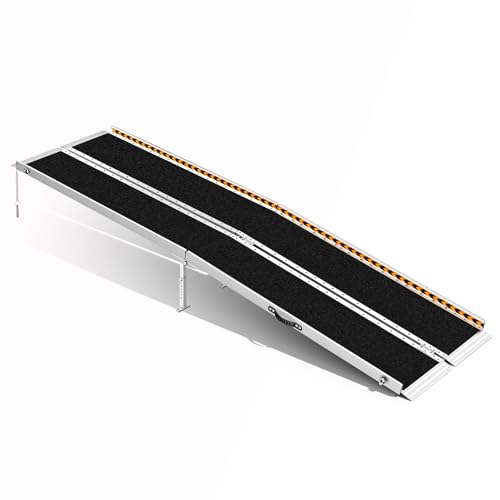
- Designed for 8- to 24-inch steps
- Adjustable legs add mid-point support
- 800-lb capacity and tool-free setup
Best For: Temporary access over taller home steps
Best Overall
FACHNUO 4FT Portable Wheelchair Ramp

- 800-pound capacity for multiple mobility devices
- Recommended for 4- to 12-inch step heights
- Folds for transport and storage
Best For: Higher steps and users needing extra ramp length
Best Compact Safety Features

- Reflective strips and raised baffles improve visibility
- Recommended for lower steps and thresholds
- Folds with a built-in carrying handle
Best For: Short access points where portability and visibility matter
Flexible Entry Access – VNN 4-Foot Portable Ramp
For wheelchair ramps for temporary use at home, the VNN 4-foot model offers a foldable aluminum design with an 800-pound capacity. It is intended for rises from 4 to 12 inches, so measure the step height before ordering.
Best For: Temporary access over home or garage steps, vehicle loading areas, and raised doorways.
Pros:
- Folds for carrying and storage and includes a comfortable handle.
- Double non-skid design combines a folded aluminum surface with a non-skid layer.
- Side baffles, reflective warning stickers, and transition plates support safer positioning.
- Aluminum construction supports up to 800 pounds.
Cons:
- At 23.8 pounds, it is less convenient to carry than lighter threshold ramps.
- Its recommended rise range is limited to 4-12 inches.
- The ramp may sink during use before rebounding, according to the product notes.
This is a practical temporary ramp when you need a longer, foldable solution for moderate steps. Confirm the required rise and available landing space, and use the included screws when securing it to a wooden platform.
Low-Threshold Solution – Adjustable Bridge Doorway Ramp
This bridge-style option suits wheelchair ramps for temporary use across low door thresholds and sliding-door tracks. Its 1.6-inch maximum height and adjustable support width make accurate measurements especially important before purchase.
Best For: Sliding doors, patio thresholds, and small indoor floor-level changes up to 1.6 inches high.
Pros:
- Adjustable removable support bars fit openings from 2.8 to 5.1 inches wide.
- Wide 27.6-by-17-inch bridge design helps span compatible tracks and thresholds.
- Grooved aluminum surface provides traction for wheelchairs, walkers, scooters, and power chairs.
- Arrives assembled and supports up to 700 pounds.
Cons:
- It is suitable only for low barriers no higher than 1.6 inches.
- Support width must be adjusted with a screwdriver.
- It may need to be removed before closing a hinged or sliding door.
Choose this ramp when the main challenge is a low threshold rather than a step. Check both the threshold height and support opening, then verify door clearance during use.
Compact Step Access – Portable 3-Foot Aluminum Ramp
For wheelchair ramps for temporary use over one or two home steps, this 3-foot aluminum ramp combines foldable storage with an 800-pound capacity. It is designed for rises from 3 to 9 inches, making height measurement essential.
Best For: Doorways, raised entrances, and steps measuring 3-9 inches high, including travel or vehicle use.
Pros:
- Folds in half and weighs about 17-18.7 pounds for easier transport.
- Non-slip surface, rear anti-slip mat, side baffles, and reflective strips add practical safety features.
- Supports manual and electric wheelchairs, scooters, walkers, trolleys, and strollers.
- Corrosion-resistant aluminum is suitable for indoor and outdoor use.
Cons:
- The recommended rise range stops at 9 inches.
- Its 3-foot length may not provide enough reach for taller steps.
- Users must consult the size guide and measure the vertical rise before buying.
This model is a useful middle ground for temporary access: lighter and shorter than many longer ramps while still offering a substantial load rating. It is best matched to modest steps where storage space and portability matter.
Heavy-Duty Threshold Access – VEVOR 3-Inch Rubber Ramp
This solid rubber threshold ramp is a sturdy choice among wheelchair ramps for temporary use at doorways, garages, gardens, and barns. Its 3-inch rise, beveled edges, and one-piece design create a simple transition without tools.
Best For: Door thresholds and raised surfaces requiring a broad, high-capacity temporary transition.
Pros:
- Supports wheelchairs, scooters, skates, and household vehicles with a listed capacity of up to 2,200 pounds in the product description.
- 35.5-inch width accommodates wheelchairs up to 26.8 inches wide.
- Grooved rubber tread provides traction, while beveled edges smooth the approach.
- One-piece design needs no assembly or tools.
Cons:
- At about 29 pounds, it is relatively heavy for frequent repositioning.
- It is fixed at a 3-inch rise and cannot be adjusted for other heights.
- The rubber may have a slight smell, according to the product notes.
Consider this ramp when stability, width, and load capacity matter more than lightweight portability. Its broad rubber construction works well for temporary placement, but measure the threshold and account for its substantial weight.
Best Portable Pick – VNN 6-Foot Seamless Aluminum Ramp
For wheelchair ramps for temporary use, the VNN 6-foot model offers a practical balance of length, portability, and stability. It folds for storage, weighs 35.5 pounds, and is designed for steps between 6 and 18 inches high.
Best For: Home doorways, garage steps, loading areas, and users who need a foldable ramp for wheelchairs, scooters, walkers, or carts.
Pros:
- 800-pound load capacity with sturdy aluminum construction.
- Seamless center hinge, raised side baffles, and reflective warning strips support safer use.
- Textured aluminum plus a non-skid layer provides double traction protection.
- Foldable design and upgraded carrying handle simplify transport and storage.
Cons:
- Limited to step heights of 6 to 18 inches.
- At 72 inches long, it may require more setup space than a short threshold ramp.
With its relatively manageable weight and 800-pound capacity, this is a versatile temporary-access option when the step height falls within its specified range.
Best for Higher Steps – TaiH Leo 8-Foot Ramp with Support Legs
Among wheelchair ramps for temporary use, this 8-foot aluminum ramp is suited to taller steps and situations where added mid-ramp support is useful. It folds without tools and includes adjustable support legs for improved stability under load.
Best For: Home entrances, garages, and indoor or outdoor access points with step heights from 8 to 24 inches.
Pros:
- Fits 8- to 24-inch step heights and supports up to 800 pounds.
- Two adjustable support legs help reduce sagging or wobbling.
- Textured, frosted surface and side baffles provide added traction and edge protection.
- Sets up without tools and folds to a more compact 48-by-14-by-6.3-inch size.
Cons:
- Weighs 55 pounds, so the supplied notes recommend a two-person lift.
- The 8-foot length requires more available floor space during use.
This model is a strong choice when a longer ramp angle and adjustable support are more important than minimum carrying weight.
Best Compact Option – LEMNISCATE 2-Foot Folding Threshold Ramp
For wheelchair ramps for temporary use at low thresholds, the LEMNISCATE 2-foot ramp is compact and easy to move. Its 24-inch length is intended for step heights from 2 to 6 inches, with 4 inches listed as the recommended height.
Best For: Doorways, low steps, garages, and other short indoor or outdoor transitions for wheelchairs, scooters, walkers, or hand trucks.
Pros:
- Compact folding design with a built-in carry handle.
- Aluminum construction provides an 800-pound load capacity.
- Textured surface, reinforced end pleats, raised edges, and fluorescent side strips support traction and visibility.
- Rust-resistant material is suited to indoor and outdoor use.
Cons:
- Only suitable for step heights of 2 to 6 inches.
- The manufacturer notes that slight temporary flex may occur during use.
This is the most convenient choice of the three for low thresholds where quick placement, compact storage, and easy carrying matter most.
Best Overall – FACHNUO 4FT Portable Wheelchair Ramp
For shoppers comparing wheelchair ramps for temporary use, this 4-foot folding aluminum model offers a practical balance of reach, capacity, and portability. It is recommended for steps measuring 4 to 12 inches high, supports up to 800 pounds, and folds with a suitcase-style handle for transport and storage.
Best For: Higher residential steps, porches, entrances, and users who want extra ramp length for manual or electric wheelchairs, scooters, walkers, or carts.
Pros:
- 800-pound maximum load capacity
- Non-slip pleated aluminum surface with raised side baffles
- Reflective strips and extended guide rails improve visibility and edge protection
- Folding design, carrying handle, and no setup required
Cons:
- At 22 pounds, it is heavier than the shorter options
- Requires careful height selection; the manufacturer recommends a ramp length at least four times the step height
- May flex or sink slightly under load before rebounding
This is the strongest choice in the group when you need a longer temporary ramp and have enough storage space. Measure the step height and available width before ordering, then keep the ramp within its recommended application range.
Best for Low Steps – 2FT Folding Aluminum Wheelchair Ramp
This compact folding ramp is a convenient option for wheelchair ramps for temporary use at low steps, doorways, thresholds, and home entrances. Its 24-inch length is designed for step heights from 2 to 6 inches, with more conservative height guidance depending on whether the user has assistance or is moving goods.
Best For: Low residential thresholds and short access points where a lightweight, foldable ramp is easier to store and carry.
Pros:
- 800-pound maximum load capacity
- Textured aluminum surface and raised side edges help provide traction and edge protection
- Built-in handle makes carrying and storage more convenient
- Suitable for wheelchairs, mobility scooters, walkers, and carts
Cons:
- Its short length limits it to lower steps and thresholds
- Requires at least 28.3 inches of clear width
- May flex slightly under load during use
Choose this model when portability and compact storage matter more than coverage for taller steps. Confirm both the step height and clear width, and follow the supplied guidance for use with or without a helper.
Best Compact Safety Features – FACHNUO 2FT Portable Ramp
For temporary access over short steps, this FACHNUO model combines a compact folding format with visibility and edge-safety features. The 2-foot aluminum ramp is intended for 2- to 6-inch height adjustments, though the manufacturer recommends keeping wheelchair step use to no more than 4 inches, with an 800-pound maximum load.
Best For: Short home steps and thresholds where reflective strips, raised baffles, and easy carrying are useful.
Pros:
- Folding design with a built-in carrying handle
- Textured non-slip aluminum surface and extended guide rails
- Reflective strips and baffles add visibility and edge protection
- Corrosion-resistant construction for indoor or outdoor use
Cons:
- Wheelbase must not exceed 27 inches
- Short length is better suited to lower steps; the manufacturer recommends no more than 4 inches for wheelchair access
- Ramp extension plates may interfere with some doors or sliding-door tracks
This is a sensible compact pick if the ramp will be moved frequently and the added visibility features are valuable. Check the wheelbase, step height, door clearance, and extension-plate space before purchase, and ensure the front plate sits flush with the ground.
How We Picked These Wheelchair Ramps for Temporary Use
We focused on portable ramps suited to temporary access at homes, doorways, steps, and other occasional-use locations. The selection includes compact 2-foot and 3-foot models, longer 4-foot, 6-foot, and 8-foot ramps, plus threshold ramps designed for low rises.
We also considered construction, non-slip surfaces, folding or portable designs, ramp width, and whether a model includes support legs. These features affect setup time, stability, storage, and the type of mobility equipment a ramp can accommodate. Always confirm the manufacturer’s rated weight capacity and installation instructions before use.
Quick Comparison
- Low door thresholds: The Bridge Threshold Ramp and VEVOR rubber threshold ramp are designed for small height changes at doorways.
- Short steps: Two- and 3-foot aluminum ramps are compact choices for modest rises where storage space is limited.
- General home access: Four-foot models offer a useful balance between portability and approach length.
- Higher steps or gentler grades: Six- and 8-foot ramps provide more length, with the 8-foot option adding support legs for extra stability.
Key Buying Factors for Wheelchair Ramps for Temporary Use
Ramp Length and Rise
Measure the vertical height from the ground to the top surface, then choose a length that creates a manageable slope for the user and equipment. A shorter ramp may work for a low threshold but can be too steep for a higher step. Follow accessibility guidance and the product’s stated maximum rise rather than relying on length alone.
Width and Usable Clearance
Check the ramp’s usable surface width, not just its outside dimensions. Wheelchairs, scooters, walkers, and caregivers need enough clearance to stay centered without contacting the edges. Also measure the doorway and landing area to ensure the ramp will not block passage.
Surface Traction and Weather Exposure
Non-slip aluminum surfaces can be practical for everyday temporary use, while rubber threshold ramps may offer a solid, low-profile fit at doors. Wet, icy, or dirty conditions can reduce traction, so inspect the surface regularly and avoid using a ramp when conditions exceed its intended environment.
Portability, Storage, and Stability
Consider folded dimensions, carrying weight, handles, and how often the ramp will be moved. Longer ramps may need support legs or a firm landing. Set the ramp on a level, stable surface, secure it as directed, and test it without a rider before use.
Who Should Buy Which Wheelchair Ramps for Temporary Use?
Choose a threshold ramp for a doorway lip or other rise around the listed height. Choose a 2- or 3-foot model when you need a compact ramp for a low step and easy storage. Choose a 4-foot ramp for a versatile home-entry option when the rise and available landing space are appropriate. Choose a 6-foot ramp when you need a gentler approach to a taller step. Choose the 8-foot ramp with support legs when added length and under-ramp support are important, provided you have sufficient setup space.
Before buying, verify the user’s total load, including the wheelchair or scooter, compare the measured rise with the product specifications, and confirm that the ramp can be safely secured at both ends.