Wireless smart locks make it easier to secure your home without carrying traditional keys. Today’s options combine app control, PIN codes, fingerprints, Wi-Fi access, and compatibility with popular smart-home platforms.
We compared 10 standout models across security features, installation considerations, connectivity, access methods, and everyday convenience to help you choose the right lock for your front door.
Best 10 Wireless Smart Locks Picks for 2026
Best Matter-Ready Pick
ULTRALOQ Bolt SE WiFi Smart Deadbolt

- Seven entry methods, including fingerprint and passcode access
- Built-in Wi-Fi for remote control without a hub
- Matter over Thread support and IP65 weather resistance
Best For: Smart-home users wanting flexible access and Matter integration
Best for Interior Doors
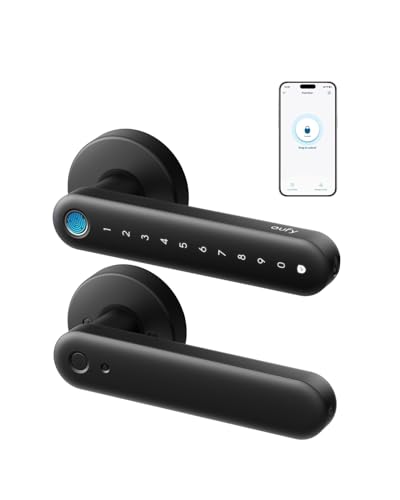
- 0.3-second fingerprint unlocking with 360-degree recognition
- Built-in Wi-Fi supports remote management and authorization
- Designed for interior doors and installs with a screwdriver
Best For: Bedrooms, offices, storage rooms, and other interior spaces
Best Established Wi-Fi Deadbolt

- Built-in Wi-Fi enables remote app control and monitoring
- Stores up to 100 access codes with history and notifications
- Includes an alarm, touchscreen, auto-lock, and backup key
Best For: Exterior residential doors with multiple authorized users
Best Battery-Friendly Fingerprint Lock

- 0.5-second fingerprint unlocking with adaptive learning
- Built-in Wi-Fi enables management in the Wyze app
- Up to eight months of battery life plus USB-C backup power
Best For: Homes needing biometric entry with multiple backup methods
Best Hub-Free Pick

- Built-in Wi-Fi with no hub required
- DIY deadbolt installation with auto-lock
- Keypad, app, voice, and key access
Best For: Homeowners wanting simple remote access without a bridge or monthly fee
Best Remote-Control Design
Geevorks Electronic Intelligent Door Lock

- Four dedicated remotes included
- Remote range listed up to 20 meters
- About 16 months of battery operation
Best For: Doors and spaces needing simple, self-contained remote entry
Best for Flexible Access
Veise VE017 Fingerprint Smart Lock

- Multiple entry methods, including fingerprint, app, codes, card, and key
- Remote user permissions with detailed activity logs
- Locally encrypted access data and adjustable auto-lock
Best For: Families, rentals, and multi-tenant properties needing flexible access control
Best Built-In Wi-Fi Value

- Built-in Wi-Fi works without an extra hub
- Fingerprint, passcode, app, key, and voice access
- Supports guest codes, alerts, Away Mode, and auto-lock
Best For: Homeowners wanting hub-free remote control and flexible guest access
Best Established Smart Lock

- Hub-free Wi-Fi control through the Kwikset app
- Stores up to 250 temporary, scheduled, or permanent codes
- Includes geofencing, alerts, auto-lock, and warranty coverage
Best For: Households managing frequent guests, family members, or service providers
Best Matter-Ready Pick – ULTRALOQ Bolt SE WiFi Smart Deadbolt
The ULTRALOQ Bolt SE is a versatile choice among wireless smart locks, combining fingerprint access, passcodes, app control, voice commands, and mechanical keys. Built-in Wi-Fi supports remote management without a hub, while Matter over Thread adds broader smart-home integration when paired with a compatible Thread Border Router.
Best For: Households, rentals, and smart-home users who want multiple entry methods and broad ecosystem compatibility.
Pros:
- Offers seven entry methods, including fingerprints, passcodes, app control, voice control, and keys.
- Built-in Wi-Fi enables remote access, temporary codes, activity history, and notifications without a hub.
- Matter over Thread support, IP65 weather resistance, and an ANSI BHMA certification add flexibility and durability.
- Rated for up to 18 months of battery life with Matter over Thread.
Cons:
- Matter remote access requires a compatible Matter over Thread hub.
- Built-in Wi-Fi supports 2.4 GHz networks only.
- A door sensor is not included.
Choose this model if flexible access options and Matter support matter more than keeping the setup as simple as possible. Its combination of built-in Wi-Fi and Thread-based smart-home connectivity makes it one of the more adaptable options in this roundup.
Best for Interior Doors – eufy Security FamiLock C32
The eufy Security FamiLock C32 is a practical wireless smart lock for interior applications such as bedrooms, offices, storage rooms, and garage entries. Its large fingerprint sensor is designed for quick unlocking, while built-in Wi-Fi allows remote management and authorization through the app.
Best For: Interior doors where fingerprint access, app control, and a lever-style design are more important than front-door use.
Pros:
- Fingerprint unlocking is rated at 0.3 seconds and supports 360-degree recognition.
- Built-in 2.4 GHz Wi-Fi enables remote management and real-time authorization.
- Installs in about 15 minutes with only a screwdriver and includes auto-lock functionality.
- USB-C emergency backup can provide power from a power bank if the batteries run out.
Cons:
- The manufacturer does not recommend it for front doors.
- Battery life is listed at over five months, shorter than some competing models.
- It does not support rekeying.
This is a focused choice for indoor access rather than a general-purpose exterior deadbolt. The quick fingerprint reader and built-in Wi-Fi are useful for busy households, offices, and utility spaces, provided the intended door is suitable for a lever lock.
Best Established Wi-Fi Deadbolt – Schlage Encode Century
The Schlage Encode Century is a well-rounded option among wireless smart locks for homeowners who want built-in Wi-Fi, keypad entry, and a traditional deadbolt format. The Schlage Home app supports remote locking, access-code management, history, and notifications, while an integrated alarm helps identify forced-entry attempts or door movement.
Best For: Exterior residential doors where a familiar brand, touchscreen keypad, and app-based access management are priorities.
Pros:
- Built-in Wi-Fi provides remote control and monitoring through the Schlage Home app.
- Supports up to 100 access codes, customizable notifications, and lock history.
- Includes a customizable alarm and a fingerprint-resistant touchscreen.
- Installs with a screwdriver and includes auto-lock, voice-control compatibility, and a backup key.
Cons:
- Typical battery life is up to six months.
- Voice control requires the Schlage Home app and a compatible voice-enabled device.
- It uses four AA batteries and does not offer fingerprint entry.
The Encode is a strong fit when dependable keypad access and established security features are more important than biometric unlocking. Its large access-code capacity also makes it useful for families, guests, and properties with multiple users.
Best Battery-Friendly Fingerprint Lock – WYZE Auto-Lock Bolt v2
The WYZE Auto-Lock Bolt v2 combines fingerprint access with app control, keypad entry, and physical keys for flexible everyday use. Among wireless smart locks, it stands out for its claimed eight-month battery life, built-in Wi-Fi, and USB-C emergency power option.
Best For: Homeowners who want biometric entry, remote app management, and several backup unlocking methods.
Pros:
- Fingerprint scanner unlocks in about 0.5 seconds and uses an adaptive learning algorithm.
- Includes built-in Wi-Fi for checking and managing the lock in the Wyze app.
- Eight AA batteries are rated for up to eight months of use.
- USB-C emergency power, an anti-peep keypad, and backup keys provide alternatives if a scan or battery fails.
Cons:
- Its IP53 rating is lower than the IP65 rating listed for the ULTRALOQ model in this roundup.
- Remote video-doorbell unlocking requires pairing with a Wyze Video Doorbell.
- The supplied details do not specify a fingerprint capacity.
The Lock Bolt v2 is a sensible pick for users who prefer fast biometric entry but do not want to rely on one access method. Its longer stated battery life and emergency USB-C power make it especially convenient for everyday home use.
Best Hub-Free Pick – eufy Security Smart Lock C30
The eufy Security Smart Lock C30 is a practical choice for shoppers comparing wireless smart locks without wanting a separate hub. Its built-in Wi-Fi supports remote app control, while keypad, voice, and physical-key entry provide flexible access for everyday residential use.
Best For: Homeowners who want straightforward remote access, auto-locking, and easy DIY installation without a monthly fee.
Pros:
- Built-in Wi-Fi enables remote control without a bridge or hub.
- Fits most standard deadbolts and is designed for 15-minute installation without drilling.
- Offers keypad, app, Alexa, Google Assistant, and physical-key access.
- Weather-resistant exterior, BHMA Grade 3 certification, and customizable auto-lock.
Cons:
- Battery life is listed at up to five months, so replacements may be relatively frequent.
- It is designed around residential deadbolt applications rather than a broad range of lock types.
The C30 stands out among wireless smart locks for its combination of built-in connectivity, simple installation, and no recurring monthly fee. Its five-month battery estimate is worth considering if you prefer longer intervals between battery changes.
Best Fingerprint Access – Veise VE012W WiFi Fingerprint Smart Lock
The Veise VE012W combines built-in 2.4GHz Wi-Fi with fingerprint entry, making it one of the more access-flexible wireless smart locks in this roundup. It also supports app control, voice commands, physical keys, and several types of programmable codes.
Best For: Families, rentals, and busy households that need multiple access methods, detailed entry logs, and remotely managed codes.
Pros:
- Six entry methods include fingerprint, app, PIN, one-time codes, physical keys, and voice control.
- Fingerprint recognition is specified at 0.2 seconds with a 99.99% recognition rate.
- Built-in Wi-Fi supports remote locking, unlocking, status checks, and access management.
- Provides real-time alerts, access history, anti-peeping passwords, and adjustable auto-lock.
Cons:
- Eight AA batteries are required and are not included.
- The one-year limited warranty becomes two years only after product registration.
- Its extensive settings may be more than needed for shoppers seeking a basic keypad lock.
For shoppers prioritizing flexible credentials and monitoring, the VE012W is a feature-rich wireless smart lock. The combination of fingerprint access, remotely managed codes, and event notifications is especially useful for households with frequent visitors or service providers.
Best Remote-Control Design – Geevorks Electronic Intelligent Door Lock
The Geevorks Remote Control Electronic Intelligent Door Lock takes a simpler approach to wireless smart locks: it uses dedicated remote controls rather than app-based Wi-Fi. With four remotes included, it can suit locations where direct remote unlocking is more useful than cloud features.
Best For: Homes, offices, garages, and other compatible doors where dedicated remote access and low battery consumption are the priorities.
Pros:
- Includes four remote controls with a stated range of 0–20 meters.
- Uses a digital conversation system designed to resist decoding or duplication.
- Four AA batteries are specified to provide about 16 months of operation.
- Stainless-steel construction and a base-plate design support durable, stable installation.
Cons:
- It does not list app, Wi-Fi, voice-control, or smartphone monitoring features.
- Remote controls require users to carry a dedicated transmitter.
- Compatibility and installation may require more careful checking across different door types.
The Geevorks lock is best viewed as a dedicated remote-entry system rather than a connected smart-home lock. Its long stated battery life and included remotes may appeal to buyers who prefer a self-contained setup, but it lacks the app-based convenience found in other wireless smart locks.
Best for Flexible Access – Veise VE017 Fingerprint Smart Lock
The Veise VE017 is a versatile choice among wireless smart locks, combining fingerprint entry with app control, codes, cards, and a traditional mechanical key. Its remote user management and detailed activity logs make it especially practical for households, rentals, and multi-tenant properties.
Best For: Property owners and families who want multiple entry methods, remote access management, and local data storage.
Pros:
- Offers fingerprint, app, code, fob card, voice-assistant compatibility with the required G1 Gateway, and mechanical-key access.
- Supports one-time, temporary, permanent, and recurring codes that can be created or deleted remotely.
- Stores access data locally with AES128 encryption and provides activity logs and alerts.
- Includes adjustable auto-lock timing from 0 to 180 seconds and an Away Mode.
Cons:
- Alexa and Google Assistant control requires the G1 Gateway.
- The supplied notes specify alkaline battery operation but do not provide a complete battery-life specification beyond a stated 12-month claim.
The VE017 stands out for access flexibility and privacy-minded local storage. It is a strong fit when you need to manage several users remotely, though buyers who want built-in voice control should budget for the optional gateway.
Best Built-In Wi-Fi Value – Philips Wi-Fi Smart Deadbolt
The Philips Wi-Fi Smart Deadbolt is a convenient option among wireless smart locks because it includes built-in Wi-Fi for remote control without an additional hub. It supports app, fingerprint, passcode, physical-key, and voice access, while its 2.4GHz-only requirement is important to verify before installation.
Best For: Homeowners who want hub-free remote access, fingerprint entry, and scheduled guest codes.
Pros:
- Built-in Wi-Fi enables remote locking and unlocking without an extra hub.
- Supports app, passcode, fingerprint, physical key, and Alexa or Google Assistant control.
- Can create up to 100 custom passcodes plus one-time or scheduled guest codes.
- Offers activity history, real-time alerts, Away Mode, and adjustable 10- to 180-second auto-locking.
Cons:
- Supports only 2.4GHz Wi-Fi, and the router and lock should be within 65 feet for better remote control.
- Batteries are not included, and the lock requires AA alkaline batteries.
- It does not include a door sensor.
This Philips lock delivers a broad feature set without requiring a separate hub. Its main tradeoffs are the 2.4GHz network limitation, battery requirement, and lack of a door sensor, so it is best for straightforward deadbolt installations where those limitations are acceptable.
Best Established Smart Lock – Kwikset Halo Wi-Fi Smart Lock
The Kwikset Halo is a well-rounded choice among wireless smart locks, offering direct Wi-Fi connectivity without a hub, touchscreen code entry, app control, and voice-assistant support. Its generous code capacity and warranty coverage make it appealing for busy households that regularly share access.
Best For: Homeowners who want a hub-free touchscreen lock with extensive guest-code management and geofencing.
Pros:
- Connects over Wi-Fi without a hub for remote locking, unlocking, guest access, and activity history.
- Supports up to 250 access codes, including temporary, scheduled, and permanent codes.
- Offers intelligent geofencing, auto-lock, intrusion notifications, and Alexa or Google Home integration.
- Includes a lifetime mechanical and finish warranty plus a one-year electronics warranty.
Cons:
- Its listed fit range is for doors 1-3/8 to 1-3/4 inches thick, so door compatibility should be checked carefully.
- The touchscreen design may be less suitable for shoppers specifically seeking fingerprint entry.
The Halo is a strong all-purpose option when keypad access and remote management matter more than biometric entry. Its 250-code capacity, geofencing, and warranty support give it an advantage for households with frequent guests or recurring service providers.
How We Picked the Best Wireless Smart Locks
We evaluated these Wireless Smart Locks by focusing on the features that matter after installation: dependable locking, remote access, entry flexibility, battery expectations, app usability, and compatibility with existing doors and smart-home systems. We also considered whether a lock offers useful backups, such as a physical keyway, touchscreen code, fingerprint reader, or emergency power option.
Because door hardware varies, installation and fit are equally important. Before buying, verify your door thickness, backset, deadbolt dimensions, handle clearance, and whether the lock is designed for a single-cylinder deadbolt or a complete handle set.
Quick Comparison
| Feature | What to Look For |
|---|---|
| Connectivity | Built-in Wi-Fi is convenient for remote control; Bluetooth-only models may require a hub or nearby phone. |
| Entry methods | PINs suit families and guests, while fingerprints provide fast personal access. |
| Smart-home support | Check compatibility with Matter, Alexa, Google Home, Apple Home, or the platform you already use. |
| Backup access | A keyway, emergency USB-C power, or spare battery solution can prevent lockouts. |
| Security and durability | Look for suitable certifications, tamper alerts, auto-lock controls, and weather-resistant construction. |
Key Buying Factors for Wireless Smart Locks
Connectivity and Remote Access
Built-in Wi-Fi lets you lock or unlock the door remotely, manage codes, and receive activity notifications without adding a separate bridge. It can also use more battery power than Bluetooth, so confirm battery life and whether the app supports low-battery alerts.
Access for Household Members and Guests
Temporary or scheduled PINs are useful for visitors, cleaners, and service providers. Fingerprint models can be faster for regular users, but performance depends on accurate enrollment and clean sensors. A physical key remains valuable as a fail-safe.
Installation and Daily Operation
Choose a model that matches your existing deadbolt or be prepared to replace the interior and exterior hardware. Auto-lock timing, one-touch locking, quiet operation, and a responsive app can make a larger difference than extra features used only occasionally.
Who Should Buy Which Wireless Smart Locks?
Choose a Wi-Fi model with strong app controls if you frequently manage access while away from home. Families may prefer keypad or fingerprint locks that eliminate shared keys and support multiple users. Renters and DIY shoppers should prioritize straightforward installation and compatibility with the current deadbolt.
For smart-home enthusiasts, Matter or platform-specific support can simplify automation. If reliability during outages is your top concern, prioritize a model with a keyway and emergency power option. Finally, match the finish and design to your existing hardware, but treat secure fit, dependable access, and clear battery alerts as the most important purchasing priorities.