For an older adult, a useful wound care kit should make it easy to find clean supplies, cover a minor injury, and change a dressing without a last-minute pharmacy trip. Fragile skin, adhesive sensitivity, and caregiver needs can make the right mix of supplies especially important.
These nine options range from compact first-aid kits to gentle bandage assortments and specialized dressing supplies. The best choice depends on the type of wound care needed—not simply the number of pieces in the box.
Best 9 Wound Care Kits for Elderly Picks for 2026
Gentlest Removal
CURAD Truly Ouchless 10-Piece Kit

- Silicone adhesive removes gently
- Pads can be lifted and resealed
- 10-piece dressing assortment
Best For: Gentle dressing changes on delicate skin
Broadest First-Aid Assortment

- 130-count mixed assortment
- Includes wipes and ointment packets
- Portable reusable tin
Best For: General first-aid supplies at home or on the go
Most Dressing Variety
Ouch Essentials Wound Care Kit

- Multiple pad and dressing types
- Non-adherent and absorbent options
- Paper tape for delicate skin
Best For: A range of wound dressings in one kit
Everyday First Aid Pick
BAND-AID 160-Piece Compact Kit

- 160 assorted first aid pieces
- Compact, refillable plastic case
- Bandages, gauze, tape, and wipes
Best For: General minor first aid at home or on the go
Larger-Wound Dressing Pick

- Non-stick pads with adhesive tabs
- Absorbent gauze and rolled wrap
- Paper tape for delicate skin
Best For: Dressing larger wounds after surgery or injury
Prepared Dressing-Change Pick
Dynarex Sterile Dressing Change Trays

- 20 individually packed trays
- Supplies arranged in procedural order
- Includes gloves, dressing, tape, and drape
Best For: Repeated dressing changes using prepared trays
Best Everyday Basics
All Health 40-Piece Wound Care Kit
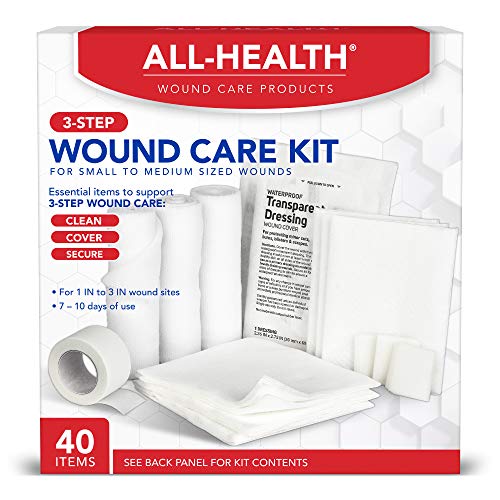
- 40-piece kit for minor cuts and scrapes
- Includes wipes, non-stick pads, gauze, and tape
- Compact for home, car, or travel
Best For: Everyday minor-wound supplies
Best Dressing Variety
Manuka Honey & Silver Alginate 20-Piece Kit

- Honey gauze and silver alginate options
- Ten waterproof adhesive film bandages
- Small 3 x 4 cm wound-contact dressings
Best For: Clinician-guided dressing changes for smaller wounds
Best Burn-Focused Kit

- Burn dressings and gel included
- Adds pads, gauze, gloves, and shears
- Portable kit with first-aid manual
Best For: Burn-focused first-aid preparedness
Gentlest Removal – CURAD Truly Ouchless 10-Piece Kit
For wound care kits for elderly people with delicate skin, this CURAD assortment focuses on dressings that are easier to remove. Its 10 sterile pieces include non-stick pads, super-absorbent pads, silicone bandages, and tape for covering cuts, scrapes, burns, and surgical sites.
Best For: Sensitive skin when gentle dressing changes are a priority.
Pros:
- EZ Release silicone adhesive peels off without pulling skin or leaving sticky residue.
- Dressings can be lifted to check a wound and resealed.
- Includes non-stick and super-absorbent pad options.
Cons:
- Only 10 pieces, so it may need frequent replenishment.
- Focused on dressings rather than a broader first-aid assortment.
Choose this compact kit when comfortable removal matters more than stocking a large supply of first-aid items.
Among wound care kits for elderly households, the Welly kit is a general-purpose option for keeping everyday first-aid supplies together. Its 130-count assortment combines fabric and waterproof bandages with non-stick pads, tape, butterfly strips, cleansing wipes, ointment packets, hydrocortisone packets, and ibuprofen tablets.
Best For: A portable home or travel kit for assorted minor first-aid needs.
Pros:
- Wide selection of bandage sizes and types.
- Includes cleansing wipes and single-use ointment packets.
- Reusable tin keeps the assortment portable.
Cons:
- Only five non-stick pads are included.
- The supplied description does not identify the adhesive bandages as gentle-removal products for delicate skin.
This is the versatile pick for a mixed supply cabinet; if atraumatic dressing removal is the main concern, a kit focused on gentle adhesives may fit better.
For shoppers comparing wound care kits for elderly people, Ouch Essentials offers several dressing formats rather than a bandage-heavy assortment. The supplied description lists gauze, non-adherent and absorbent ABD pads, transparent film dressings, a conforming bandage, and paper tape for a range of wound-covering tasks.
Best For: Keeping multiple dressing types available for different wound-care needs.
Pros:
- Non-adherent pads are designed to absorb without sticking to the wound.
- ABD pads provide a highly absorbent option with a moisture-resistant backing.
- Hand-tearable paper tape is described as gentle on delicate skin.
- Conforming bandage helps hold dressings around body contours.
Cons:
- The notes do not specify quantities for each dressing type.
- No cleansing wipes or ointments are listed.
This kit is worth considering when dressing flexibility is more useful than a large collection of adhesive strips, though you may need separate cleansing supplies.
Everyday First Aid Pick – BAND-AID 160-Piece Compact Kit
For shoppers comparing wound care kits for elderly family members, this 160-piece BAND-AID kit is a compact option for everyday minor cuts and scrapes. Its durable plastic case holds assorted bandages, gauze, cleansing wipes, and other first aid supplies.
Best For: Keeping general first aid supplies accessible at home or while traveling.
Pros:
- Includes assorted bandage sizes, non-stick gauze pads, rolled gauze, and paper tape.
- Compact case can be refilled and stored in a medicine cabinet, car, or bag.
- Also includes antibiotic cream, itch relief, pain relief caplets, and a cold pack.
Cons:
- Geared toward minor first aid rather than a dedicated dressing-change routine.
- Contains many types of supplies, so not all 160 pieces are wound dressings.
Choose this kit for broad household coverage; for repeated care of a larger wound, a more dressing-focused kit may be a better fit.
Larger-Wound Dressing Pick – CURAD 25-Count Wound Care Kit
Among wound care kits for elderly people who need dressings after surgery or injury, this 25-piece CURAD kit focuses on covering and cushioning larger wounds. It combines non-stick pads, absorbent gauze, rolled gauze, and paper tape rather than a broad assortment of first aid items.
Best For: Dressing larger wounds after surgery or injury, as directed by a care professional.
Pros:
- Soft non-stick pads have adhesive tabs for easier placement.
- Gauze pads include a highly absorbent cellulose layer to wick away drainage.
- Paper tape is described as suitable for delicate skin.
Cons:
- Does not list cleansing wipes or other general first aid supplies.
- Contains 25 pieces, so supplies may need replenishing during ongoing care.
This is the more targeted choice when dressings matter most, especially if paper tape for delicate skin is a priority.
Prepared Dressing-Change Pick – Dynarex Sterile Dressing Change Trays
For caregivers comparing wound care kits for elderly patients with recurring dressing changes, this Dynarex box supplies 20 individually packed, single-use trays. Each tray arranges dressing-change items in procedural sequence, reducing the need to gather separate supplies before each change.
Best For: Repeated dressing changes when a prepared, individually packed tray is useful.
Pros:
- Each tray includes sponges, swabsticks, a transparent dressing, tape, gloves, a mask, and a drape.
- Individually packed trays keep supplies sterile until use.
- Includes 20 single-use trays and contains no natural latex.
Cons:
- Single-use trays create more packaging than a refillable kit.
- The box measures 22.5 x 10.75 x 7.25 inches, making it less compact for storage than a small household kit.
Its advantage is consistency: supplies are packed together for each change. Follow the instructions and the patient’s wound-care plan when using them.
Best Everyday Basics – All Health 40-Piece Wound Care Kit
For shoppers comparing wound care kits for elderly family members, this 40-piece All Health kit offers straightforward supplies for minor cuts and scrapes at home or on the go.
Best For: Keeping basic supplies handy for small to medium cuts and scrapes.
Pros:
- Includes cleansing wipes, gauze pads, non-stick pads, transparent dressings, gauze rolls, and paper tape.
- Compact 5 x 3.5 x 5.25-inch package fits home, car, or travel storage.
- Non-stick pads offer a dressing option when avoiding adhesion to the wound matters.
Cons:
- Intended for minor wounds with sites roughly 1 to 3 inches across.
- No specialized burn or high-exudate dressings are listed.
Choose this for a general-purpose supply kit rather than specialized wound management. For an older adult with a wound that is larger or needs ongoing care, ask a clinician which dressings are appropriate.
Best Dressing Variety – Manuka Honey & Silver Alginate 20-Piece Kit
Among wound care kits for elderly adults, this 20-piece option stands out for its two specialized dressing types: Manuka honey gauze and silver alginate. It also includes transparent adhesive bandages to secure them.
Best For: Caregivers following a clinician’s guidance on dressing selection for smaller wounds with different drainage levels.
Pros:
- Includes five 3 x 4 cm Manuka honey gauze pads and five 3 x 4 cm silver alginate dressings.
- Provides ten 6 x 7 cm waterproof transparent adhesive bandages.
- Offers separate dressing options described for lower- and higher-exudate wounds.
Cons:
- Small 3 x 4 cm wound-contact dressings may not suit larger areas.
- Adhesive film may require extra care when removing it from fragile skin.
- No cleansing wipes or medical tape are listed.
This is a targeted dressing assortment, not a full first-aid kit. If an older adult has a persistent, deep, or postoperative wound, confirm the dressing choice and change schedule with their care team.
Best Burn-Focused Kit – EVERLIT 30-Piece Burn Kit
If your search for wound care kits for elderly relatives includes burn-specific supplies, the EVERLIT kit combines burn dressings and gel with standard first-aid essentials in a portable package.
Best For: Keeping burn-focused first-aid supplies at home or in a vehicle.
Pros:
- Includes sterile burn dressings, burn gel, and waterproof film dressings.
- Also supplies non-adherent pads, gauze, tape, gloves, wipes, and trauma shears.
- Includes a burn-care first-aid manual.
Cons:
- More burn-focused than a general kit for routine dressing changes.
- The listed burn products contain tea tree oil, which may be unsuitable for someone sensitive to it.
This kit is useful to have ready for burn first aid, but supplies alone do not replace medical assessment. Seek professional advice for significant burns, chemical burns, or burns in someone with fragile skin.
How We Picked the Best Wound Care Kits for Elderly
We compared the listed kits by their intended use, assortment of dressings, portability, and suitability for common older-adult needs such as delicate skin and caregiver-assisted changes. We gave more weight to usable supplies than to a high piece count. This is a comparison of kit contents and use cases, not a claim that any kit treats a particular condition. Check current packaging for exact contents and expiration dates.
Quick Comparison: Which Type Fits Your Needs?
For a household supply of everyday bandages and first-aid basics, start with a general-purpose kit such as the BAND-AID Brand, Welly, or All Health option. A compact kit can also serve as a backup in a bag or car. If removing adhesive is a frequent concern, look first at the CURAD Truly Ouchless kit, then check the label to confirm each included item suits the person using it.
For dressing changes, the Dynarex tray is organized around a procedure, while the CURAD Wound Care Kit and Ouch Essentials kit offer other wound-care assortments to compare by contents. The manuka honey, silver alginate, and transparent-dressing bundle is a specialized selection rather than a general first-aid refill. EVERLIT’s burn kit is the focused option for burn supplies; it is not a substitute for a broad household kit.
Key Buying Factors for Wound Care Kits for Elderly Adults
Dressings and Skin Comfort
Match pad size and type to the injuries you are preparing for. Non-stick pads can be useful when a dressing must be changed without pulling at the wound. Older skin may tear or bruise easily, so pay close attention to tape and adhesive choice. A product described as gentle still needs to be removed carefully and may not suit everyone’s skin.
Complete Supplies and Usability
Check whether the kit includes what you actually need: appropriately sized sterile dressings, gloves, tape, and other supplies specified in a clinician’s care plan. A ready-to-use dressing-change tray may simplify setup, but confirm its contents before relying on it. Large type or clear organization also helps when a caregiver needs to find an item quickly. Restock used items and replace anything past its expiration date or with damaged packaging.
Know When a Kit Is Not Enough
These kits are for having supplies on hand, not diagnosing or treating complex wounds. Seek medical guidance for a wound that is deep, spreading, increasingly painful, draining pus, or not healing; for a significant burn; or for a person with diabetes or poor circulation. Follow a clinician’s instructions for chronic wounds and specialty dressings.
Who Should Buy Which Wound Care Kits for Elderly?
Choose a general-purpose assortment for routine minor cuts and a gentle-adhesive option when skin comfort is the priority. Consider a dressing-change tray when a caregiver has a specific, clinician-directed routine. Buy specialty dressings or a burn kit only when they match the anticipated need, and keep a basic first-aid kit alongside them for unrelated minor injuries.