Patient Lift Transfer Chair review is best read as a mobility and caregiver-safety buying decision, not as a generic comfort accessory.
If you need a simple transfer aid for wheelchair-to-bed moves, short relocations, or emergency evacuation support, this design is aimed squarely at that job.
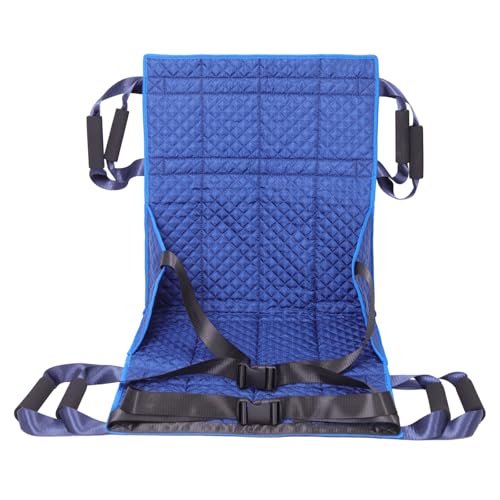
Patient Lift Transfer Chair Review Summary
The Patient Lift Transfer Chair is a focused assistive transfer mat rather than a full mechanical lift, and that distinction matters.
It suits households, caregivers, and care settings that need a lightweight manual aid for moving a person between a wheelchair, bed, car, or another chair, with an extra use case for stair evacuation when needed.
Best fit: users who want a practical, portable transfer solution with multiple grip points and reinforced construction.
Less ideal: buyers expecting powered lifting, highly specialized bariatric support, or a replacement for trained hands-on transfer protocols.
Review Scorecard
| Category | Score | Editorial rationale |
|---|---|---|
| Transfer versatility | 9/10 | Listed for wheelchair-to-bed, car, chair, and stair evacuation use. |
| Caregiver handling | 8/10 | Eight thickened sponge handles should improve grip and control. |
| Construction confidence | 8/10 | Oxford fabric, reinforced stitching, and reinforcing straps suggest a durable build. |
| Everyday practicality | 8/10 | Lightweight manual format is easier to keep on hand than bulkier devices. |
| Safety support | 8/10 | Reinforced structure and multiple handles are aligned with controlled transfers. |
| Capacity fit | 7/10 | Up to 260 lbs is useful, but not enough for every user or every scenario. |
| Value for the use case | 8/10 | The feature set is targeted and sensible if you need exactly this kind of aid. |
This is a good buy if you want a straightforward transfer aid with clear caregiving utility.
The listing claims are practical rather than flashy: breathable Oxford fabric, cross-reinforced stitching, 8 padded handles, two reinforcing straps, and a 260 lb weight limit.
That combination makes sense for short-distance transfers where control, positioning, and grip matter more than automation.
The main reason to choose it is scope.
It is meant to help move a person safely from one spot to another, and it also doubles as an emergency evacuation tool.
For people caring for an elderly, disabled, or lower-limb-impaired user, that dual-purpose positioning is useful because it can reduce the number of separate tools you need to keep nearby.
Review Scorecard
| Category | Score | Editorial rationale |
|---|---|---|
| Transfer versatility | 9/10 | Listed for wheelchair-to-bed, car, chair, and stair evacuation use. |
| Caregiver handling | 8/10 | Eight thickened sponge handles should improve grip and control. |
| Construction confidence | 8/10 | Oxford fabric, reinforced stitching, and reinforcing straps suggest a durable build. |
| Everyday practicality | 8/10 | Lightweight manual format is easier to keep on hand than bulkier devices. |
| Safety support | 8/10 | Reinforced structure and multiple handles are aligned with controlled transfers. |
| Capacity fit | 7/10 | Up to 260 lbs is useful, but not enough for every user or every scenario. |
| Value for the use case | 8/10 | The feature set is targeted and sensible if you need exactly this kind of aid. |
Key Features and Specifications of Patient Lift Transfer Chair
The listing describes a transfer cushion / transfer mat built for daily mobility assistance.
It is intended for wheelchair users, elderly users, disabled users, handicapped people, and people who cannot move their lower limbs independently.
Core listed features include:
- Oxford fabric construction with a breathable feel and reinforced stitching
- Eight thickened sponge handles for caregiver grip
- Two reinforcing straps to help stabilize the transfer process
- Up to 260 lbs weight capacity
- Emergency evacuation use for stairs as well as routine transfers
- Backed by a 2-year warranty, according to the listing
The product is not presented as a powered lift, and that is a strength as long as buyers understand it.
A manual transfer aid can be easier to deploy quickly, store, and move between rooms or vehicles.
In practice, that makes it more attractive for home care, rehabilitation settings, or backup readiness than for users who need repeated high-volume lift operations.
The handles deserve attention because they are doing a lot of the functional work here.
Eight padded grip points can make it easier for two caregivers to coordinate a move, and the additional straps should help keep the transfer more controlled.
The listing also emphasizes cross-reinforced stitching and heavy-duty materials, which is exactly what you want to see in this category.
Pros and Cons of Patient Lift Transfer Chair
Pros
- Multi-use design covers chair, bed, car, and stair evacuation scenarios.
- Eight handles improve carrying and repositioning options for caregivers.
- Reinforced stitching and straps point to a more confidence-inspiring build.
- Breathable Oxford fabric is a sensible choice for an item used close to the body.
- 260 lb support claim gives a clear working ceiling for planning use.
- 2-year warranty adds some reassurance for a purchase in a safety-sensitive category.
Cons
- Manual-only use means it is not a substitute for powered lifting equipment.
- 260 lb limit will exclude some buyers and should be checked carefully.
- Generic listing language leaves some practical details unspecified, such as sizing and exact transfer method.
- Best for short transfers, not for solving every mobility challenge in a care routine.
The biggest plus is simplicity.
You are not trying to learn or maintain a complex lift system, and you are not relying on electronics to function during an urgent situation.
The biggest limitation is also simplicity: this is a hand-operated aid, so it depends on caregiver technique, coordination, and the physical demands of the transfer itself.
Who Should Buy Patient Lift Transfer Chair?
This product makes the most sense for caregivers who already know they need a manual transfer aid.
That includes family caregivers, home-care teams, and facilities that want a portable backup tool for moving someone between a wheelchair, bed, or car.
It is also a reasonable choice for buyers who value emergency preparedness.
The stair-evacuation positioning gives it a role beyond ordinary day-to-day transfer tasks, which can matter in homes or care environments where a fast exit plan is important.
You should probably skip it if you need:
- a powered patient lift
- a solution for heavier users above the listed capacity
- a one-person transfer tool with minimal physical effort
- a highly specialized device with detailed sizing and fitting options
The right buyer here is not looking for luxury or automation.
They want a practical tool that is easy to store, quick to bring out, and credible enough to support short-distance transfers with help from another person or team.
Transfer Use Cases and Practical Fit
Wheelchair-to-Bed Transfers
For moving someone from a wheelchair to a bed, the product’s padded handles and reinforcing straps are the most relevant features.
The listing suggests controlled manual handling, which is exactly what this kind of short transfer usually needs.
Car and Chair Relocation
The product is also marketed for transfers to a car or another chair.
That widens its utility for appointments, discharge days, and routine repositioning at home, where a smaller manual aid can be easier to manage than larger equipment.
Stair Evacuation Support
The emergency evacuation angle is an important differentiator.
Even if you do not use that mode often, having a transfer aid that also addresses stair situations can justify the purchase for households that want a broader safety plan.
Comfort and Handling
The breathable Oxford fabric and sponge handles suggest a design that tries to balance durability with user and caregiver comfort.
That matters because the best transfer equipment is not just strong; it is also easier to hold, position, and trust during repeated use.
Alternatives to Patient Lift Transfer Chair
If you want similar options on Amazon, the most credible alternatives are usually established mobility and transfer product lines rather than one-off generic listings.
Good comparison searches include Medline patient transfer aids, Drive Medical patient transfer products, and Stander transfer and mobility aids.
If you need a different format, look at transfer boards for sideways moves, gait belts for assisted standing support, or evacuation chairs for more dedicated stair-exit planning.
Those alternatives solve adjacent problems, but not all of them offer the same combination of handle-based transfer support and evacuation framing.
Is Patient Lift Transfer Chair Worth It?
Yes, if you need a manual transfer aid with emergency-evacuation utility and a clear caregiver-focused design. The Patient Lift Transfer Chair looks worthwhile for home care, rehab support, and short transfer scenarios where multiple handles, reinforced stitching, and a defined weight limit matter.
It is not the right pick if you want powered assistance or a heavy-duty solution for every body type and every transfer situation.
For the buyer it is aimed at, though, this is a sensible, purpose-built option that earns consideration on practicality alone.