The right adaptive utensils can make everyday meals easier for people managing tremors, arthritis, weakness, limited wrist motion, or reduced hand control. This roundup compares 10 practical options designed to support more comfortable one-handed eating.
We included complete utensil sets, angled designs, weighted handles, rocker knives, bendable pieces, and grip aids so you can match the equipment to the user’s strength, dexterity, and preferred eating style.
Best 10 Adaptive Utensils for One Handed Use Picks for 2026
Best Portable Set
BUNMO Foam-Grip Adaptive Utensils

- Lightweight foam handles provide cushioned, non-slip control.
- Four-piece set includes a curved rocker knife.
- Canvas wrap supports organized, portable use.
Best For: Users who want a complete lightweight set for home and travel
Best One-Handed Knife
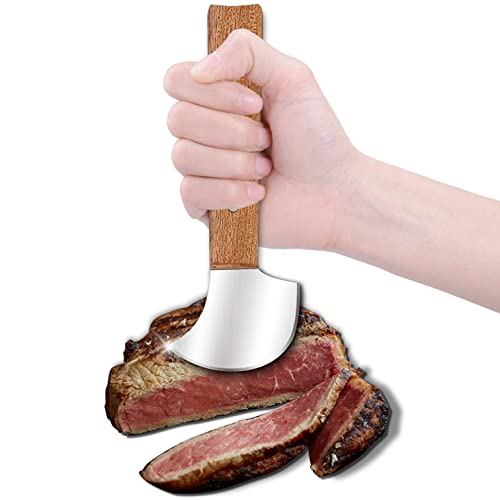
- Rocking blade increases downward cutting force.
- Vertical wood handle supports one-handed control.
- Lightweight knife includes a protective leather sheath.
Best For: Users who need a dedicated cutting aid rather than full flatware
Best Weighted Set
BUNMO Blue Weighted Adaptive Utensils

- Wide rubberized handles support a fuller grip.
- Weighted construction may improve control.
- Curved knife offers above or horizontal cutting.
Best For: Users who prefer weighted utensils for tremor or dexterity support
Best Compact Combo

- Combines fork and spoon functions in one utensil.
- Offset grip is designed for limited wrist motion.
- Lightweight handle is dishwasher safe.
Best For: Right-handed users seeking a simple everyday utensil
Flexible Grip Set

- Includes fork, knife, tablespoon, and teaspoon
- Adjustable fork and spoons support custom positioning
- Wide handles aid grip and control
Best For: Users who need adjustable utensils and a complete four-piece set
Stabilizing Angle Set

- Angled design helps limit wrist rotation
- 2.5-ounce weight adds stability for tremors
- Large silicone-grip handles improve control
Best For: Right-handed users seeking weighted support for tremors
Senior Support Set
Angled Stainless Steel Utensils

- Thicker handles help accommodate limited mobility
- Angled design supports easier self-feeding
- Dishwasher-safe stainless steel construction
Best For: Right-handed seniors needing simple angled utensils
Complete Dining Support

- Includes angled, weighted utensils plus dishware and storage accessories
- 2.5–2.9-ounce weighting and 45° spoon and fork design
- Dishwasher-safe stainless steel and silicone construction
Best For: Right-handed users who want a complete dining and travel setup
Customizable Grip Aid
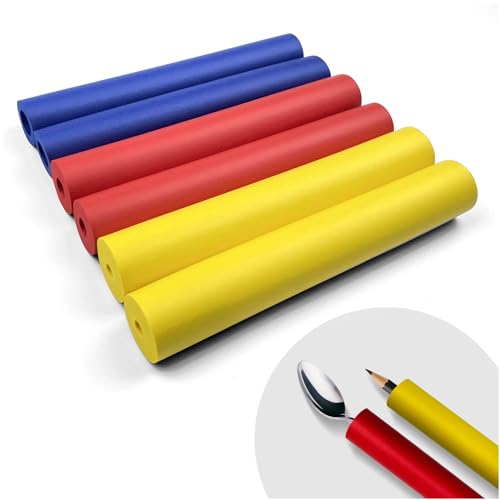
- Six tubes in three inner diameters for varied utensil sizes
- Cut-to-fit design works with utensils and other daily tools
- Water-resistant, non-slip coating for easier maintenance
Best For: Users adapting existing utensils and household tools
Focused Tremor Support
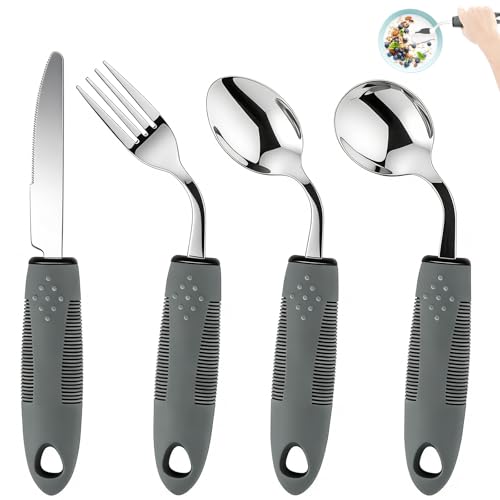
- Weighted 45° angled spoon and fork for reduced hand movement
- Textured silicone handles provide a larger, non-slip grip
- Dishwasher-safe stainless-steel utensil construction
Best For: Right-handed users wanting essential tremor-support silverware
Best Portable Set – BUNMO Foam-Grip Adaptive Utensils
For shoppers comparing adaptive utensils for one handed use, this four-piece BUNMO set combines lightweight foam grips with a curved rocker knife. The included travel wrap also makes it practical for meals away from home.
Best For: Older adults and users with tremors, weak grips, or hand fatigue who want a complete, portable dining set.
Pros:
- Soft, lightweight, non-slip foam handles help reduce hand strain.
- Includes a fork, tablespoon, teaspoon, and curved rocker knife.
- Reusable canvas wrap keeps the set organized for travel.
- Stainless steel construction is rust resistant and dishwasher safe.
Cons:
- Foam handles may be less suitable for users who prefer a weighted utensil.
- The set is gray only, according to the supplied details.
This is a well-rounded choice when portability and comfortable gripping matter more than added utensil weight. Its rocker knife may also reduce the need for a traditional sawing motion.
Best One-Handed Knife – Vertical-Grip Rocker Knife
This rocker knife is a focused option among adaptive utensils for one handed use. Its vertical wood handle and rocking blade are designed to increase downward cutting force while helping limit hand slippage.
Best For: People with hand injuries, tremors, arthritis, Parkinson’s disease, or other restrictions who primarily need help cutting food.
Pros:
- Rocker design cuts by swinging rather than requiring a conventional sawing motion.
- Vertical handle supports one-handed use and added downward pressure.
- Stainless steel blade can cut foods such as bread, pizza, vegetables, and meat.
- Compact, lightweight design includes a leather sheath for portability.
Cons:
- This is a single knife, not a complete utensil set.
- Its wood handle may require different care than plastic or rubber grips.
Choose this model when cutting is the main obstacle at mealtime or food preparation. It can also be used in cans, bowls, and dishes, adding flexibility beyond table use.
Best Weighted Set – BUNMO Blue Weighted Adaptive Utensils
For adaptive utensils for one handed use with more substance in the hand, this BUNMO set pairs weighted construction with wide rubberized grips. It includes everyday flatware plus a curved knife for alternative cutting angles.
Best For: Adults with hand tremors, arthritis, Parkinson’s disease, or limited dexterity who prefer a wider, weighted grip.
Pros:
- Weighted, wide handles can provide more control during meals.
- Curved knife supports cutting from above or horizontally.
- Four-piece set includes a fork, knife, tablespoon, and teaspoon.
- Rust-resistant stainless steel is dishwasher safe.
Cons:
- Its 15.84-ounce set weight may feel less comfortable for users who need lightweight utensils.
- The supplied details describe a blue set, limiting color choice.
This set is a stronger fit than foam-handled flatware for shoppers who benefit from additional weight and a substantial grip. Consider the weight carefully if lifting utensils is difficult.
Best Compact Combo – Right-Handed Offset Spork
This right-handed offset spork is a compact alternative for shoppers seeking adaptive utensils for one handed use. By combining a fork and spoon with an easy-grip offset handle, it is designed for limited wrist or hand range of motion.
Best For: Right-handed users with arthritis, tremors, Parkinson’s, carpal tunnel, or other dexterity limitations who want one lightweight utensil.
Pros:
- Two-in-one spork reduces the need to switch between a fork and spoon.
- Offset design may help users with limited wrist or hand motion.
- Lightweight 4.5-inch gray plastic handle supports grip control.
- Dishwasher safe up to 180 degrees for easier cleaning.
Cons:
- Designed specifically for right-handed use.
- It is a single spork rather than a full adaptive utensil set.
- It does not include a knife for cutting food.
This spork makes sense for users who value simplicity and want one utensil for foods suited to both spooning and forking. It is less appropriate if a complete place setting or cutting aid is needed.
Flexible Grip Set – Bendable Four-Piece Utensils
For shoppers comparing adaptive utensils for one handed use, this four-piece set stands out for its bendable components and wide-grip handles. The fork, tablespoon, and teaspoon can be positioned to suit the user, while the knife is designed to work in either hand.
Best For: Users with arthritis, hand tremors, Parkinson’s, or reduced grip strength who want adjustable utensils for more independent meals.
Pros:
- Includes a fork, tablespoon, teaspoon, and dinner knife.
- Bendable fork and spoons can be adjusted to a preferred position.
- Wide handles and palm-aligning ribs support grip and control.
- Dishwasher safe up to 125 degrees.
Cons:
- The handle ribs are specifically aligned for right-handed users, although the set is usable with either hand.
- Adjustment is available on the fork and spoons, but the knife is not described as bendable.
This is a versatile choice when adjustability matters most. Its four-piece format also covers more meal types than a basic fork-and-spoon pairing.
Stabilizing Angle Set – Weighted 42-Degree Utensils
Among adaptive utensils for one handed use, this set focuses on stability through a 42° angle, 2.5-ounce weighting, and large silicone-grip handles. The design is intended to reduce wrist rotation and help users manage hand tremors or limited mobility during meals.
Best For: Right-handed seniors and adults with Parkinson’s, hand tremors, arthritis, or other dexterity limitations who prefer weighted utensils.
Pros:
- Angled design may reduce wrist rotation and fatigue.
- 2.5-ounce weighted construction provides added stability.
- Large textured handles with non-slip silicone grips support control.
- Stainless steel eating surfaces and dishwasher-safe construction.
Cons:
- The supplied title specifies a right-handed version.
- Added weight may not suit users who prefer lightweight utensils.
- The set includes four pieces, but the notes specifically list a fork, knife, and soup spoon rather than naming the fourth piece.
Choose this set when tremor management and wrist positioning are higher priorities than bendability. Its weighted, angled design is more specialized than a standard adaptive utensil set.
Senior Support Set – Angled Stainless Steel Utensils
For shoppers seeking straightforward adaptive utensils for one handed use, this three-piece set combines angled utensils with thicker handles. It is designed to reduce wrist strain and support self-feeding for seniors with limited mobility, stiff hands, or weak wrists.
Best For: Right-handed seniors who need angled, easy-grip utensils for arthritis, stiffness, or reduced dexterity.
Pros:
- Thicker handles accommodate limited mobility and may reduce wrist strain.
- Angled design supports users with reduced dexterity.
- Stainless steel construction is durable and dishwasher safe.
- Three-piece set offers a simple everyday configuration.
Cons:
- Suitable for right-handed use only.
- Three-piece set is smaller than the four-piece alternatives in this roundup.
- The notes do not specify weighting or bendability.
This set is a practical option for users who want uncomplicated angled cutlery rather than weighted or adjustable components. Confirm the right-handed orientation before buying.
Complete Dining Support – 9-Piece Adaptive Utensils Set
For shoppers seeking adaptive utensils for one handed use, this 9-piece set combines angled, weighted silverware with tableware and storage accessories. The 45° spoon and fork, approximately 2.5–2.9-ounce weighting, and silicone handles are designed to support steadier, more comfortable meals.
Best For: Right-handed users with hand tremors, Parkinson’s, arthritis, weak grip, or limited hand mobility who want a complete dining and travel collection.
Pros:
- Includes spoons, fork, rocker knife, serrated knife, spill-proof plate, non-slip bowl, suction mats, and a travel bag.
- 45° angled spoon and fork can reduce wrist strain and required hand movement.
- Weighted stainless-steel utensils with food-grade silicone handles are dishwasher-safe.
Cons:
- Designed specifically for right-handed use.
- The broad 9-piece collection may be more than needed if only utensils are required.
This is the most comprehensive option of the three, especially for home, assisted-living, or travel use. Choose it when matching dishware and storage accessories are as important as the utensils themselves.
Customizable Grip Aid – Foam Grip Tubing
This foam tubing takes a flexible approach to adaptive utensils for one handed use by adding a larger, cushioned handle to existing silverware. The six tubes come in multiple inner diameters and can be cut to fit utensils, pens, toothbrushes, and other everyday tools.
Best For: People with arthritis, tremors, neuropathy, Parkinson’s, or limited grip strength who want to adapt their own utensils and daily-use items.
Pros:
- Six 8-inch tubes provide three inner-diameter options for different utensil sizes.
- Can be trimmed with kitchen scissors or a knife for a customized length.
- Non-slip, water-resistant coating is designed for easier cleaning and maintenance.
Cons:
- This is grip tubing rather than a complete utensil set, so compatible utensils are required.
- Cutting and fitting the tubing adds an extra setup step.
Consider this option when versatility and customization matter most. It can adapt multiple household tools, but it does not provide the angled or weighted utensil design found in dedicated silverware sets.
Focused Tremor Support – 4-Piece Angled Silverware
For a smaller dedicated set of adaptive utensils for one handed use, this four-piece collection focuses on weighted, 45° angled silverware. Oversized textured silicone handles add traction, while the stainless-steel construction is dishwasher-safe for routine care.
Best For: Right-handed seniors and adults with Parkinson’s, arthritis, hand tremors, weak grip, or stroke-recovery needs who want essential adaptive silverware.
Pros:
- 45° angled spoon and fork are designed to ease wrist strain and minimize movement.
- Approximately 2.5–2.9-ounce weighting may provide added stability for tremors.
- Oversized textured silicone handles support traction and control.
- Rust-resistant stainless steel and dishwasher-safe construction simplify cleaning.
Cons:
- Intended for right-handed use.
- Four pieces provide fewer accessories than a full dining collection.
This is a practical middle ground for shoppers who want purpose-built weighted utensils without buying a larger tableware bundle. It is best suited to users who already have suitable plates and bowls.
How We Picked the Best Adaptive Utensils for One Handed Use
We focused on features that affect real-world usability: handle shape, utensil angle, weight, grip security, versatility, portability, and cleaning requirements. The selection includes products for users who need help stabilizing a utensil, reducing wrist rotation, improving leverage, or making handles easier to hold.
Because needs vary widely, we did not treat one design as universally best. A lightweight foam-grip set may suit someone with fatigue or weak grasp, while weighted and angled utensils may be more helpful for tremors or limited wrist control.
Quick Comparison
| Type | Best For | What to Look For |
|---|---|---|
| Angled utensils | Limited wrist movement | Comfortable angle and suitable right- or left-hand orientation |
| Weighted utensils | Tremors and involuntary movement | Manageable weight, balanced handle, and secure grip |
| Rocker knife | Cutting with one hand | Broad blade, stable rocking action, and comfortable handle |
| Foam grip aids | Weak or painful grasp | Proper inner diameter, soft texture, and washable material |
| Bendable utensils | Personalized positioning | Adjustable shaft and enough rigidity for everyday use |
Key Buying Factors for Adaptive Utensils for One-Handed Use
Handle Size and Grip
Thicker handles generally require less finger strength than standard flatware. Foam tubing can add cushioning and diameter, but it may not provide enough stability for users with pronounced tremors. Check whether the handle remains comfortable when wet or greasy.
Weight and Balance
Added weight can reduce small involuntary movements for some users, but it may increase fatigue for others. Choose the lightest option that provides adequate control, especially if the user has weak arm or shoulder strength.
Angle and Flexibility
Angled or offset utensils can reduce the wrist rotation needed to bring food to the mouth. Bendable models allow more customization, although they should be adjusted carefully and checked regularly for looseness or damage.
Knife Function and Safety
For one-handed meals, a rocker knife can be more practical than a conventional knife because it uses a controlled rocking motion. Look for a comfortable grip and a blade that is easy to guide without excessive force.
Cleaning and Portability
Dishwasher-safe construction is convenient, while a travel wrap can help keep a set together outside the home. Inspect foam and textured grips for trapped food or moisture and follow the manufacturer’s cleaning instructions.
Who Should Buy Which Adaptive Utensils for One Handed Use?
Choose a lightweight, thick-handled set for mild weakness, arthritis discomfort, or general grip difficulty. Consider weighted angled utensils for tremors or Parkinson’s-related control challenges, provided the user can comfortably lift the added weight. Select a rocker knife when cutting food independently is the primary obstacle. Bendable utensils are useful when a standard angle does not align well with the user’s wrist or mouth. For highly personalized needs, occupational-therapy guidance can help determine the safest handle size, weight, and utensil angle.