When caring for a loved one with dementia, ensuring their safety is a top priority. Wandering alarms can be an essential tool in preventing accidents and providing peace of mind. With various options available, from bed alarms to door sensors, you have choices that suit different needs. Understanding which features matter most can help you make the best decision. Let’s explore some of the top alarms designed to keep your loved ones safe and secure.
Caregiver Pager Door Alarms for Dementia Patients and Home Security

Caregiver Pager Door Alarms are an ideal choice for families caring for dementia patients, as they provide a reliable safety net to prevent wandering. These wireless alarms cover nearly 260 feet, alerting you when vulnerable individuals open doors or windows. With 58 ringtones and adjustable volume levels, you can customize notifications to suit your needs, including a built-in LED for the hearing-impaired. Installation is a breeze—just plug in the receiver and adhere the sensors with double-sided tape. Expand the system easily, supporting multiple sensors and receivers, giving you peace of mind by enhancing home security and monitoring.
Best For: Families caring for dementia patients and those seeking enhanced home security.
Pros:
- Offers a generous detection area of nearly 260 feet for effective monitoring.
- Features customizable sound notifications with 58 ringtones and adjustable volume levels, including a visual LED alert for hearing-impaired users.
- Easy installation process with plug-and-play functionality and expandable system options for multiple sensors and receivers.
Cons:
- Limited to a specific range, which may not cover larger properties effectively.
- Requires a power outlet for the receiver, which may limit placement options.
- May need periodic battery replacements for sensors, adding to maintenance efforts.
Lunderg Early Alert Bed Alarm for Elderly Adults

The Lunderg Early Alert Bed Alarm is an excellent choice for those caring for elderly adults with dementia, thanks to its Pre-Alert Smart Technology. This innovative alarm detects when your loved one begins to stand, alerting you before they leave the bed. The patented sensor pad minimizes false alarms, ensuring reliable alerts. With a wireless connection and a portable pager, you’ll receive notifications via continuous alarm or vibration, adjustable to your needs. The easy setup and long battery life of 15 months make it user-friendly. Plus, it’s FSA/HSA eligible, helping you manage costs while keeping your loved ones safe.
Best For: Caregivers of elderly adults with dementia who need a reliable fall prevention solution.
Pros:
- Pre-Alert Smart Technology provides timely notifications before patients stand, enhancing safety.
- Patented sensor pad minimizes false alarms, ensuring caregivers are alerted only when necessary.
- Long battery life of 15 months reduces maintenance and replacement hassle.
Cons:
- Initial setup may require careful placement of the sensor pad for optimal performance.
- Wireless connectivity may be affected by distance or interference from other devices.
- The size of the pressure pad (10 x 33 inches) may not fit all bed types comfortably.
Lunderg Bed Alarm and Chair Alarm Set for Elderly

For those caring for elderly individuals or patients with dementia, the Lunderg Bed Alarm and Chair Alarm Set stands out as an essential tool for ensuring safety and peace of mind. This wireless early-alert system includes a bed sensor pad and a chair pad that notify you before your loved one gets up. The patented technology minimizes false alarms, while the portable pager allows you to keep track of alerts easily. With adjustable volume settings and easy-to-clean, incontinence-resistant pads, this set is designed for convenience. It’s a practical solution to help prevent falls and keep your family safe.
Best For: Caregivers of elderly individuals and dementia patients who need a reliable fall prevention system.
Pros:
- Early-alert system notifies caregivers before patients get up, enhancing safety.
- Patented technology significantly reduces false alarms, ensuring accurate alerts.
- Portable pager with adjustable volume settings offers convenience and flexibility for caregivers.
Cons:
- Requires installation of anti-slip stickers and bands to prevent false alarms, adding to setup time.
- Battery life for chair pads lasts only 15 months, necessitating replacements.
- May not be suitable for non-compliant patients who may ignore alerts or not use the system effectively.
Upgraded Bed Sensor Alarm for Elderly and Dementia Care
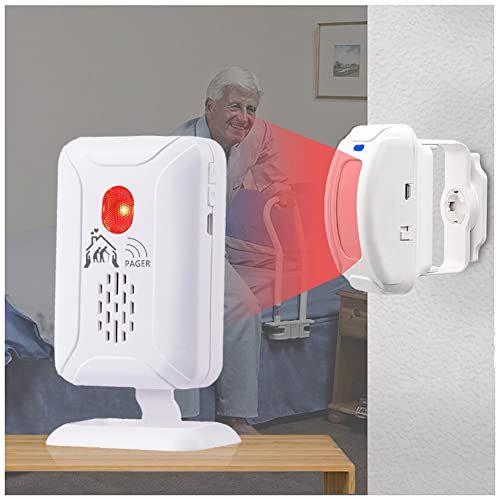
Designed specifically for elderly and dementia patients, the upgraded bed sensor alarm provides peace of mind for families and caregivers alike. This wireless motion sensor alerts you when your loved one gets out of bed or leaves the room, triggering an alarm as soon as their foot touches the ground. It features five volume levels, ensuring you’re notified without startling them. With a maximum range of 918 feet, you can place sensors where they’re most effective. Dual reminders—an LED light and sound—add extra assurance. Plus, it’s easy to control via app or touch, making it user-friendly for everyone involved.
Best For: Families and caregivers of elderly and dementia patients who need reliable fall prevention and monitoring solutions.
Pros:
- Wireless design allows for flexible placement of sensors under the bed or at the door.
- Five volume levels ensure notifications can be tailored to different environments without causing alarm.
- User-friendly controls via app or touch make it accessible for both caregivers and patients.
Cons:
- Battery dependency means regular maintenance to ensure the system is always operational.
- Maximum range of 918 feet may be limited in certain home layouts or settings.
- Requires setup and configuration, which might be challenging for some users not familiar with technology.
Smart Caregiver Basic Pull String Alarm for Fall Prevention (BPS-01)

Caregivers seeking a reliable solution for fall prevention and wandering management will find the Smart Caregiver Basic Pull String Alarm (BPS-01) particularly beneficial. This mobility monitoring alarm features a 36-inch pull string and a locking metal garment clip that securely attaches to clothing. When your loved one moves beyond the set distance, the magnet detaches, triggering a continuous sound until you reattach it. With adjustable volume settings and a low battery indicator, this alarm guarantees you won’t miss a notification. Ideal for use in chairs, it’s an economical choice that enhances safety and provides peace of mind.
Best For: Caregivers looking for an effective tool to monitor and prevent falls and wandering among individuals who require assistance.
Pros:
- Adjustable volume settings allow for customizable alert levels.
- Secure attachment with a locking metal garment clip ensures the alarm stays in place.
- Continuous sound alerts caregivers promptly when a user attempts to stand or exit.
Cons:
- Requires a 9-volt battery, which is not included with the product.
- Not recommended for bed use, limiting its application in certain settings.
- May not be suitable for users who are highly mobile or active, as it is designed for those needing assistance.
Smart Caregiver Bed Alarm for Elderly Adults

The Smart Caregiver Bed Alarm is an ideal solution for elderly adults at risk of wandering, especially those suffering from dementia. This fall prevention system features a 10″x30″ weight-sensing bed pad that alerts caregivers when pressure is removed. When your loved one gets out of bed, the alarm instantly sounds, ensuring their safety. The discreet design fits under the fitted sheet, while the monitor can be mounted nearby for easy access. With durable materials and easy cleaning, this alarm offers reliable daily use. Plus, volume options and a reset button make it user-friendly, keeping your loved one secure and comfortable.
Best For: Elderly adults at risk of wandering, particularly those with dementia or mobility issues.
Pros:
- Instant alerts provide immediate notification to caregivers when the user gets out of bed.
- Durable and easy to clean design ensures reliability in daily caregiving environments.
- User-friendly features such as volume options and a reset button enhance usability for caregivers.
Cons:
- Requires a battery or adapter for operation, which may need to be purchased separately.
- May cause alarm fatigue if users get out of bed frequently, leading to potential desensitization.
- Wireless add-on kit sold separately, which may increase overall cost for full functionality.
Patient Aid Bed Alarm with Motion Sensor Pad for Fall Prevention

For those caring for elderly patients at risk of falls, the Patient Aid Bed Alarm with Motion Sensor Pad is an invaluable tool. This 10″ x 30″ motion sensor pad detects movement, alerting you when your loved one is getting up. Easily install the alarm out of reach, placing the pad beneath their shoulders or buttocks. With multiple sound options at 80-90db, you can customize alerts to suit your preference. Made from durable, tear-resistant vinyl, it’s easy to clean and maintain. Plus, enjoy peace of mind with a 1-year warranty guaranteeing hassle-free replacements for defects.
Best For: Those caring for elderly patients at risk of falls who need an effective monitoring solution.
Pros:
- Durable Design: Made from tear-resistant, water-resistant vinyl that is easy to clean.
- Customizable Alerts: Multiple sound options with adjustable volume levels from 80db to 90db.
- Hassle-Free Warranty: Includes a 1-year warranty for easy replacement in case of defects.
Cons:
- Not Suitable for All Patients: Not recommended for individuals with pacemakers or defibrillators.
- Installation Required: Requires proper placement and installation, which may be challenging for some caregivers.
- Limited Mobility Detection: The motion sensor may not detect all movements if not positioned correctly.
Smart Caregiver Bed and Chair Exit Alarm System for Fall Prevention

Ensuring the safety of individuals with dementia can be challenging, especially when they’re prone to wandering or falling. The Smart Caregiver Bed and Chair Exit Alarm System provides a reliable solution. It features pressure-sensitive pads that alert you immediately when someone tries to get up from bed or a chair. With adjustable volume and a silencing option, you can manage alerts effectively. Installation is straightforward, and the durable pads are designed for comfort and protection. This system not only enhances safety but also offers peace of mind, knowing you’ll be alerted when your loved one needs assistance.
Best For: Caregivers and families of individuals with dementia or mobility issues who need assistance in preventing falls and wandering.
Pros:
- Immediate alerts when the individual attempts to get up, enhancing safety.
- Durable and comfortable pads designed for incontinence protection.
- Adjustable volume settings and a silencing option for effective alert management.
Cons:
- Requires battery replacement which may be inconvenient over time.
- Limited range of use as it is designed specifically for bed and chair applications.
- May not be suitable for individuals who are non-responsive to alarms.
Rechargeable Wireless Bed Exit Alarm for Elderly Dementia Patients

Designed specifically for elderly dementia patients, the Rechargeable Wireless Bed Exit Alarm offers peace of mind to caregivers by providing timely alerts when a patient is about to leave their bed. Utilizing advanced motion detection technology, it senses when a foot is about to touch the ground and sends a signal to the receiver up to 918 feet away. Installation is a breeze with factory-paired devices and a low-mounted sensor. With rechargeable batteries, you won’t have to worry about replacements. Plus, it features 36 tones and adjustable volume, ensuring you can customize alerts to suit your needs.
Best For: Caregivers of elderly dementia patients who need reliable alerts for bed exit safety.
Pros:
- Easy installation with factory-paired devices and a low-mounted sensor for accurate detection.
- Rechargeable batteries eliminate the need for constant replacements, with low battery alerts included.
- Customizable alerts with 36 tones and adjustable volume to suit individual preferences.
Cons:
- Limited range of 918 feet may not cover larger homes or facilities.
- Motion detection may occasionally trigger false alarms due to bed movements.
- Requires regular charging to ensure continuous functionality.
Caregiver Pager WiFi Door Alarm for Dementia Patients

The Caregiver Pager WiFi Door Alarm stands out as an essential tool for families caring for dementia patients. This device includes two sensors and a gateway, making it ideal for various settings like homes and businesses. With WiFi connectivity, you can monitor your loved ones remotely via a free smartphone app, receiving alerts whenever doors or windows open. The plug-in receiver sounds an alarm, offering 32 ringtones and five volume levels up to 110 dB. Plus, you can expand the system with additional sensors and share alerts with multiple users, ensuring everyone stays informed and your loved one remains safe.
Best For: Families caring for dementia patients who need a reliable way to monitor their loved ones’ safety at home.
Pros:
- WiFi connectivity allows for real-time remote monitoring through a smartphone app.
- Customizable alerts with 32 ringtones and adjustable volume levels up to 110 dB cater to different preferences and needs.
- Expandable system enables the addition of more sensors and receivers, allowing for tailored coverage.
Cons:
- Requires 2 alkaline 12V batteries that are not included, which could be an added expense.
- The device may not function effectively without a stable WiFi connection, limiting its usability in areas with poor internet access.
- Some users may find the setup process complicated, especially if they are not tech-savvy.
Factors to Consider When Choosing Dementia Wandering Alarms
When choosing a dementia wandering alarm, you need to take into account several key factors. Think about the detection range and coverage to guarantee it fits your home’s layout, as well as the alarm sound and volume that will alert you effectively. Don’t overlook ease of installation, motion sensor technology, and battery life to make certain it meets your needs for both functionality and convenience.
Detection Range and Coverage
Choosing the right dementia wandering alarm hinges greatly on detection range and coverage. Some models boast detection ranges up to 918 feet in open areas, letting you monitor loved ones from a safe distance. A coverage of nearly 260 feet can effectively alert you when vulnerable individuals approach doors or windows. It’s essential to evaluate the specific environment—whether it’s a home, business, or larger facility—since this impacts the alarm’s effectiveness. Systems with multiple sensors expand coverage, accommodating various entry points for thorough monitoring. Additionally, caregiver alarms featuring dual power options and intelligent motion detection help minimize false alarms while ensuring reliable range and coverage. Make sure to assess these factors carefully to enhance safety and security.
Alarm Sound and Volume
Selecting the right alarm sound and volume for dementia wandering alarms is essential for effective monitoring. You should look for alarms that offer multiple sound options, allowing you to choose ringtones that suit both your preferences and your loved one’s comfort. Adjustable volume levels are vital; some models provide settings from 0 dB to 110 dB, ensuring alerts are heard in various environments. Continuous sound alerts are often ideal, as they notify you promptly of any wandering attempts. Additionally, consider alarms with built-in LED indicators for visual notifications, which can be helpful for hearing-impaired caregivers. Remember, the sound should be effective without being startling, minimizing anxiety or confusion for the patient while keeping them safe.
Ease of Installation
Ease of installation is a key factor that can greatly impact your experience with dementia wandering alarms. You’ll want to choose a system that offers easy plug-and-play installation to minimize setup time and complexity. Look for devices with adhesive sensors that stick effortlessly to doors or windows, eliminating the need for tools. Wireless connectivity is another vital feature, allowing flexible placement without the hassle of running wires. Additionally, consider alarms that come with pre-installed batteries or rechargeable options for even simpler setup. Finally, opt for products with clear installation instructions and user-friendly interfaces, so you can deploy the system quickly and hassle-free, ensuring your loved ones stay safe and secure.
Motion Sensor Technology
When it comes to dementia wandering alarms, understanding motion sensor technology is essential for ensuring reliable monitoring. These alarms utilize infrared detection to sense when a patient’s foot is about to touch the ground, providing timely alerts to caregivers. Many motion sensors offer a maximum detection range of up to 918 feet in open areas, making them effective for various environments. Intelligent motion detection minimizes false alarms caused by bed movements, enhancing reliability. Some systems even include dual reminders with sound and LED lights, catering to users with hearing impairments. Additionally, motion sensor alarms may feature rechargeable batteries, reducing the hassle of frequent replacements and ensuring consistent functionality for peace of mind.
Battery Life Considerations
Understanding battery life considerations is essential for choosing dementia wandering alarms that meet your needs. Some alarms can last up to 15 months on a single set of batteries, reducing maintenance hassles. Look for devices that feature low battery indicators to alert you when it’s time for a replacement, ensuring the alarm stays functional. Rechargeable options can add convenience, eliminating constant battery changes and often including built-in battery management systems. Keep in mind that battery types vary; some devices require standard alkaline batteries while others use rechargeable lithium-ion. High-capacity batteries offer longer operational times, minimizing interruptions in monitoring—crucial for high-risk individuals. Prioritizing battery life can greatly enhance peace of mind for you and your loved ones.
Expandability and Customization Options
Choosing dementia wandering alarms isn’t just about finding a basic model; you’ll want to contemplate expandability and customization options that can adapt to your specific needs. Look for systems that allow you to add multiple sensors and receivers, enhancing coverage across larger areas. Customizable settings are essential—adjust alarm sounds, volume levels, and notification methods to fit individual preferences. Verify the system can pair multiple sensors with a single receiver to monitor various entry points effectively. Consider options with app integration for remote monitoring and alerts on your smartphone, providing greater flexibility. Finally, check for expandability features that let you add more sensors or receivers as your needs evolve, guaranteeing ongoing safety for your loved ones.