When it comes to keeping your loved ones with dementia connected, choosing the right phone can make all the difference. Dementia photo phones offer features like one-touch dialing and amplified audio, tailored for easy use. These devices not only facilitate communication but also foster a sense of independence. Curious about which options stand out in the market? Let’s explore the top 10 dementia photo phones that can truly enhance communication for seniors.
Telephones for Seniors – Picture Memory Corded Landline Telephone

If you’re looking for a phone that truly caters to seniors, the Picture Memory Corded Landline Telephone stands out with its nine photo memory keys for one-touch dialing. You can easily store numbers using ten two-button dialing options, making it quick to connect with family or friends. Its hands-free calling feature lets you multitask with ease, while the high-volume capabilities guarantee you won’t miss important calls. With adjustable receiver volume and a 110dB+ ringer, it’s designed for those with hearing challenges. This simple, reliable phone enhances independence, making communication effortless for seniors, especially those with memory loss.
Best For: Seniors who require an easy-to-use phone with memory features and high-volume capabilities for better communication.
Pros:
- User-friendly design tailored specifically for seniors, enhancing independence and ease of use.
- High-volume capabilities ensure calls are heard clearly, assisting those with hearing impairments.
- One-touch dialing with photo memory keys simplifies connecting with loved ones.
Cons:
- Limited features compared to modern smartphones, which may not appeal to tech-savvy seniors.
- Corded design may restrict mobility and placement options in the home.
- Dependence on landline service, which may not be available or preferred by all users.
VTech Corded Senior Phone for Elderly

The VTech Corded Senior Phone (Model SN1117) is an excellent choice for elderly users and individuals with hearing impairments, thanks to its oversized high-contrast buttons and photo speed dial keys. You’ll appreciate how easy dialing becomes, as each number is read aloud, helping to avoid mistakes. With the ability to program up to 8 photo speed dial keys, staying connected with loved ones is effortless—just press a button with their photo. Plus, the bright visual ringer guarantees you won’t miss calls, while the full-duplex speakerphone allows for clear conversations. It’s designed for simplicity, enhancing communication for everyone.
Best For: The VTech Corded Senior Phone is best for elderly users and individuals with hearing impairments who need an easy-to-use communication device.
Pros:
- Oversized, high-contrast buttons make dialing simple and stress-free.
- Photo speed dial keys allow for quick and easy connections to loved ones.
- Bright visual ringer ensures users are alerted to incoming calls even in quiet environments.
Cons:
- Limited to corded use, which may restrict mobility.
- May not have advanced features found in modern smartphones.
- The design is focused on simplicity, which may not appeal to younger users.
Serene Innovations Amplified Big Button Landline Phone for Seniors

Designed specifically for seniors with dementia, the Serene Innovations Amplified Big Button Landline Phone stands out with its one-touch dialing feature. With big buttons and an impressive 85 dB volume, it addresses both visual and auditory challenges. You can easily program speed dial buttons with portrait photos, making it simple for your loved ones to connect with family and friends. This corded phone operates without needing electrical power, ensuring reliable communication at home or in the office. Its intuitive controls promote independence, and you can trust that it’s designed to support seniors in staying connected and engaged.
Best For: Seniors with dementia or memory challenges who need a user-friendly phone with amplified sound and visual aids.
Pros:
- Loud volume of 85 dB ensures clear communication for hearing-impaired users.
- One-touch dialing with portrait photos simplifies calling for those with visual or cognitive impairments.
- Corded design provides reliable operation without reliance on electrical power.
Cons:
- Limited features compared to modern smartphones, which may not appeal to tech-savvy users.
- Corded design may restrict mobility and placement options in the home.
- Photo button customization may require assistance for initial setup.
Big Button Phone for Seniors with Extra Loud Ringer

For seniors who struggle with memory loss or vision impairment, the Big Button Phone with an extra loud ringer is an ideal choice. It features nine customizable picture buttons for one-touch dialing, making it easy to connect with loved ones. You can adjust the ringer volume from low to high or turn it off completely. With HD hands-free functionality, you’ll enjoy clear conversations at up to 75+ dB. Made from durable materials, this heavy-duty phone is designed for long-lasting use. Plus, the plug-and-play design means no batteries are required, ensuring straightforward operation for everyone.
Best For: Seniors with memory loss or vision impairment who need an easy-to-use telephone.
Pros:
- Customizable picture buttons allow for easy one-touch dialing to connect with family and friends.
- Adjustable ringer volume caters to individual hearing needs, providing options from low to high or turning it off completely.
- Durable design ensures long-lasting use without the need for batteries, making it convenient for seniors.
Cons:
- Unplugging the phone may erase stored numbers, posing a challenge for those with memory issues.
- Number keys do not emit a signal tone when storing numbers, which may cause confusion during setup.
- Limited mobility options as it is a wired landline phone, restricting use to areas with a telephone line.
Big Button Corded Telephone for Seniors

Finding a phone that simplifies communication for seniors with memory issues can be challenging, but the Big Button Corded Telephone stands out with its 9 picture memory buttons. This design makes dialing effortless, allowing your loved ones to reach familiar contacts quickly. The large photo and number buttons enhance convenience, while the clear SOS button guarantees they can call for help in emergencies. Powered by a landline, it eliminates battery worries. With adjustable volume settings, it caters to those with hearing or visual impairments. This phone is perfect for seniors, giving them the confidence to stay connected and engaged.
Best For: Seniors with memory problems who need a simple and effective way to communicate.
Pros:
- Large buttons and picture memory options make dialing easy for users.
- Clear SOS button provides peace of mind for emergency situations.
- Corded design eliminates the need for batteries, ensuring reliability.
Cons:
- Limited mobility due to corded design, restricting placement options.
- Average customer ratings indicate mixed satisfaction among users.
- Not suitable for those who prefer mobile technology, as it lacks portability.
Big Button Phone for Seniors with One-Click Dialing
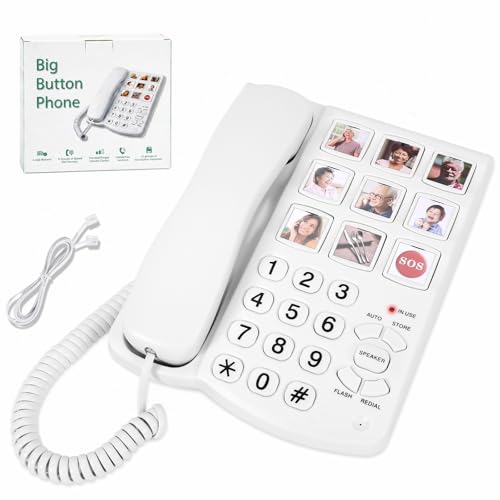
The Big Button Phone for Seniors with One-Click Dialing is perfect for elderly users, especially those coping with dementia or Parkinson’s disease. Its large, high-contrast buttons make it easy to see and use. With nine one-touch speed dial buttons, you can personalize it with photos to aid memory. The adjustable volume and flashing light guarantee that calls are easily noticed, even in noisy environments. Plus, the HD hands-free capability and one-touch SOS button enhance communication and safety. Installation is simple—just plug it in, making it a reliable choice for seniors needing a straightforward, effective phone solution.
Best For: Seniors with visual, hearing, and memory impairments, including those with dementia and Parkinson’s disease.
Pros:
- Large, high-contrast buttons for easy visibility and use.
- One-touch speed dial buttons with photo replacement to aid memory.
- Adjustable volume and flashing light ensure calls are noticeable in various environments.
Cons:
- Wired design may limit mobility and require a fixed location.
- Lack of additional features like internet connectivity or advanced smart functions.
- Limited portability compared to mobile phones.
Big Button Amplified Speakerphone Photo Frame Picturephone Speed Dial

Designed with simplicity in mind, the Big Button Amplified Speakerphone Photo Frame Picturephone Speed Dial is an ideal choice for individuals with Dementia or Alzheimer’s. It features 10 one-touch memory picture keys for easy dialing, ensuring your loved ones can stay connected without confusion. The unit’s amplified speakerphone provides clear audio, while adjustable volume controls cater to varying hearing needs. With bright LED indicators and a wall-mountable design, it fits seamlessly into any space. Plus, it remembers the last dialed number, making communication even more effortless. This phone truly enhances engagement and connection for everyone involved.
Best For: Individuals with Dementia or Alzheimer’s who need an easy-to-use phone for staying connected.
Pros:
- Amplified audio ensures clear communication for users with hearing difficulties.
- 10 one-touch memory picture keys make dialing simple and intuitive.
- Wall-mountable design allows for convenient placement in any room.
Cons:
- Customer ratings average only 3.0 out of 5 stars, indicating mixed user satisfaction.
- Limited compatibility as it requires a phone jack, restricting usage in certain scenarios.
- No battery or AC adapter, which may be a drawback in case of power outages or jack issues.
Picture Telephone for Seniors

For seniors, especially those living with Alzheimer’s or dementia, the Picture Telephone stands out as an ideal communication tool. Its humanized design allows you to replace nine pictures of friends and family for quick, easy access. The SOS one-touch speed dial guarantees that help is just a button away. Since it’s powered by the phone line, you won’t have to worry about changing batteries. With pre-stored numbers, you can effortlessly call home, order meals, or reach emergency contacts. This durable landline phone is a great way for your loved ones to stay connected and engaged without the confusion of traditional phones.
Best For: Seniors, particularly those with Alzheimer’s, dementia, or hearing impairments, who need a simple and effective communication tool.
Pros:
- Humanized design with customizable pictures for quick access to loved ones.
- SOS one-touch speed dial for emergency situations.
- No battery required, making it energy-efficient and hassle-free.
Cons:
- Currently has a low customer rating of 1.0 out of 5 stars.
- Limited functionalities compared to more advanced modern phones.
- May not suit seniors who prefer more traditional or complex phone systems.
Big Button Phone for Seniors (Corded Landline Telephone)

Seniors seeking an easy and reliable way to stay connected will find the Big Button Phone for Seniors (EX-LD-828-01) by Excelltel an ideal choice. This corded landline telephone features 10 picture keys for quick one-touch dialing, making communication effortless. With amplified volume and large buttons, it caters specifically to elderly users, ensuring they can use it with confidence. Plus, it’s compatible with hearing aids, providing crystal-clear sound quality. Programmable memory buttons let you save important contacts for easy access, simplifying your daily interactions. Overall, this phone combines simplicity and functionality, enhancing home communication for seniors.
Best For: Seniors looking for a user-friendly and reliable corded telephone to enhance their communication experience.
Pros:
- Amplified volume and large buttons for easy use by elderly individuals.
- Ten picture keys for quick one-touch dialing of important contacts.
- Compatible with hearing aids, ensuring clear sound quality during conversations.
Cons:
- Limited features compared to modern smartphones, which may not appeal to all users.
- Corded design may restrict mobility and placement options within the home.
- Requires a landline connection, which may not be available in all areas.
FLYINGVOICE FIP12WP VoIP Phone for Seniors

The FLYINGVOICE FIP12WP VoIP phone stands out as an ideal choice for individuals with dementia, thanks to its customizable image keys that allow you to insert family photos. This feature fosters familiarity, making connections easier. With large buttons designed for seniors with reduced vision, it guarantees user-friendliness. The dedicated HELP key provides quick access to emergency assistance, enhancing safety. Plus, its enhanced audio features, including a handset volume over 90dB, cater to those with hearing loss. Visual alerts for incoming calls and wall-mountable design further add practicality, making it a perfect fit for homes and care facilities alike.
Best For: The FLYINGVOICE FIP12WP VoIP phone is best for seniors, especially those with dementia or hearing impairments, who need a user-friendly communication device.
Pros:
- Customizable image keys help seniors easily identify contacts, fostering familiarity and comfort.
- Large buttons and a dedicated HELP key enhance usability for those with vision impairments and emergency needs.
- High volume levels and visual alerts ensure clear communication for users with hearing loss.
Cons:
- Some seniors may require assistance with initial setup and customization of the image keys.
- The wall-mountable design may not be suitable for all living spaces, limiting placement options.
- Limited advanced features compared to more modern smartphones may not appeal to tech-savvy users.
Factors to Consider When Choosing Dementia Photo Phones
When choosing dementia photo phones, you’ll want to focus on several key factors. Consider the user-friendly design that makes navigation easy, along with memory features that help recall important contacts. Don’t forget to check for audio clarity, visual alerts, and emergency dialing options to guarantee safety and accessibility.
User-Friendly Design
Choosing a dementia photo phone involves considering several key design factors that enhance usability. Look for large, high-contrast buttons that improve visibility and help prevent dialing mistakes. Customizable photo memory buttons are also essential; they let users associate pictures of loved ones with specific numbers, making it easier to recall contacts. One-touch speed dial options simplify the dialing process, providing quick access to important connections without frustration. Enhanced audio features, like adjustable volume controls for the handset and ringer, cater to seniors with hearing impairments, ensuring they don’t miss calls. Additionally, visual alerts such as flashing lights help users stay aware of incoming calls, even in noisy environments, making communication smoother and more accessible.
Memory Features
Selecting a dementia photo phone with robust memory features can substantially enhance the user experience. Look for models that include one-touch speed dial buttons with replaceable pictures, allowing your loved one to easily connect with familiar contacts. This reduces confusion during calls. Multiple memory storage options are essential, enabling the saving of several important numbers for quick access to caregivers and family. Programming these phones is typically straightforward, taking just a few simple steps. Additionally, some phones offer visual and auditory cues, like flashing lights or amplified sound, to help recognize incoming calls. Don’t forget about emergency call buttons marked with recognizable symbols, providing an immediate way to reach help when needed, promoting safety and peace of mind.
Audio Clarity
Audio clarity plays an essential role in guaranteeing effective communication for those using dementia photo phones. Look for devices with volume levels exceeding 90dB, which can considerably enhance clarity for users with hearing impairments. Many dementia photo phones come with adjustable volume settings, allowing you to tailor the audio to your loved one’s specific needs. Additionally, high-quality speakerphone functionality is vital, as it enables both parties to hear and speak simultaneously without interruptions. This feature can greatly reduce misunderstandings during conversations, fostering a more positive communication experience. Ultimately, investing in a phone that prioritizes audio clarity guarantees your loved one stays connected and engaged, making every conversation more meaningful.
Visual Alerts
When it comes to dementia photo phones, visual alerts are essential for ensuring users remain aware of incoming calls. Bright flashing lights can help seniors recognize calls, so they don’t miss important communications. If your loved one has hearing impairments, a strong visual indicator offers an alternative way to stay informed about phone activity. Look for phones with LED indicators that signal when the phone is in use or when a call is coming in, as these enhance user awareness. Effective visual alerts can also reduce anxiety, allowing seniors to see when a call is happening without relying solely on sound. Ultimately, clear visual cues foster independence by providing immediate feedback on phone interactions.
Emergency Dialing
Emergency dialing features are essential for dementia photo phones, as they provide a quick and reliable way for seniors to reach help in critical situations. Look for phones with a one-touch SOS button that connects directly to emergency services or caregivers. Customizable emergency contact options allow users to dial trusted individuals swiftly when needed. Choose devices designed with visual cues, like bright buttons or icons, to help your loved one easily identify emergency functions. High-volume ringer and speakerphone capabilities guarantee that incoming emergency calls are heard clearly, even in noisy environments. Additionally, consider phones powered by the phone line, so emergency functions remain operational without relying on battery power, giving you peace of mind.
Adjustable Volume
Adjustable volume is a key feature to contemplate in dementia photo phones, ensuring that users with varying degrees of hearing loss can communicate effectively. Some models offer earpiece volumes exceeding 90dB and ringer volumes over 110dB, catering to individual needs. The ability to modify ringer volume settings helps maintain a quiet environment when necessary, enhancing comfort and reducing anxiety. Many dementia photo phones provide multiple volume levels for both the ringer and handset, allowing for personalized control based on specific hearing capabilities. This flexibility prevents missed calls, ensuring important communications are heard, which is vital for seniors relying on contact with caregivers or family. Additionally, some devices include visual alerts, creating a multi-sensory approach to notifications for users with hearing impairments.
Durability and Reliability
Selecting a dementia photo phone involves considering not just volume control but also its durability and reliability. Look for models made from high-quality, heavy-duty materials like ABS, ensuring they stand the test of time. Opt for corded phones powered directly by the phone line, which eliminates worries about battery failures or power outages. Heavier models provide stability, reducing the risk of tipping during use. User-friendly designs with intuitive controls promote consistent usage for those with cognitive impairments. Additionally, choose devices that include secure mounting options or anti-slip bases to further enhance safety. By prioritizing these elements, you can make a choice that keeps your loved ones connected and engaged without unnecessary stress.