Mealtime can be easier, calmer, and more dignified with the right adaptive dining trays for dementia. The best options help guide food onto utensils, reduce spills, and support safer self-feeding.
Below, we focus on practical choices that balance stability, ease of use, cleaning, and comfort for daily care at home or in a facility.
Best 10 Adaptive Dining Trays for Dementia Picks for 2026
Best Scoop-Lip Plate

- Raised rim helps guide food onto utensils
- Non-slip base improves stability at mealtime
- Microwave- and dishwasher-safe for daily use
Best For: Adults with dementia, tremors, or limited hand control who need a stable scoop-style plate.
Best for Strong Suction
Multi-Grid Silicone Suction Plate

- Strong suction helps prevent sliding during meals.
- Divided grid layout supports easier scooping and food separation.
- Durable silicone build is made for everyday senior use.
Best For: Seniors or patients who need a stable divided plate for easier self-feeding.
Best Spill Control
Vive Spill-Proof Scoop Plates, 9" (2 Pack)

- High rim makes scooping easier with less spilling
- Non-skid base helps keep the plate in place
- Dishwasher- and microwave-safe for daily use
Best For: Seniors and caregivers who want a steadier plate for easier, less messy mealtimes.
Best for Easy Scooping
Sammons Preston Partitioned Scoop Dish

- Three divided sections for portion control
- Tall sides help users scoop food more easily
- Dishwasher safe and made from durable melamine
Best For: Seniors, caregivers, and users with limited mobility who need a scoop-friendly divided plate.
Best for Easy Setup
Special Supplies Adaptive Scoop Plates, 3-Pack

- High wall design supports easier scooping and less spillover
- Nonslip base helps keep plates stable during meals
- Microwave- and dishwasher-safe BPA-free plastic
Best For: Adults with dementia or limited hand control who need a simple, stable plate for more independent eating.
Best Scoop Plate Set
Providence 9" Scoop Plate 6-Pack
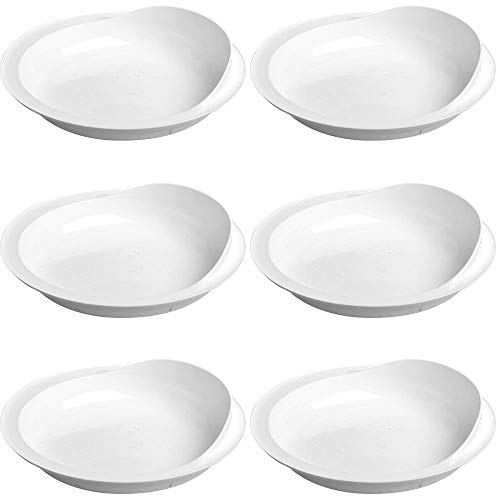
- Raised rim makes scooping easier for limited hand control
- Non-slip base helps keep meals in place
- Microwave-safe, dishwasher-safe, and BPA-free
Best For: Caregivers and older adults who need a simple, stable plate for easier scooping at meals.
Best Multipack Value
Hushee Adaptive Spill-Proof Plate & Bowl Set

- 3 plates and 3 bowls for flexible daily use
- Suction base and high-low rim help reduce spills
- Microwave- and dishwasher-friendly plastic
Best For: Caregivers and families seeking a simple, reusable self-feeding set for seniors with tremors or dementia.
Best with Extra Features
Special Supplies Adaptive Spill-Proof Scoop Plates

- High wall helps guide food back onto the utensil
- Nonslip base adds stability for safer self-feeding
- Microwave- and dishwasher-safe BPA-free plastic
Best For: Adults with dementia or limited dexterity who need a simple, spill-reducing plate for self-feeding.
Best Scoop-Style Eating Aid
Vive Spill-Proof Scoop Plate & Bowl

- High-sided rims help guide food onto utensils
- Non-slip base and suction bowl add stability
- Microwave-safe and dishwasher safe for easy cleanup
Best For: Seniors and adults with dementia, Parkinson's, or stroke recovery who need a spill-resistant eating aid.
Best Scoop-Lip Plate – Providence 9" Scoop Plate
The Providence Spillproof 9" Scoop Plate is a practical pick for adaptive dining trays for dementia when the main goal is to make self-feeding easier and less frustrating. Its high-low rim helps guide food onto a spoon or fork, while the non-slip base adds stability for users with limited hand control, tremors, or reduced depth perception.
Best For: Adults who need a stable, easy-scoop plate for dementia care, Parkinson’s, stroke recovery, or tremors.
Pros:
- Raised scoop edge makes it easier to push food onto utensils
- Non-slip base helps keep the plate from sliding during meals
- Microwave-safe, dishwasher-safe, and made from BPA- and latex-free polypropylene
- Lightweight 9" size is useful for everyday breakfasts, lunches, and dinners
Cons:
- Single plate included, so bigger households may need multiple units
- Open design is less contained than a true lidded bowl or divided tray
- Simple utility styling may feel basic compared with more specialized tableware
For shoppers comparing adaptive dining trays for dementia, this plate stands out for its simple, reliable scoop-and-eat design rather than extra features. It is a strong everyday option if you want a low-fuss dish that supports independence and is easy to clean and reuse.
Best for Strong Suction – Multi-Grid Silicone Suction Plate
If you want a stable, easy-to-manage option among adaptive dining trays for dementia, this silicone suction plate is built to stay put while helping users scoop and separate foods with less frustration. The divided grid layout supports portion control and simpler self-feeding, while the soft silicone body is practical for everyday senior care.
Best For: Seniors or patients who need a non-slip divided plate that supports safer self-feeding at the table.
Pros:
- Strong suction cup helps keep the plate from sliding during meals.
- Divided grid design makes it easier to separate foods and scoop bites.
- Silicone construction is durable, food-safe, and simple to wipe clean.
- Useful for caregivers looking for a straightforward self-feeding aid.
Cons:
- Hand wash only, which may be less convenient than fully dishwasher-safe options.
- Single-plate design offers fewer features than more specialized adaptive tableware.
As a practical pick for adaptive dining trays for dementia, this plate focuses on the basics that matter most: stability, food separation, and easier scooping. It is a solid choice if you want a simple, durable feeding aid rather than a more complex system.
Best Spill Control – Vive Spill-Proof Scoop Plates, 9" (2 Pack)
For caregivers and families comparing adaptive dining trays for dementia, these Vive scoop plates are a simple, practical way to reduce spills and make scooping easier at mealtime. The high, sloped rim helps guide food onto utensils, while the non-skid base keeps the plate steadier on the table.
Best For: Seniors, adults with dementia, Parkinson’s, stroke recovery, tremors, or limited hand control who need a steadier, easier-to-scoop plate.
Pros:
- High wall and sloped rim help push food onto forks and spoons.
- Non-slip base adds stability and reduces sliding during meals.
- Microwave- and dishwasher-safe for everyday convenience.
- High-contrast blue design can make food easier to see.
Cons:
- Works better as a scoop plate than as a full tray-style eating surface.
- Not ideal for users who need divided sections or full meal organization.
Overall, this is a useful low-friction option for adaptive dining trays for dementia when the main goal is cleaner scooping, less mess, and a more stable plate at the table.
Best for Easy Scooping – Sammons Preston Partitioned Scoop Dish
If you’re comparing adaptive dining trays for dementia, this Sammons Preston partitioned scoop dish is a practical choice for keeping food separated and easier to gather with a spoon or fork. The tall dividers and nearly vertical sides help users corral food, which can reduce frustration at mealtime for people with limited vision, limited mobility, or reduced hand control.
Best For: Caregivers and seniors who need a simple, durable divided plate that makes self-feeding easier and supports portion control.
Pros:
- Three divided sections keep foods separated and portioned
- High sides make scooping food much easier for limited mobility
- Durable melamine build is dishwasher safe
- BPA-free, phthalate-free, and non-latex
Cons:
- Not microwave safe
- Divided plate design is simpler than a full tray-style setup
This is a good fit when the main goal is cleaner, more independent eating rather than a full adaptive tray system. For adaptive dining trays for dementia, its strong separation walls and scoop-friendly shape make everyday meals less messy and easier to manage.
Best for Easy Setup – Special Supplies Adaptive Scoop Plates, 3-Pack
If you’re comparing adaptive dining trays for dementia, this 3-pack of scoop plates is a practical choice for reducing spills and making self-feeding easier. The high sloped rim helps guide food back onto the utensil, while the wide base and nonslip ring add stability at the table.
Best For: Adults with dementia, Parkinson’s, tremors, or limited hand coordination who need a simple plate that supports more independent mealtime.
Pros:
- High wall and scoop shape help food stay on the plate and support easier utensil use
- Nonslip base adds stability for safer, less frustrating meals
- BPA-free, microwave-safe, and dishwasher-safe for everyday convenience
- High-contrast colors can make food easier to see and recognize
Cons:
- These are plates, not full tray-style dining systems with straps or lap support
- Plastic construction may feel less premium than weighted metal alternatives
For buyers who want a low-fuss feeding aid, these plates are a strong fit, especially when the goal is to make adaptive dining trays for dementia simpler and less messy. They’re not a specialized tray system, but they do deliver the core benefits many caregivers look for: stability, easier scooping, and less cleanup.
Best Scoop Plate Set – Providence 9" Scoop Plate 6-Pack
For shoppers comparing adaptive dining trays for dementia, this Providence Spillproof scoop plate set is a practical, low-fuss option that helps food stay within reach. The raised high-low rim gives users a simple edge to guide food onto a fork or spoon, while the non-slip base helps keep meals steadier for people with limited hand control.
Best For: Older adults and caregivers who want an easy-to-use, everyday adaptive plate for tremors, stroke recovery, Parkinson’s, or dementia-related mealtime challenges.
Pros:
- Raised rim helps with scooping and reduces food slipping off the plate
- Non-slip base adds stability during meals
- Microwave-safe, dishwasher-safe, and BPA-free for simple daily use
- 6-pack offers good value for multi-meal or multi-user households
Cons:
- Plastic construction may feel less sturdy than heavier premium dishware
- 9" size may be small for larger meal portions
Overall, this is a straightforward adaptive dining solution for anyone who needs more control at mealtime without complicated features. If you want adaptive dining trays for dementia that focus on stability and easy scooping, this set is a dependable everyday pick.
Best Multipack Value – Hushee Adaptive Spill-Proof Plate & Bowl Set
If you’re comparing adaptive dining trays for dementia, this Hushee set is a practical low-cost option for everyday self-feeding support. It includes three plates and three bowls with suction bases and high-low edges to help reduce spills and make one-handed eating easier for seniors, adults with tremors, or anyone who needs steadier dinnerware.
Best For: Caregivers or families who want a simple, reusable plate-and-bowl set for helping someone eat more independently at home.
Pros:
- Includes 3 plates and 3 bowls, so you get enough pieces for daily use and rotation.
- Suction base helps keep dishes anchored during meals and reduces sliding.
- High-low rim design supports scooping food with less mess.
- Microwave- and dishwasher-friendly plastic makes cleanup more convenient.
Cons:
- Not as specialized as true tray-style dining aids for very limited mobility.
- Suction works best on smooth, clean, flat surfaces.
- Plastic construction is lightweight, but less durable-feeling than premium materials.
This is a strong value pick if you want adaptive dining trays for dementia that emphasize everyday usability over premium features. It’s especially useful when the goal is to cut down on spills, support independent eating, and keep mealtimes calmer without adding complexity.
Best with Extra Features – Special Supplies Adaptive Spill-Proof Scoop Plates
If you’re comparing adaptive dining trays for dementia, this 2-pack scoop plate set is a simple, practical option for supporting safer self-feeding. The high, sloped rim helps guide food back onto the utensil, while the nonslip base adds stability for everyday meals.
Best For: Adults with dementia, Parkinson’s, arthritis, stroke recovery, or limited hand control who need a more forgiving plate for independent eating.
Pros:
- High wall and scoop-friendly shape make it easier to gather food with less spilling
- Nonslip ring and wide base improve stability during mealtime
- BPA-free, microwave-safe, and dishwasher-safe for easy daily use
- High-contrast solid color can help with food visibility
Cons:
- Not a full tray-style eating surface if you want larger containment
- Plastic build is functional, but less premium than heavier dinnerware
- Best suited to plates and bowls rather than a complete dining system
Overall, this is a straightforward choice if you want adaptive dining trays for dementia that prioritize ease of scooping, spill reduction, and low-maintenance cleanup. It’s especially useful for caregivers who want a durable, no-fuss plate that supports more independent eating.
Best Spill-Control Bowl – Vive Spill-Proof Scoop Bowl (2-Pack)
If you’re comparing adaptive dining trays for dementia or other meal aids for shaky hands, this Vive scoop bowl is a simple way to make eating less frustrating. The high-lipped, curved edge helps users gather food more easily, while the suction base keeps the bowl from sliding during meals.
Best For: People with dementia, Parkinson’s, tremors, strokes, or limited hand control who need a stable, easy-to-scoop bowl for daily meals.
Pros:
- High walls and curved scoop edge make it easier to load food onto utensils.
- Suction base helps prevent slipping, tipping, and messes at the table.
- BPA-free plastic is microwave- and dishwasher-safe for everyday use.
- Two-bowl pack offers good value for home or caregiver use.
Cons:
- It’s a bowl, not a full tray, so it won’t contain a complete place setting.
- The suction works best on smooth, clean surfaces.
For buyers comparing adaptive dining trays for dementia, this bowl is most useful as a targeted mealtime aid rather than a full dining system. It’s a practical pick when stability, spill reduction, and easier scooping matter more than a larger tray setup.
Best Scoop-Style Eating Aid – Vive Spill-Proof Scoop Plate & Bowl
If you’re comparing adaptive dining trays for dementia, the Vive Spill-Proof Scoop Plate & Bowl is a practical option for people who need a little more guidance at mealtime. The high, curved sides help food stay on the utensil, while the non-slip base and suction cup bowl aim to reduce slips and spills.
Best For: Seniors, adults with dementia or Parkinson’s, and post-stroke users who need a simple scoop-style plate and bowl for more independent eating.
Pros:
- High-sided scoop design helps guide food onto forks and spoons
- Non-slip base plus suction cup bowl improves stability on smooth tables
- Microwave-safe and top-rack dishwasher safe for everyday use
- Blue color offers strong contrast for easier food recognition
Cons:
- Plastic construction may feel less substantial than heavier dishware
- Only one plate and one bowl are included, so it is not a full set
- The suction feature works best on clean, smooth surfaces
This set makes sense if you want a low-fuss feeding aid that supports independence without adding complicated parts. For shoppers browsing adaptive dining trays for dementia, it stands out as a simple, spill-resistant choice rather than a full tabletop tray system.
How We Picked the Best Adaptive Dining Trays for Dementia
We prioritized designs that make independent eating simpler: raised edges or scoop walls, non-slip or suction bases, easy-clean materials, and shapes that work well with limited hand control or reduced coordination. We also looked for options that are straightforward for caregivers to set up and maintain.
Quick Comparison: What Matters Most
Some products are better for pure spill control, while others are better for stability or portion separation. Scoop plates and lipped bowls help guide food onto utensils, divided plates support food separation and visual clarity, and suction-based trays are best when sliding is the main issue. The right choice depends on the user’s mobility, grip strength, and eating habits.
Key Buying Factors for Adaptive Dining Trays for Dementia
Edge Height and Shape
Raised rims and angled walls can help users push food onto a spoon with less frustration. Higher walls are useful for people who have trouble scooping or controlling utensils.
Stability on the Table
If trays move during meals, self-feeding becomes harder. Non-skid bases and suction cups are especially helpful for users with tremors, weak grip, or impulsive movements.
Material and Cleanup
Look for materials that are durable, lightweight, and easy to wash. Dishwasher-safe designs can save time in caregiving settings, but verify care instructions before buying.
Food Separation and Visibility
Divided sections can reduce confusion and keep foods from mixing, which may be helpful for users who prefer predictable plate layouts. They can also support portion control.
Who Should Buy Which Adaptive Dining Trays for Dementia?
If the main challenge is food slipping off the plate, choose a scoop plate or lipped bowl. If the issue is movement on the table, prioritize suction or a strong non-slip base. If the user benefits from seeing each food separately, a divided plate is often the better fit.
For many households, the best Adaptive Dining Trays for Dementia are the ones that match the person’s current abilities while remaining simple enough for daily use. A small improvement in stability or edge design can make meals more successful and less stressful for everyone involved.