When verbal communication becomes difficult, the right visual aid can make everyday care calmer and more effective. Picture communication boards give patients and caregivers a simple way to share needs, choices, and basic comfort items.
In this roundup, we focus on practical, easy-to-use options that can help in home care, assisted living, and hospital settings. The best picks prioritize clarity, durability, and layouts that are simple to understand at a glance.
Best 9 Picture Communication Boards for Dementia Picks for 2026
Best for Durable Everyday Use
Plastic Communication Board for Non Verbal Adults

- 4-board set covers common needs and requests
- Simple layout supports fast day-to-day communication
- Durable plastic design suits frequent handling
Best For: Adults and caregivers who want a sturdy, portable communication aid for routine care settings.
Best Value Pack
6-Piece Color Picture Communication Boards

- 6-board pack is useful for backups or multiple users.
- Bright symbols and clear patterns support quick pointing.
- Thick coated cardboard can handle repeated everyday use.
Best For: Caregivers and clinicians who want an affordable multi-board communication set.
Best Durable Reusable Board
Plastic Communication Boards Set

- Double-sided picture symbols for non-verbal communication
- Waterproof plastic that wipes clean for repeated use
- Portable size suits homes, hospitals, and care homes
Best For: Caregivers who want a durable, reusable communication aid for dementia, stroke, or aphasia support.
Best for Basic Care Communication
6 Pcs Colorful Picture Symbol Cards
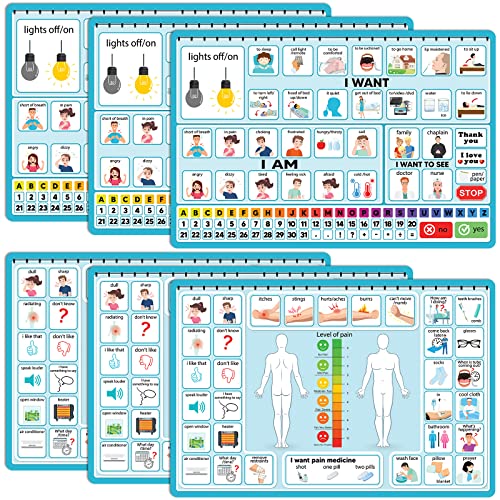
- Includes 6 boards for rotation or backups
- Clear symbols help with everyday needs and discomfort
- Thick coated cardboard is sturdy and writable
Best For: Caregivers needing a simple communication aid for nonverbal adults, aphasia, or dementia support.
Best for Large Visual Sets
Plastic Communication Boards Set for Non Verbal Adults

- Durable plastic cards for repeated daily use
- Clear picture symbols for basic needs and requests
- Suitable for dementia, aphasia, stroke, and care settings
Best For: Caregivers and facilities needing a sturdy, low-tech visual communication aid.
Best for Simple Symbol Use
WATINC 12-Piece Communication Cards

- 12-piece set for basic symbol-based communication
- Good fit for non-verbal seniors and aphasia support
- Portable and simple for bedside or caregiver use
Best For: Caregivers who want a small, easy symbol card set for basic daily communication.
Best Value 6-Pack
Fuyoooo Colorful Communication Boards

- 6 boards for easy placement in multiple rooms
- Clear symbols for needs, feelings, and daily routines
- Compact and portable for home or travel use
Best For: Caregivers seeking an affordable multi-board communication set for home or facility use.
Best Multi-Use Set
6-Piece Communication Boards for Nonverbal Adults

- 6 themed boards for needs, feelings, and everyday requests
- Durable, wipe-clean plastic for home or care use
- Simple picture-and-word layouts for quick pointing and response
Best For: Families and caregivers who want a straightforward visual aid for nonverbal adults, aphasia, autism, or dementia support.
Best Multi-Pack
Fuyoooo 3-Piece Communication Boards

- Three boards for multiple rooms or backup use
- Simple symbol layout for daily needs and emotions
- Compact size works at home, hospital, or on the go
Best For: Caregivers who want an affordable, easy-to-place communication board set for nonverbal adults.
Best for Durable Everyday Use – Plastic Communication Board for Non Verbal Adults
If you need picture communication boards for dementia that are simple, portable, and built for repeated use, this plastic set is a practical choice. The four-board format gives caregivers and users a clearer way to express needs, preferences, and requests in hospital, care home, or home settings.
Best For: Adults who need a sturdy, easy-to-use communication aid for care environments, everyday routines, and frequent handling.
Pros:
- Includes four specialized boards to cover a range of common communication needs.
- Simple layout helps reduce confusion for non-verbal adults and those with speech difficulties.
- Durable plastic construction is better suited to repeated cleaning and daily use.
- Lightweight and compact enough to move between rooms or carry on the go.
Cons:
- Not as customizable as digital or print-your-own communication systems.
- May be too basic for users who need a very large vocabulary.
Overall, this is a dependable low-tech option for caregivers who want straightforward picture communication boards for dementia and other speech-related needs. Its biggest strengths are durability, portability, and ease of use in everyday care settings.
Best Value Pack – 6-Piece Color Picture Communication Boards
If you need simple, reusable picture communication boards for dementia, this 6-pack offers a practical way to help nonverbal adults point to needs, discomfort, and basic daily requests. The boards use bright, easy-to-read symbols and sturdy cardboard, making them useful for home care, clinics, or short-term support.
Best For: Caregivers, family members, and healthcare teams who want an affordable multi-board set for everyday communication support.
Pros:
- Includes 6 boards, so you have extras for backup, different rooms, or multiple users.
- Clear picture symbols and bright colors make quick pointing and recognition easier.
- Thick 300g cardboard with a coated surface adds durability and allows marker notes to be wiped off.
- Covers a broad range of daily communication needs, from comfort issues to basic requests.
Cons:
- Cardboard construction is sturdy, but not as wipe-clean or long-lasting as laminated plastic boards.
- The layout may feel basic if you need highly customized dementia communication prompts.
Overall, this set is a straightforward, budget-friendly option if you want picture communication boards for dementia that are easy to share and replace. It’s especially appealing when you need multiple boards rather than one premium, highly specialized aid.
Best Durable Reusable Board – Plastic Communication Boards Set
If you need picture communication boards for dementia or other non-verbal care situations, this plastic set is a simple, practical option. It uses clear picture symbols, a portable size, and wipe-clean material that works well in homes, hospitals, and care settings.
Best For: Caregivers and facilities looking for a durable, easy-to-sanitize communication aid for adults with dementia, stroke recovery, aphasia, or similar speech challenges.
Pros:
- Double-sided boards with clear picture symbols for everyday communication
- Sturdy waterproof plastic that can be wiped clean and reused
- Portable 30 x 21 cm size for home, hospital, or care-home use
- Designed for adult healthcare communication, not just children’s use
Cons:
- Limited to the symbols already printed on the boards
- May feel basic if you need highly customized dementia communication prompts
For buyers comparing picture communication boards for dementia, this set stands out for durability and simplicity rather than customization. It is a solid choice when you want a reusable, professional-looking aid that can travel between rooms or facilities.
Best for Basic Care Communication – 6 Pcs Colorful Picture Symbol Cards
If you’re comparing picture communication boards for dementia, this 6-pack is a practical, low-cost option for basic daily needs, symptom reporting, and simple caregiver conversations. The colorful symbols and clear layout make it easy to point to common requests, discomfort, and routine tasks without requiring a lot of setup.
Best For: Caregivers who want a simple, reusable communication aid for nonverbal adults, aphasia patients, or dementia support at home or in clinical settings.
Pros:
- Includes 6 boards, which is helpful for backups or multiple care locations.
- Bright pictures and clear symbols support faster point-and-answer communication.
- Thick 300g cardboard with a coated surface feels sturdy and reusable.
- Writable surface lets caregivers add notes or personalize prompts.
Cons:
- Basic cardboard construction is less durable than laminated or waterproof boards.
- Symbol-style cards may be too simple for users who need more detailed phrasing.
As a straightforward support tool, these boards work well when you need an accessible way to reduce frustration and speed up communication. They’re especially useful if you want picture communication boards for dementia that are easy to hand over, easy to understand, and simple to replace.
Best for Large Visual Sets – Plastic Communication Boards Set for Non Verbal Adults
If you need simple, low-tech picture communication boards for dementia, this plastic card set is designed to make everyday requests and basic needs easier to understand. It’s a practical option for caregivers, hospitals, and care homes that want a durable, easy-to-use visual aid for nonverbal adults or people with aphasia.
Best For: Care settings and family caregivers looking for a durable picture-based communication tool for adults who need help expressing basic needs.
Pros:
- Picture symbol format supports quick, straightforward communication
- Plastic construction is better suited to repeated handling than paper cards
- Useful across dementia care, stroke recovery, aphasia, and nonverbal support
- Works well in hospitals, care homes, and home caregiving routines
Cons:
- Not a personalized communication system
- May feel too basic for users who need more advanced AAC tools
Overall, this set is a solid low-tech choice if you want picture communication boards for dementia that are sturdy, straightforward, and easy to deploy in real care environments. It focuses on clarity and practicality rather than customization.
Best for Simple Symbol Use – WATINC 12-Piece Communication Cards
If you need picture communication boards for dementia that keep requests and basic needs straightforward, this 12-piece WATINC set is a practical low-tech option. The cards are designed around simple symbol-based communication, which can help caregivers, family members, and facility staff reduce confusion during everyday interactions.
Best For: Caregivers looking for a compact, easy-to-use set of communication cards for non-verbal seniors, aphasia support, or dementia-friendly bedside use.
Pros:
- Simple picture symbols make it easy to point, match, or prompt responses.
- Useful for basic needs like comfort, pain, hunger, and routine requests.
- Portable 12-piece format is easy to keep in a bag, room, or care station.
Cons:
- Limited card count may not cover every communication need.
- Not a full communication system for more complex conversations.
As a straightforward starter set, this option works well when clarity and simplicity matter most. It may not replace a more comprehensive AAC tool, but for picture communication boards for dementia, it offers an approachable way to support daily communication without a learning curve.
Best Value 6-Pack – Fuyoooo Colorful Communication Boards
If you need picture communication boards for dementia or other speech-support needs, this 6-pack from Fuyoooo offers a simple, low-cost way to place visual prompts in multiple rooms or care settings. The boards are compact, lightweight, and built around everyday symbols that help users point to needs, feelings, and routine activities.
Best For: Caregivers who want an affordable multi-board set for home, hospital, or facility use.
Pros:
- Includes 6 boards, making it easy to keep one near the bed, chair, kitchen, or bathroom
- Large variety of symbols and phrases helps support basic needs and emotion expression
- Portable 11.81 x 8.27-inch size works well for home use and travel
Cons:
- More general-purpose than dementia-specific, so some icons may not match every user
- May feel basic for people who need highly customized communication options
Overall, this is a practical multipack for families and caregivers who want simple picture communication boards for dementia-style support without spending much. It’s a strong option when you value convenience, backups, and easy placement more than advanced customization.
Best Multi-Use Set – 6-Piece Communication Boards for Nonverbal Adults
If you need picture communication boards for dementia, this 6-piece set is a practical option for simple needs-based communication at home, in care settings, or during therapy. The boards use clear symbols and large theme-based layouts to help users point to feelings, food, items, and personal needs without relying on speech.
Best For: Caregivers, speech therapists, and families looking for a simple, wipe-clean communication aid for nonverbal adults, aphasia, autism, or dementia support.
Pros:
- Includes 6 themed boards, giving users multiple ways to express needs and emotions.
- Durable plastic construction holds up well in hospitals, homes, and therapy settings.
- Wipeable surface makes cleanup easy when used as a placemat or daily aid.
- Clear image-and-word layouts are easy to scan during routine communication.
Cons:
- May be too basic for users who need highly customized language boards.
- Plastic format is sturdy, but not as portable as foldable card-style options.
For families comparing picture communication boards for dementia, this set stands out for its simple visuals, easy maintenance, and broad everyday use. It is not the most advanced communication system, but it’s a dependable low-fuss choice for quick needs, feelings, and food requests.
Best Multi-Pack – Fuyoooo 3-Piece Communication Boards
For caregivers comparing picture communication boards for dementia, this 3-piece set stands out for its simple, practical design and easy placement around the home. Each board is compact, lightweight, and filled with everyday symbols that can help nonverbal users point to needs, feelings, and routine requests without relying on speech.
Best For: Caregivers who want multiple boards to keep in different rooms, in a hospital bag, or by a bedside for quick communication support.
Pros:
- Three-board bundle offers better value and lets you place boards in multiple locations.
- Includes a broad mix of symbols and daily-life prompts for needs, emotions, and activities.
- Portable 11.81 x 8.27-inch size makes it easy to carry to appointments or use on the go.
Cons:
- May feel basic for users who need highly customized or advanced communication systems.
- Symbol-heavy layout may require caregiver guidance at first.
Overall, this is a straightforward, low-fuss option if you want picture communication boards for dementia that can be kept within reach in several places. It’s especially useful when consistency and simplicity matter more than personalization.
How We Picked the Best Picture Communication Boards for Dementia
We looked for Picture Communication Boards for Dementia that are easy to read, simple to point to, and useful for common care conversations. Priority went to boards with clear symbols, durable materials, and formats that work for bedside use, home care, and caregiver support.
We also favored options that are lightweight, portable, and suitable for repeated handling. Since dementia communication needs can change over time, flexibility and legibility matter just as much as the number of pictures included.
Quick Comparison
The most useful boards for dementia care are usually the simplest ones: large icons, high contrast, and a small set of everyday needs. Multi-pack sets can be helpful when you want backups for different rooms, caregivers, or facilities, while plastic boards are often better for long-term durability and easier cleaning.
Some products lean toward speech therapy or broader nonverbal communication, which can still be useful if they include clear, everyday symbols. For dementia support, focus less on feature count and more on whether the board makes common requests faster and less stressful.
Key Buying Factors for Picture Communication Boards for Dementia
Clarity of Symbols
Choose boards with large, easy-to-recognize images. Dementia-friendly communication works best when the pictures are straightforward and the board avoids clutter.
Size and Portability
Consider where the board will be used. A bedside board should be easy to reach, while a portable option is better for appointments, travel, or shared caregiving.
Material and Durability
Plastic boards can hold up better to frequent use and wiping, which is useful in care settings. Lighter card-style boards may be convenient, but they may wear faster.
Everyday Usefulness
The best Picture Communication Boards for Dementia cover common needs such as pain, hunger, thirst, toileting, emotions, and yes/no responses. Practical content matters more than novelty.
Care Environment
Think about whether the board will be used at home, in a facility, or in a clinical setting. A good fit depends on how many caregivers will use it and how often it needs to be replaced or cleaned.
Who Should Buy Which Picture Communication Boards for Dementia?
Buy a durable plastic board if you want a long-lasting option for regular daily care. Choose a multi-pack if you need several boards for different locations or backup copies for family and staff.
If you are supporting someone with dementia alongside aphasia, stroke recovery, or another speech-related condition, a broader nonverbal communication board can still be a smart choice as long as the visuals are simple and the layout is easy to follow. For most caregivers, the best option is the one the user can understand quickly without extra explanation.