A raised doorway threshold can be a frustrating obstacle for wheelchair users, people using walkers, and anyone moving carts or equipment. The right ramp creates a smoother transition while helping reduce bumps, slips, and strain.
This roundup compares 10 threshold ramps for doors across several rise heights, materials, widths, and load capacities so you can choose a practical fit for your home or facility.
Best 10 Threshold Ramps for Doors Picks for 2026
Best Cut-to-Fit Rubber Ramp
1.6-Inch Cuttable Threshold Ramp

- 35.4-inch width can be cut to fit
- Non-slip natural-rubber construction
- Includes double-sided tape
Best For: Custom-width doorways and smooth indoor or outdoor surfaces
Best Modular Aluminum Ramp

- Lightweight 3-pound aluminum design
- Modular height options from 1 to 6 inches
- Traction-focused extruded surface
Best For: Adjustable home entrances and sliding patio doors
Best Heavy-Duty Rubber Ramp

- 3-inch rise for taller thresholds
- 35.5-inch-wide, beveled rubber platform
- Tool-free one-piece installation
Best For: Garages, barns, and high-traffic taller transitions
Best Lightweight Portable Ramp
2-Inch Odorless Threshold Ramp
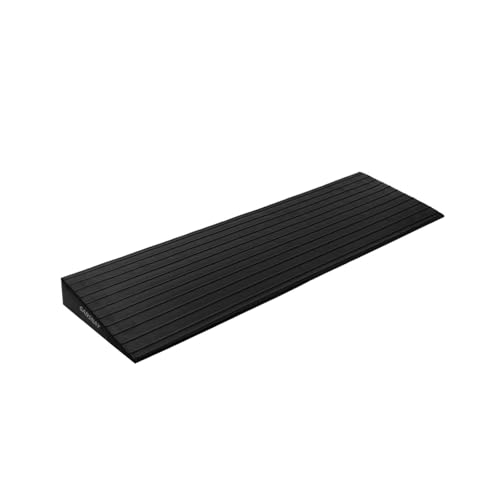
- Weighs 4.4 pounds for easy portability
- Cuttable rubber design with grooved traction
- Rated for up to 1,200 pounds
Best For: Compact door sills and portable indoor or outdoor access
Heavy-Duty Cable-Covering Ramp
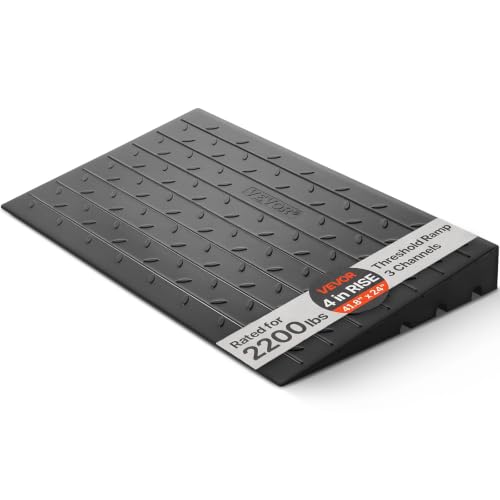
- Supports up to 2,200 pounds
- Three channels protect cables and hoses
- Slip-resistant one-piece rubber construction
Best For: Garages, curbs, and high-traffic entrances
Extra-Strong Vehicle-Ready Ramp
4-Inch Wide Rubber Doorway Ramp

- Rated for loads up to 33,069 pounds
- Grooved surface with drainage channels
- Includes mounting holes and expansion bolts
Best For: Wide thresholds, curbs, and vehicle access
Low-Profile Indoor Access Ramp

- Designed for 1-inch threshold rises
- Textured top and non-slip bottom
- Includes 10 adhesive securing pads
Best For: Low indoor thresholds and bathroom access
Best Heavy-Duty Pick
VEVOR 1.2-Inch Cuttable Rubber Threshold Ramp

- Supports up to 33,069 pounds
- Anti-slip surface for wet or dry use
- Cuttable 35.4-inch width with adhesive tape
Best For: High-traffic doorways and demanding loads
Best Compact Transition

- Designed for a 1-inch rise
- Supports up to 2,000 pounds
- Cuttable width with grooved traction surface
Best For: Lower door sills in homes and workshops
Best All-Season Design
1.5-Inch Rubber Threshold Ramp

- No assembly required
- Grooved surface supports traction and drainage
- 2,204-pound capacity for indoor or outdoor use
Best For: Higher thresholds, curbs, and uneven outdoor transitions
Best Cut-to-Fit Rubber Ramp – 1.6-Inch Cuttable Threshold Ramp
For shoppers comparing threshold ramps for doors, this VEVOR model stands out for its 35.4-inch width and cuttable natural-rubber construction. The 1.6-inch rise creates a gradual transition for wheelchairs, pushcarts, baby carriages, and robot vacuums, while the included double-sided tape helps secure it on smooth floors or tile.
Best For: Custom-width doorway, bathroom, garage, and smooth-tile transitions that need a sturdy rubber ramp.
Pros:
- Can be cut to fit different threshold widths; leftover material can serve as a door stop.
- Non-slip striped surface improves traction in wet or rainy conditions.
- Natural rubber is wear-resistant and designed to resist deformation.
- Includes double-sided adhesive tape for added stability on smooth surfaces.
Cons:
- At 13.7 pounds, it is less convenient to move than lighter portable ramps.
- The product may have a slight rubber smell initially and may benefit from ventilation before use.
- Cutting it requires the appropriate saw and careful measurement.
This is a practical choice when you want a wide, heavy-duty threshold ramp that can be customized to the opening. Its solid rubber build prioritizes stability and load capacity over lightweight portability.
Best Modular Aluminum Ramp – 1-Inch Adjustable Entry Ramp
This EZ-ACCESS model is a strong option among threshold ramps for doors when adjustability and low weight matter. Its self-supporting aluminum design provides a 1-inch rise, and the modular system can be adapted with sections or extensions for thresholds from 1 to 6 inches, plus an additional 0.25 inches through its pivoting flap.
Best For: Home entrances, sliding patio doors, and raised landings used by wheelchair, walker, or scooter users.
Pros:
- Lightweight 3-pound aluminum construction is easy to transport or reposition.
- Rust-proof material is suitable for indoor and outdoor use.
- Pivoting flap and modular sections allow height customization.
- Extruded surface is designed to provide traction in varied conditions.
Cons:
- The listed 1-inch model has a lower 700-pound capacity than some heavy-duty rubber alternatives.
- Additional sections or extensions may be needed for taller thresholds.
- Its 6.5-inch width may provide less lateral room than wider rubber ramps.
Choose this ramp if you value a portable, weather-resistant design and may need to adjust the configuration later. It is especially versatile for changing entryways, though buyers should confirm the required height and width before ordering.
Best Heavy-Duty Rubber Ramp – 3-Inch Wide Doorway Ramp
For higher thresholds and demanding traffic, this VEVOR model is one of the more substantial threshold ramps for doors. It rises 3 inches, measures 35.5 inches wide by 17.7 inches deep, and uses a one-piece rubber design with beveled edges for smoother approaches from multiple directions.
Best For: Taller door thresholds, garages, barns, gardens, and entryways used by wheelchairs, scooters, carts, or household vehicles.
Pros:
- 3-inch rise helps bridge taller thresholds and uneven level changes.
- Wide 35.5-inch platform accommodates mobility equipment up to the stated 26.8-inch width.
- Grooved rubber surface provides traction, while beveled edges ease transitions.
- One-piece design requires no tools and can be used temporarily or semi-permanently.
Cons:
- At 29 pounds, it is relatively heavy to carry or reposition.
- The 17.7-inch depth requires more floor space than compact threshold ramps.
- Its substantial size may be excessive for low, narrow interior thresholds.
This ramp favors stability and coverage over portability. Its broad, heavy rubber profile makes it suitable for taller transitions and mixed traffic, but measure the available approach space before buying.
Best Lightweight Portable Ramp – 2-Inch Odorless Threshold Ramp
This 2-inch rubber model offers a compact, portable approach to threshold ramps for doors. Measuring 31.5 by 8.7 inches and weighing 4.4 pounds, it is designed for door sills, porches, living rooms, laundry rooms, and garden transitions, with a grooved surface and a cuttable body for fit adjustments.
Best For: Lightweight indoor and outdoor transitions for wheelchairs, walkers, scooters, strollers, pets, and robot cleaners.
Pros:
- Portable 4.4-pound design is easy to carry and reposition.
- Grooved anti-slip surface supports traction for mobility devices, pets, and strollers.
- Can be cut with a saw to accommodate different widths.
- Rated for up to 1,200 pounds and designed for temperatures from -5°F to 302°F.
Cons:
- Its 31.5-inch width is narrower than several wider doorway ramps.
- The 8.7-inch depth may provide a steeper transition than deeper designs.
- Robot-vacuum compatibility depends on the specific model’s maximum climb angle.
This is a convenient pick when portability, low odor, and easy cleaning are priorities. Measure the threshold and check the approach angle carefully, especially if the ramp will be used by a robot cleaner or mobility equipment with larger wheels.
Heavy-Duty Cable-Covering Ramp – 4-Inch Rubber Threshold Ramp
For larger doorway gaps, this 4-inch VEVOR ramp is a substantial option among threshold ramps for doors. Its wide, textured rubber surface supports mobility aids and vehicles while built-in channels help protect cords and hoses.
Best For: High-traffic indoor or outdoor entrances, garages, curbs, and households needing a heavy-duty ramp with cable management.
Pros:
- Supports up to 2,200 pounds and weighs 65 pounds for stability.
- Raised-button rubber surface provides slip resistance in indoor and outdoor settings.
- Three channels accommodate different cable, wire, and hose sizes.
- One-piece design requires no tools to install or remove.
Cons:
- The approximately 14-degree incline is steep and may require wheelchair assistance.
- At 65 pounds, it is less convenient to move than lighter ramps.
This is a sturdy choice when stability, width, and load capacity matter more than portability. Confirm that the 4-inch rise and steeper angle suit the user before buying.
Extra-Strong Vehicle-Ready Ramp – 4-Inch Wide Rubber Doorway Ramp
This 35.5-inch-wide model is built for substantial loads, making it one of the more heavy-duty threshold ramps for doors and curbs. Its grooved surface, drainage channels, and underside cable passage support access in wet or dry conditions.
Best For: Doorways, balconies, bathrooms, gardens, and areas where wheelchairs, scooters, or even household vehicles need a broad transition.
Pros:
- Industrial natural rubber construction is rated for up to 33,069 pounds.
- Textured grooves and molded drain channels improve traction in wet conditions.
- One-piece design includes pre-drilled holes and expansion bolts for secure installation.
- Carry handle supports repositioning when needed.
Cons:
- The rubber may have a noticeable odor initially; outdoor airing is recommended.
- Its 52-pound weight may make frequent relocation inconvenient.
- The supplied dimensions indicate a 4-inch rise, which may not suit every doorway.
Choose this ramp when maximum load capacity and a wide, durable surface are priorities. Allow time for the rubber smell to dissipate before using it indoors.
Low-Profile Indoor Access Ramp – 1-Inch Rubber Doorway Ramp
For smaller lips and doorway transitions, this 1-inch model offers a more compact alternative among threshold ramps for doors. The 35.5-inch length, textured rubber surface, and included adhesive pads are suited to smooth indoor floors and tiles.
Best For: Low door thresholds, bathroom entries, garages, and transitions for wheelchairs, scooters, carts, or other mobility aids.
Pros:
- Low 1-inch rise provides a gentler transition than taller threshold ramps.
- Textured top and non-slip bottom patterns support traction and stability.
- Supports up to 1,000 pounds in a lightweight 5.5-pound format.
- Includes 10 adhesive pads for securing it to smooth surfaces.
Cons:
- Its 5.3-inch width is narrower than the other listed ramps.
- Adhesive-pad installation is intended for smooth surfaces such as floors or tile.
- It is designed for a 1-inch rise and cannot address taller thresholds.
This is the practical pick for modest height differences where a lightweight, low-odor ramp is preferable. Measure the threshold first and verify that the narrow width provides adequate wheel coverage.
Best Heavy-Duty Pick – VEVOR 1.2-Inch Cuttable Rubber Threshold Ramp
If you need threshold ramps for doors that can handle demanding everyday use, this VEVOR model combines a 1.2-inch rise with a solid natural-rubber build. Its broad, cuttable design works for wheelchairs, carts, strollers, and robot vacuums across smooth indoor or outdoor surfaces.
Best For: High-traffic doorways, garages, stores, and users who want an especially high load capacity.
Pros:
- Supports up to 33,069 pounds, according to the supplied specifications.
- Textured anti-slip surface helps provide traction in wet or dry conditions.
- 35.4-inch width can be trimmed to fit, and included double-sided tape helps secure it on smooth surfaces.
Cons:
- At 11.5 pounds, it is relatively substantial to move and position.
- The natural rubber may have a mild odor initially.
- Adhesive installation is intended for clean, dry, smooth surfaces.
Choose this ramp when maximum stated capacity and a durable, low-profile transition matter more than portability. Measure the threshold and available landing area before trimming or installing.
Best Compact Transition – 1-Inch Rubber Threshold Ramp
For lower door sills, this 1-inch option offers a practical transition without the added height of larger threshold ramps for doors. The 35.5-inch rubber ramp is cuttable, supports up to 2,000 pounds, and is designed for wheelchairs, scooters, carts, bicycles, and robot vacuums.
Best For: Homes, garages, workshops, and other entry points with a measured 1-inch threshold.
Pros:
- Low 1-inch rise suits smaller raised transitions.
- Deep grooves provide traction in wet or dry conditions.
- Can be trimmed for narrower openings or positioned side by side for wider access.
Cons:
- Its 2,000-pound capacity is lower than the heavier-duty options in this roundup.
- A slight curve or mild rubber odor may be present after packaging.
- Adhesive strips work best on clean, dry, smooth surfaces.
This is a sensible choice when accurate threshold measurement points to a 1-inch rise. Let the flexible rubber flatten in a ventilated area if needed, then install it on a properly prepared surface.
Best All-Season Design – 1.5-Inch Rubber Threshold Ramp
This 1.5-inch ramp is a sturdy option for threshold ramps for doors where a higher transition requires a smooth, non-assembled solution. Its natural-rubber construction, drainage grooves, and 2,204-pound capacity suit wheelchairs, scooters, strollers, walkers, pets, and other wheeled equipment.
Best For: Indoor and outdoor thresholds, driveways, curbs, sheds, and other uneven-height transitions.
Pros:
- Integrated design requires no assembly.
- Anti-slip grooves also form drainage paths to help manage water.
- Tough natural rubber is described as resistant to compression, deformation, and corrosion.
Cons:
- The 1.5-inch rise may be too high for a lower threshold.
- At roughly 13 to 14.3 pounds in the supplied details, it is not the lightest option.
- The supplied notes do not mention included adhesive strips or tape.
Consider this model when you need a higher rise and want an easy-to-clean ramp that works across seasons. Confirm the 1.5-inch threshold height and available width before ordering.
How We Picked These Threshold Ramps for Doors
We selected products that cover the most common doorway challenges, from low 1-inch transitions to higher 4-inch thresholds. The lineup includes solid rubber ramps, modular aluminum designs, cuttable models, and options with built-in channels for cables or cords.
Our comparison focuses on the measurements and features that matter most in everyday use: rise height, usable width, surface traction, weight capacity, installation requirements, portability, and whether the ramp can be trimmed or adapted to a particular doorway.
Quick Comparison
- Low thresholds: The 1-inch, 1.2-inch, and 1.5-inch models suit small lips at exterior or interior doors.
- Moderate transitions: The 1.6-inch and 2-inch ramps provide additional clearance for wheelchairs, walkers, and rolling carts.
- Taller thresholds: The 3-inch and 4-inch options address larger steps, but require more approach space and careful slope planning.
- Flexible installation: Cuttable rubber ramps can be adjusted for a closer fit, while the EZ-ACCESS aluminum model offers a lighter modular alternative.
Key Buying Factors for Threshold Ramps for Doors
Measure the Rise First
Measure from the lower floor surface to the highest point of the threshold, rather than relying on an estimate. Choose a ramp designed for that rise; a ramp that is too low may leave a bump, while an unnecessarily tall ramp can create a steeper approach.
Check Width and Available Approach Space
Confirm the ramp is wide enough for the wheelchair, walker, scooter, or cart. Also measure the space in front of the door. Higher ramps generally need a longer transition to remain comfortable and manageable.
Choose the Right Material
Rubber ramps are substantial, naturally grippy, and often easy to place without complex hardware. Aluminum ramps are typically lighter and more portable. For outdoor use, look for a surface and construction suited to moisture, temperature changes, and repeated traffic.
Verify Capacity and Stability
Compare the stated weight capacity with the combined weight of the user, mobility device, and any load being carried. A stable base, non-slip surface, and secure positioning are especially important on smooth floors or frequently used entrances.
Look for Useful Adjustments
Cuttable designs can help accommodate unusual door widths or obstructions. Cord channels may be valuable where cables cross the threshold, but they should not compromise the ramp’s usable path or create a new trip hazard.
Who Should Buy Which Threshold Ramps for Doors?
For a small indoor lip: Choose a 1-inch to 1.5-inch ramp when the threshold is low and space is limited.
For a standard exterior doorway: A 1.6-inch to 2-inch rubber ramp offers a sturdy, broadly useful transition for wheelchairs, walkers, and carts.
For a taller step: Consider a 3-inch or 4-inch model only after confirming there is enough approach room and that the resulting slope is suitable for the user and device.
For changing or unusual openings: A cuttable rubber ramp is useful when exact width or fit matters. For users who prioritize lower carrying weight and modular installation, an aluminum option may be the better choice.
Before ordering, recheck the threshold height, doorway width, floor conditions, and product capacity. A proper fit is more important than choosing the tallest or heaviest-duty ramp available.